Manneken Pis
It is one of Europe’s smallest monuments, yet few are more recognizable than Manneken Pis. Standing just over two feet tall at the corner of two narrow streets in the heart of Brussels, this tiny bronze boy has captured the imagination of visitors for more than four hundred years. Despite his modest size, he has become the unofficial symbol of Belgium’s capital.
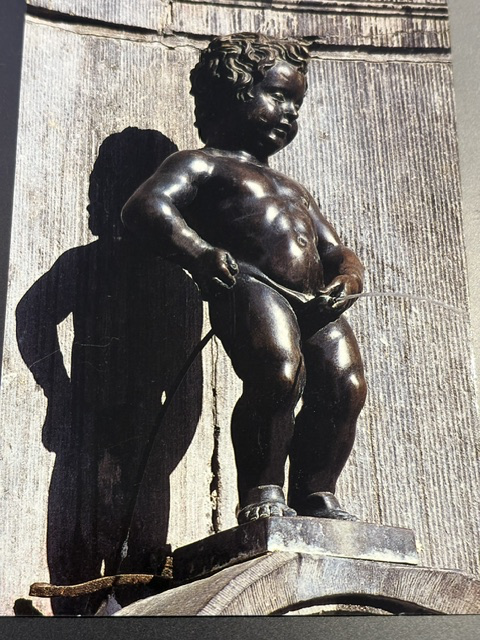
The statue seen today was created in 1619 by the Flemish sculptor Jérôme Duquesnoy the Elder. Commissioned as part of a public fountain, it replaced an earlier stone figure that had occupied the site since at least the fifteenth century. The fountain served a practical purpose, providing water to the surrounding neighborhood, while the playful figure reflected the spirit of a city that often-celebrated wit, independence, and ordinary life rather than royal grandeur.
Over the centuries, Manneken Pis has become far more than a fountain. The little statue has been stolen several times, most famously by French soldiers in the eighteenth century and again in the twentieth century. Each time, public outcry led to its recovery or replacement, demonstrating just how deeply the people of Brussels had come to identify with their diminutive mascot. Today, the original statue is preserved in the Brussels City Museum in the Grand Place, while the figure standing in the fountain is a carefully crafted replica.
Perhaps the most charming tradition associated with Manneken Pis is his wardrobe. Since the late seventeenth century, the statue has been dressed in costumes to mark holidays, national celebrations, diplomatic visits, and charitable events. His collection has grown to include well over one thousand outfits representing countries, professions, historical figures, sports teams, and cultural organizations from around the world. On designated occasions, volunteers gather to ceremonially dress the statue while bands perform, and crowds celebrate a tradition that has become uniquely Brussels.

