Ivy-Covered Walls of Trotsky House
At first glance, the exterior of the Trotsky House in Mexico City’s Coyoacán neighborhood seems almost inviting. Ivy climbs the weathered brick and stucco walls, softening the sharp lines of the building and giving it the appearance of a quiet family home that has peacefully settled into its garden over many decades. Sunlight filters through the trees, flowers bloom along the walkways, and there is little to suggest that this house once stood at the center of one of the twentieth century’s greatest political dramas.
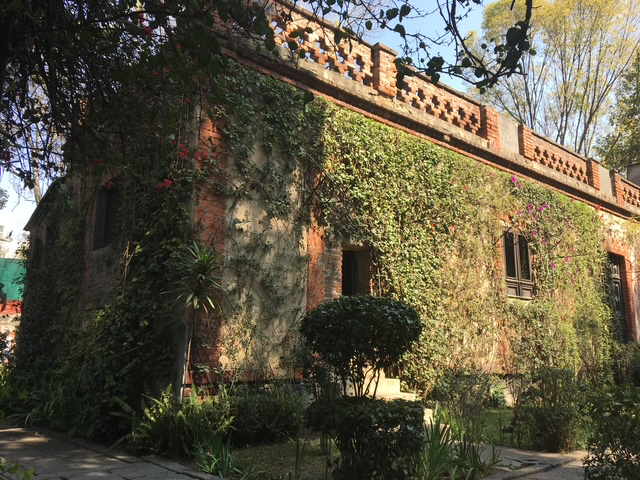
The ivy itself is part of the house’s character. Draped across the walls like a living tapestry, it blurs the boundaries between architecture and nature. Rather than dominating its surroundings, the building appears to have been embraced by them. The green vines soften the rough masonry and create a sense of tranquility that contrasts beautifully with the deep red brick trim and simple architectural details.
Yet beneath that peaceful appearance lies a very different story.
When Leon Trotsky lived here from 1939 until his assassination in 1940, these walls represented security rather than beauty. They enclosed a heavily fortified residence surrounded by armed guards, reinforced gates, watchtowers, and barricaded windows. The house had already survived one-armed assault before, in August 1940, Trotsky was fatally attacked inside by Ramón Mercader, an assassin acting on behalf of Joseph Stalin. Today, the house serves as a museum, preserving the memory of those extraordinary events while presenting a remarkably peaceful atmosphere to those who visit.
Without knowing its history, this could easily be mistaken for one of Coyoacán’s many charming historic homes. Yet behind these ivy-covered walls unfolded an event that echoed far beyond Mexico City, altering the course of international politics and forever linking this quiet house to one of history’s most famous political assassinations.