Guggenheim Museum
There are museums we visit because of what is hanging on the walls, and then there are museums where the building itself is part of what we have come to experience. The Solomon R. Guggenheim Museum in New York City is certainly one of those places.
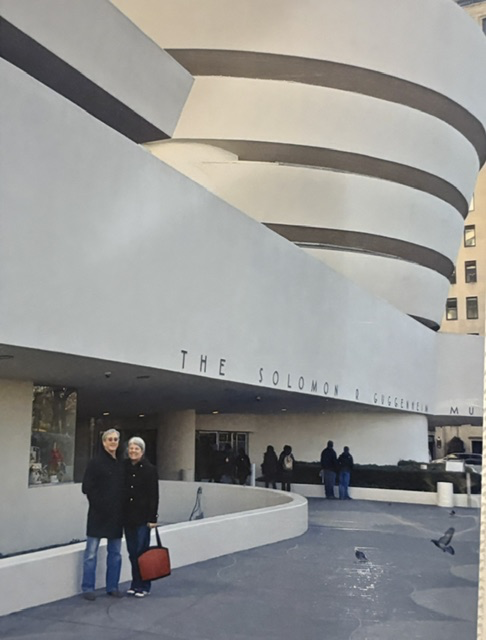
What makes a visit to the Guggenheim so distinctive is that the art begins with the building itself. Designed by Frank Lloyd Wright, the museum is unlike the traditional galleries we have visited, with its sweeping curves and continuous spiral drawing you through the space.
Wright was commissioned in 1943 by Solomon R. Guggenheim and his art adviser, Hilla Rebay, who envisioned a new kind of museum for modern art. The design evolved over the next sixteen years, and when the Guggenheim finally opened in 1959, Wright had died just six months earlier and never saw visitors experiencing his completed museum.
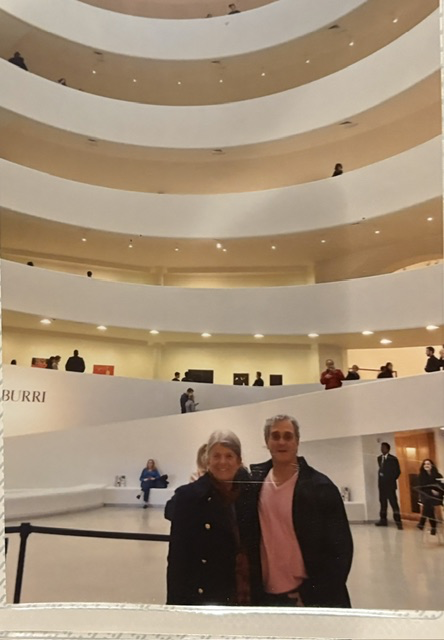
From Fifth Avenue, the building looks unlike almost anything surrounding it. Instead of the rectangular form and formal entrance of a traditional museum, Wright created a great white spiral that widens as it rises. Set against the straight lines of Manhattan buildings, it must have appeared even more radical when it opened.
But it is inside that Wright’s idea really becomes apparent. Rather than arranging galleries as a succession of separate rooms, he created one continuous ramp spiraling around a soaring central rotunda. Visitors can take an elevator to the top and gradually descend, moving through the exhibition while repeatedly looking across the open space to the other levels of the museum.
Wright wanted the experience of looking at art to flow continuously rather than having visitors repeatedly enter and leave individual galleries. It was an extraordinary idea, although not everyone loved it. Even before the museum opened, some artists objected that the curved walls and sloping ramp would compete with their work and make conventional paintings difficult to display. The building became so important architecturally that in 2019 it was included with seven other Frank Lloyd Wright buildings on UNESCO’s World Heritage List, recognizing his enormous influence on modern architecture.
I have been fortunate to visit many art museums, and usually I remember particular paintings, sculptures, or collections. The Guggenheim is different. Here, I remember the experience of being inside the building with the spiral, the open rotunda, the curves above us, and the changing perspectives as we moved through it. Frank Lloyd Wright designed a museum to hold art, but he created something more than a container. At the Guggenheim, the museum itself is one of the masterpieces.
Read More From Nancy
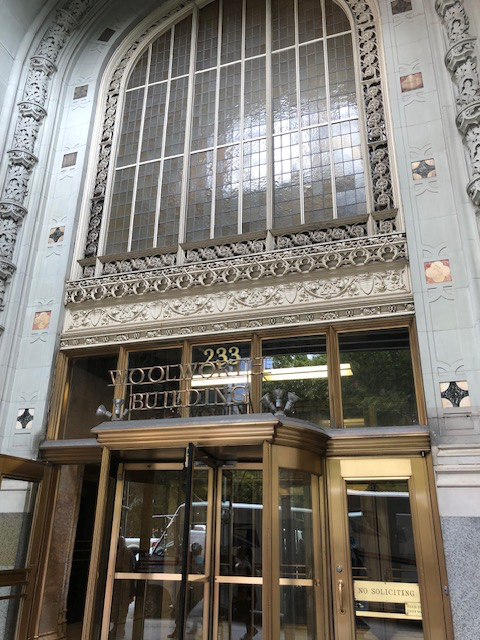
The Woolworth Building
There is so much to see and do in New York City that sometimes the buildings themselves become the destination. One day Marty and I took a tour of the Woolworth Building at 233 Broadway. I had seen its distinctive tower as part of the Manhattan skyline, but walking through its doors revealed a building […]

Watkins Glen State Park
Although the gorge stretches less than two miles, Watkins Glen State Park contains one of the most extraordinary examples of nature’s ability to shape the landscape over immense periods of time. Established as New York’s first state park in 1906, Watkins Glen had already become a popular destination decades earlier. Visitors arrived by train, stagecoach, and […]
The Morgan Library and Museum
One of our favorite places to visit in New York City is the Morgan Library & Museum. Originally built as the private library of financier J. Pierpont Morgan between 1902 and 1906, it reflects both his extraordinary wealth and his passion for collecting some of the world’s greatest books, manuscripts, artwork, and historical treasures. The […]

