Gas Rationing
July 1944Dearest Reader,
In 1944, gasoline rationing had become an accepted part of American life. Every driver carried a small ration book, and a lettered windshield sticker determined how much fuel they were permitted each week.
For most families, like my mother’s, the driver had an A-ration card, the most common classification in the country. It allowed only three gallons of gasoline per week, just enough for commuting to work, church and necessary errands.
Cars of the early 1940s were not fuel-efficient, often getting 10 to 15 miles per gallon so a few gallons a week disappeared quickly. In one of her letters, my mother captured the reality of that time:
“If we go too far, I guess it will have to stay here til after the war when there is plenty of gas.”
This sentence reflects the common reality that was felt by millions of Americans. Many families walked or relied on infrequent buses and leisure travel was not common. Rationing gave families a shared sense of sacrifice. My mother’s comment captures this time when Americans lived within wartime limits and waited for a future “when there is plenty of gas”.
Dr. Nancy Watson
Rambling With Nan
Washington
Read More From Nancy
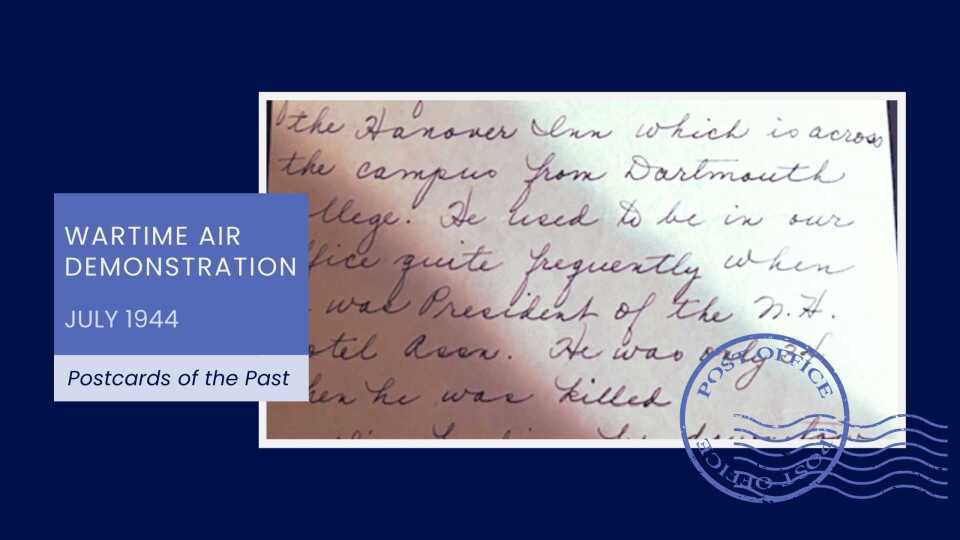
Wartime Air Demonstration
In a letter dated July 28, 1944, my mother responded to news my father had shared about a tragic accident that occurred during an air show. Her words suggest not only how quickly such events traveled through letters and conversations: “Mother read to me what you wrote about that plane accident that occurred while that […]
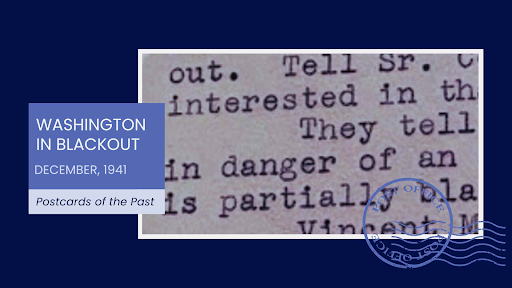
Washington in Blackout
In the December 13, 1941, letter, my grandmother described another unsettling reality of those first days after Pearl Harbor, the fear that the war might reach the American mainland. Information was fragmentary, rumors circulated freely, and no one yet knew what form the conflict would take. She wrote simply and without drama: “They tell us […]
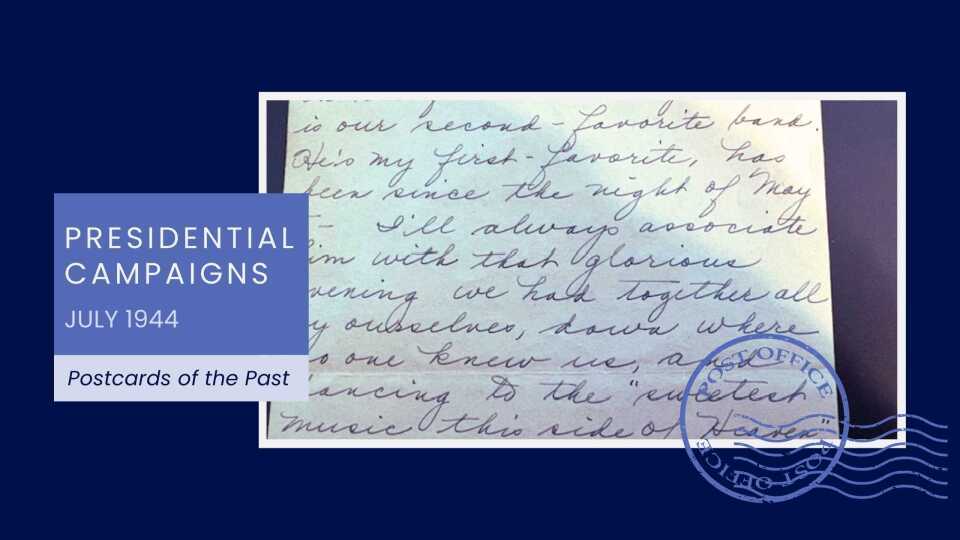
Presidential Campaigns
My mother’s letter of July 11, 1944, contains a single line that instantly reveals just how different presidential campaigns were then compared to today: “I see by tonight’s headlines that Roosevelt says he is going to run for a fourth term very reluctantly. Humph!” There was no televised announcement, no rally, no choreographed campaign rollout. Instead, Americans opened […]

