E. H. Steinberg Building
At 1611 East Seventh Avenue, the E. H. Steinberg Building preserves the name of a Jewish merchant whose influence extended beyond his storefront. Edward H. Steinberg operated a dry goods business in Ybor City, serving a neighborhood whose cigar factories brought together people from different countries and traditions.
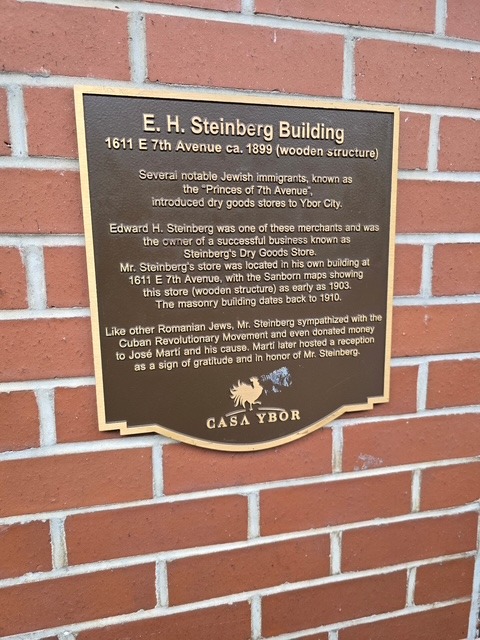
Jewish immigrant merchants helped develop Seventh Avenue into a commercial center. Sometimes remembered as the “Princes of Seventh Avenue,” these business owners supplied goods to workers and families, adding shops and services to a community often identified primarily with cigar production.
Steinberg’s business occupied a wooden structure at this address before the present masonry building, which dates to 1910. The distinction matters: his commercial history at the site began before the construction of the surviving building.
His connection with Cuban independence likewise belonged to an earlier period. Steinberg supported the revolutionary movement and contributed money to its cause. José Martí, who sought support among Tampa’s immigrant communities, later attended a reception honoring him.
This relationship reveals how political commitments could cross the boundaries of language, religion, and national origin. Ybor City’s connections with Cuba reached beyond Cuban residents and cigar workers, drawing support from merchants who participated in the neighborhood’s wider civic life.
The Steinberg name therefore recalls two related histories: the Jewish businesses that helped sustain Seventh Avenue and the international movement that found supporters in Tampa. The building’s plaque preserves the connection between a local shopkeeper and a struggle for independence across the Florida Straits.
Read More From Nancy
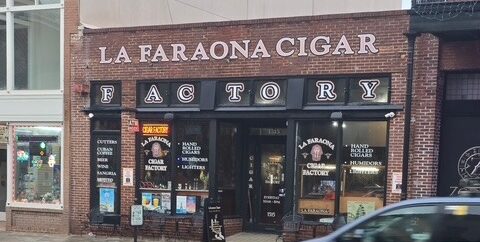
La Faraona Cigar Factory
On Seventh Avenue in Ybor City, La Faraona Cigar Factory connects the neighborhood’s manufacturing heritage with the work of a modern family business. Its founder, Odelma Matos, brought experience in Cuban cigar making to a district whose identity had been shaped by earlier generations of immigrant tobacco workers. Matos grew up in a family of […]
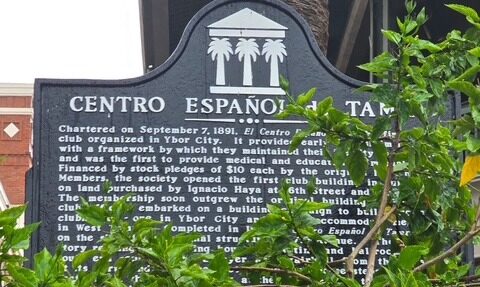
Centro Español
The red-brick Centro Español clubhouse on Seventh Avenue represents an important part of Ybor City’s immigrant history. Established in 1891, the Spanish association brought people together to preserve their culture and provide practical support as they built lives in Florida. Mutual aid meant sharing resources to meet needs that individual families could struggle to manage […]

