Dwight D. Eisenhower Presidential Library
One of my goals has been to visit each of America’s presidential libraries. Rather than simply learning about the accomplishments of each president, I hope to better understand the experiences that shaped their leadership. Every library has given me a different perspective, and my visit to Abilene, Kansas, helped me see Dwight D. Eisenhower in a way I had not fully appreciated before.
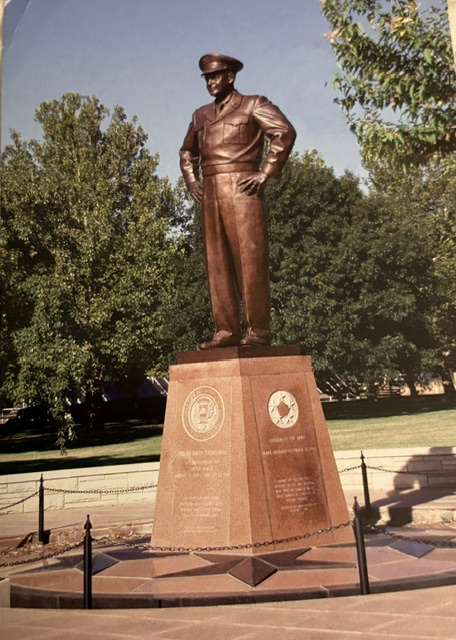
Many people associate Eisenhower with Europe, World War II, or Washington, D.C., so it may seem surprising that his presidential library is located in the small town of Abilene, Kansas. Although he was born in Denison, Texas, his family moved to Abilene when he was just a young child, and it was here that he spent his formative years. The modest home where he grew up, his church, his school, and the values of hard work, humility, faith, and service that surrounded him all helped shape the man he would become. Eisenhower chose to be buried in Abilene because he considered it home.
Standing before this monument, I was reminded that Eisenhower entered the White House unlike any modern president. Before becoming President of the United States, he had carried one of the greatest military responsibilities in history as Supreme Commander of the Allied forces in Europe during World War II. He understood war not from books or political debate, but from the burden of making decisions that affected millions of lives.
Many people remember Eisenhower as a successful general. What impressed me most was discovering how often he used that experience to avoid war rather than seek it. During the height of the Cold War, he consistently looked for ways to maintain peace while preserving America’s strength. He understood the necessity of military preparedness, but he also understood its costs.
Perhaps nowhere is that better illustrated than in his Farewell Address in January 1961. Leaving office after eight years as president, Eisenhower warned the nation about the growing influence of what he called the “military-industrial complex”. Coming from a lifelong soldier, those words carried unusual weight. He was not criticizing the military. Instead, he cautioned future generations to ensure that military power never overshadowed the democratic principles it was meant to protect.
As I walked through the museum, I realized that Eisenhower’s greatest legacy may not have been winning a war. It may have been recognizing that the highest achievement of military leadership is creating the conditions in which peace can endure.
That is one of the reasons I enjoy visiting presidential libraries. Each one allows me to look beyond familiar events and discover a lesson that still speaks to us today. My visit to Abilene reminded me that true leadership is not measured only by victories won, but also by the wisdom to know when power should be exercised with restraint.

