Dean College
Dean College is another institution that reinforces how the town of Franklin identities itself with education. Founded in 1865, shortly after the Civil War, Dean College has been part of Franklin’s landscape for generations and remains one of the landmarks of the town center.
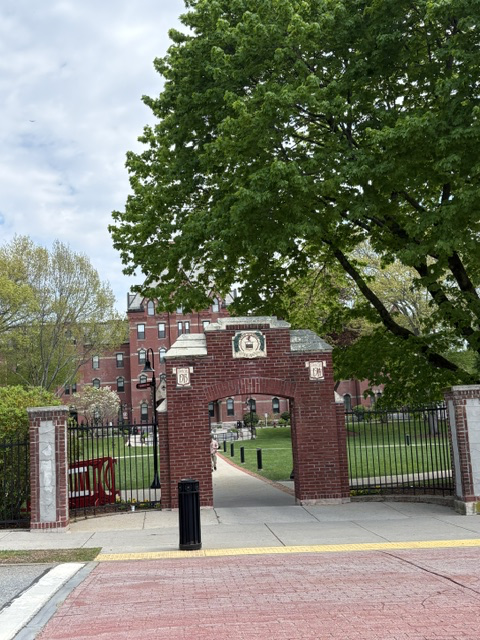
The school was originally founded as Dean Academy through the generosity of Dr. Oliver Dean, a Franklin resident, physician, businessman and philanthropist. Dean accumulated wealth through farming, land holdings and local business ventures and believed strongly in the importance of education and opportunity. Upon his death in 1865, he left funds in his estate to establish an academy in Franklin for the education of local students. The academy opened the following year, carrying forward his vision of creating educational opportunities within his home community.
Originally, Dean Academy functioned as a preparatory academy or advanced secondary school. In the nineteenth century, academies like this provided education beyond the local common school system and helped prepare students for teaching, business or further higher education. Dean Academy was co-educational from its founding and welcomed both men and women into its educational programs.
In its early decades, many students attended Dean Academy to prepare to become teachers. Teacher preparation and moral education were considered essential parts of nineteenth-century educational philosophy. Schools like Dean were expected not only to educate students academically, but also to help shape character, discipline and leadership.
The brick gateway and enclosed campus create a transition from the surrounding streets into the academic setting beyond. Walking through the entrance, there is a sense of entering a place intentionally devoted to learning and community life.
At the center of the courtyard stands a World War I memorial fountain honoring members of the Dean Academy community who served during the war. Positioned directly in front of one of the college’s historic buildings, the memorial connects education and civic responsibility.
Walking through Franklin, you begin to see that there is a connected story about what the town has chosen to value and preserve: education, public service, historical memory, and that belief that communities are strengthened when they continue teaching future generations about both knowledge and sacrifice.
Read More From Nancy
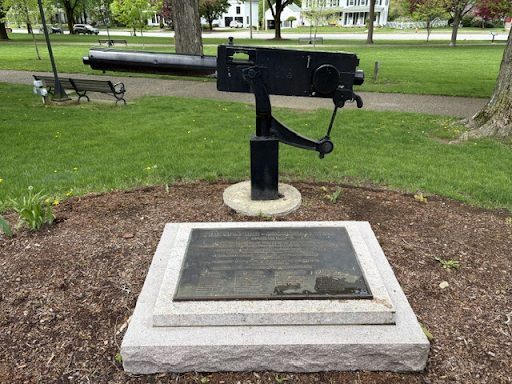
Spanish-American War Memorial
Among the memorials on the Franklin town common, ist his mounted naval style gun and plaque commemorating Franklin residents who served in the Spanish-American War of 1898. The gun is a direct physical reminder of how warfare was changing at the turn of the twentieth century, when modern naval power began reshaping America’s role in […]
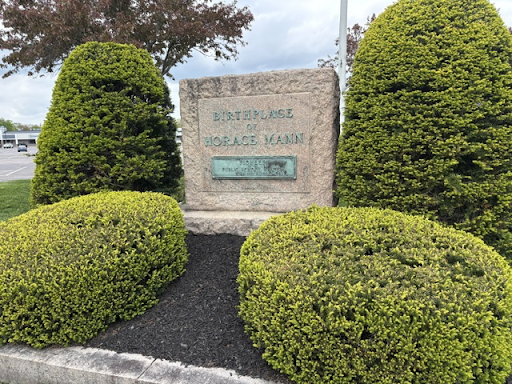
Birthplace of Horace Mann
In Franklin, the memory of Horace Mann is preserved in these two different ways. One is the granite marker of his birthplace, while the other is the large public statue located in Horace Mann Square. The birthplace plaque marks where his life began, while the statue honors what Horace Mann became. Standing confidently beside a column of […]
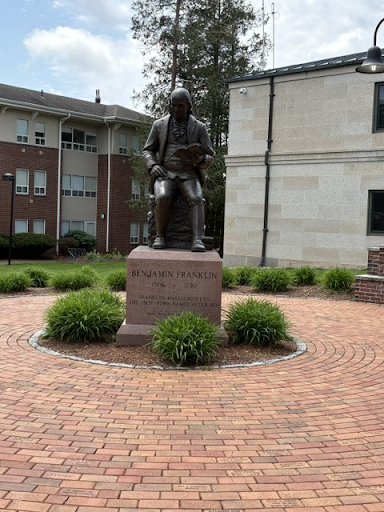
Benjamin Franklin Statue
Franklin is a town deeply aware of its history and proudly displays the people and ideals that helped shape its identity. Unlike many New England towns named for English places, Franklin holds the distinction of being the first town in the United States named after one of the nation’s founding fathers: Benjamin Franklin. Although Benjamin Franklin is closely […]

