Costs of Groceries
October 1424Dearest Reader,
In October 1942, as my father was stationed in Washington State, my grandmother wrote to him describing how profoundly life on the home front had changed. Her letter reflects a nation fully mobilized for war, where shortage, rationing and rising prices had become part of everyday reality. What she shared was not abstract, but lived experience, felt most at the grocery counter:
She wrote:
“The prices are skyrocketing here. I had to pay 55 cents a pound for butter at the A and P Saturday. No beef of any kind. A $10 bill goes about as far as a $5.00 went this time last year. Eggs were fifty cents a dozen.”
By the fall of 1942, the United States had been at war for nearly a year, and the economic consequences were unmistakable. Industrial production had shifted toward military needs. Food, fuel, rubber and metals were redirected to support troops overseas, leaving fewer goods available for civilians. Scarcity, combined with increased demand and rising wages in the war industries, pushed prices upward despite efforts to contain inflation.
Butter, meat and eggs were among the most affected staples. Butter production was limited by shortages of labor and feed, while meat, especially beef, were heavily diverted to supply the armed forces. Eggs fluctuated in price. Even when ration coupons were available, store shelves were often bare.
My grandmother’s observation that “a $10 bill goes about as far as a $5.00 went this time last year” captures the erosion of purchasing power felt by families across the country. Households were expected to adapt, stretching meals and doing without.
Her words show her adjustment and resolve. While my father stood watch on the Pacific Coast, she was managing the vigilance at home by measuring butter, counting dollars and learning, like so many others, how to live within the constraints of wartime America.
Dr. Nancy Watson
Rambling With Nan
Washington
Read More From Nancy
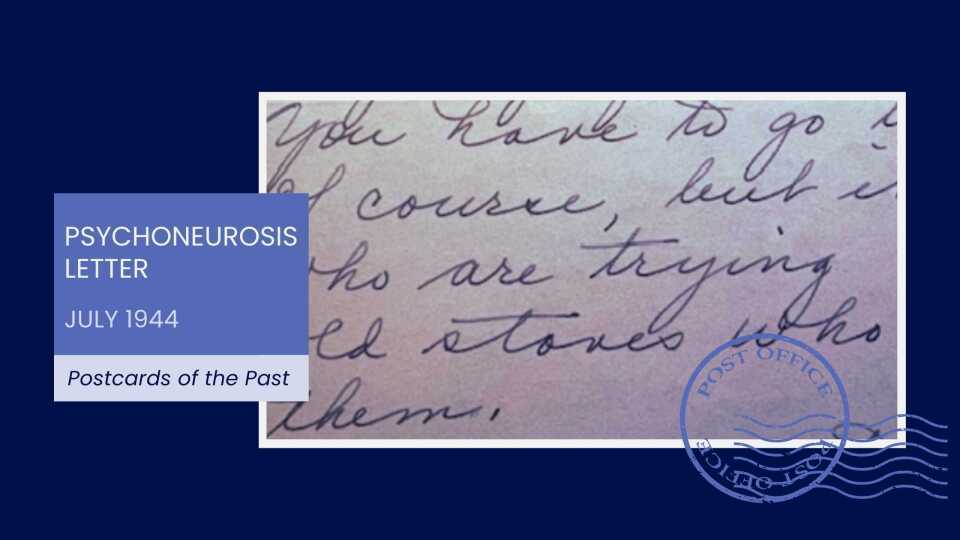
Psychoneurosis Letter
Reading my grandmother’s words, it is clear how complicated and emotionally charged the term psychoneurosis was in 1944, She writes: “You will note that Dr. Link, a noted psychologist, does not believe in the use of that term, that to call a man a ‘psychoneurotic’ is to go a long way towards making him one. […]
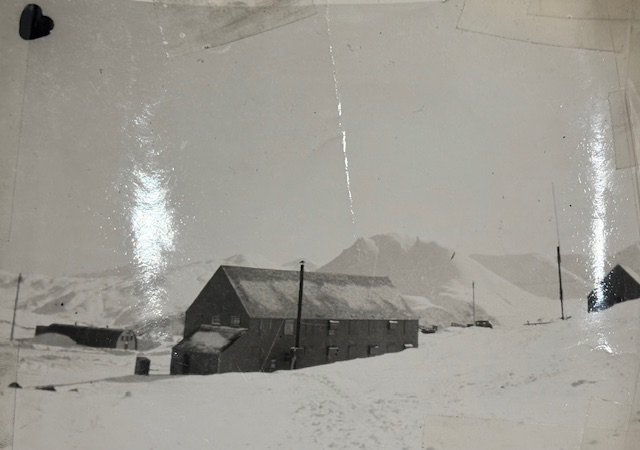
On top of Mt Ballyhoo on Amaknak Island
This photo tells more of my father’s story in the Aleutians. On the back of the photo, my father wrote: “ON TOP OF MT. BALLYHOO (BARRACKS HOUSING HQ BTRY 264TH CA) ON AMAKNAK ISLAND OVERLOOKING DUTCH HARBOR IN ALEUTIAN ISLANDS WINTER OF ’43” This placed my father on Mount Ballyhoo, the steep volcanic rise that […]
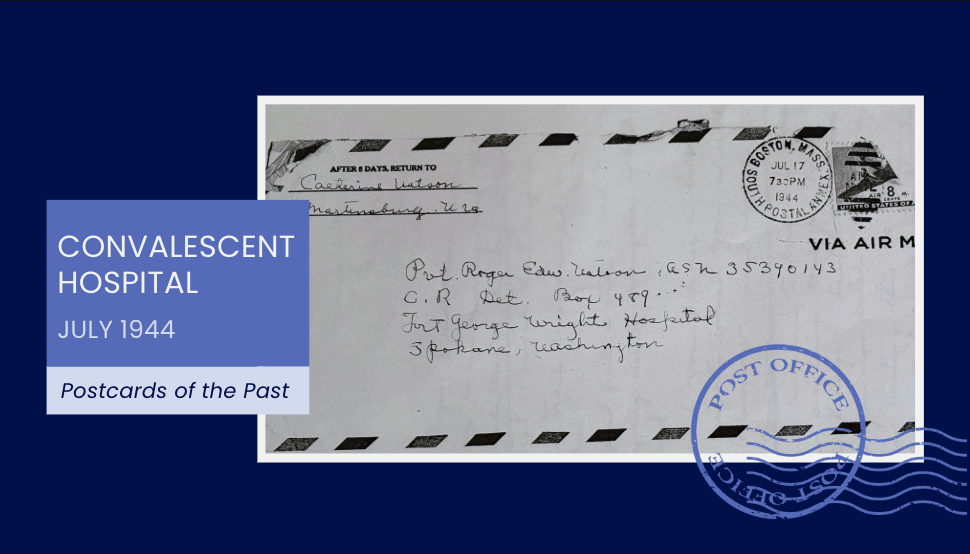
Convalescent Hospital
In July of 1944, letters to my father were addressed to Fort George Wright Hospital in Spokane Washington. Fort George Wright Hospital in 1944 was a key convalescent and rehabilitation facility for the US Army servicemen. Fort George was a US post established beginning in the late 1890s. The hospital was built on-site in 1898 […]

