Pennsylvania
Pennsylvania was founded by William Penn in 1681 and became the second state to ratify the United States Constitution in 1787. Its history has been shaped by the Lenape people, Quaker ideals of religious tolerance, the founding of the nation in Philadelphia, the Civil War, immigration, agriculture, coal mining, railroads, and industrial growth.
Our travels through Pennsylvania have taken us into historic cities, small towns, battlefields, museums, and preserved landscapes. My Hometown Stories explore the communities and people that connect Pennsylvania to the founding of the country, its industrial development, and many of the defining events in American history.
Hometowns
Jim Thorpe, PA
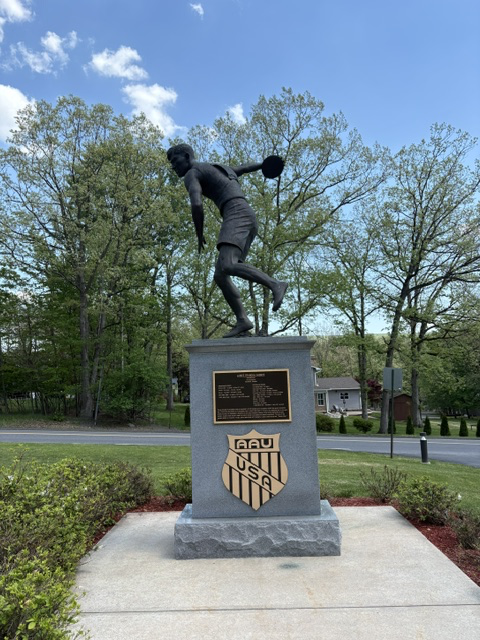
Nestled in the Lehigh Gorge of Pennsylvania’s Pocono Mountains, Jim Thorpe is a small town with a remarkably layered history. Originally two communities—Mauch Chunk and East Mauch Chunk—the area grew during the nineteenth century as a center of the anthracite coal industry and became an important transportation hub for moving coal from the mountains to eastern markets. Its steep hillsides, Victorian architecture, railroad history, and narrow streets still reflect the prosperity of that era. In 1954, the two communities merged and took the unusual step of renaming themselves Jim Thorpe in honor of the celebrated Native American athlete and Olympic champion, although Thorpe himself had never lived there. His remains were brought to the community, where a memorial now tells another chapter of the town's story. Today, Jim Thorpe combines its industrial past, Victorian architecture, railroad heritage, and the unexpected story of the man whose name it bears. It is the kind of town where the history is not confined to a single site but surrounds you as you walk its streets.
Strasburg, PA
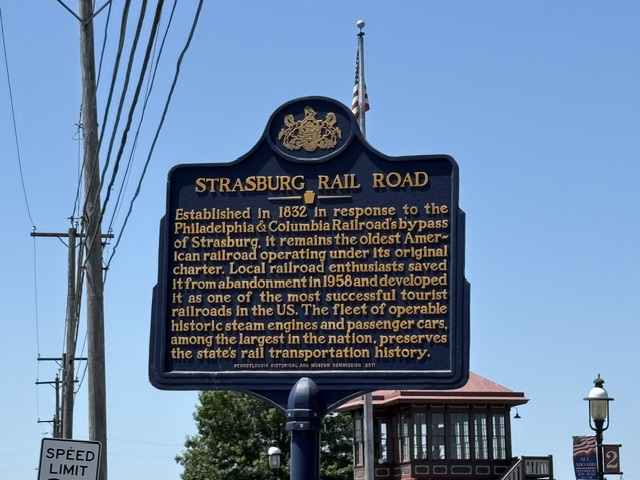
Strasburg, Pennsylvania, grew along the Old Conestoga Road, an early route through Lancaster County. By the eighteenth century, taverns, stables, blacksmiths and wagon makers served the travelers passing through town. When the Strasburg Railroad was chartered in 1832, it connected the community to a new way of moving passengers and freight. The railroad later became the town’s best-known attraction, but Strasburg’s history remains visible beyond the station. Its historic district preserves the character of its older streets, while the surrounding farmland places it within Pennsylvania Dutch Country, a region long associated with Amish communities. Today, Strasburg brings together its early road history, its railroad heritage, and the agricultural landscape of Lancaster County.

