Budapest
Budapest is a beautiful city known for its architecture, grand bridges. thermal bathhouses and a vibrant culinary scene. Among these pleasures, one of the most poignant moments of our visit came along the banks of the Danube.
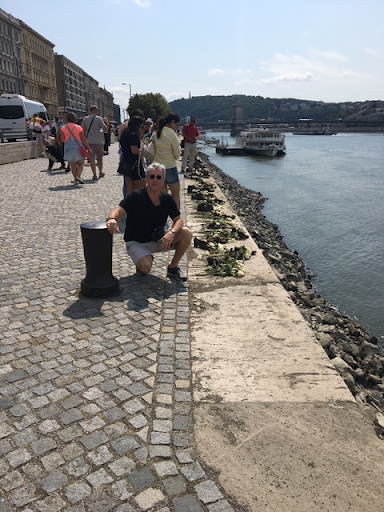
There, along the river’s edge, is a memorial known as “Shoes on the Danube Bank.” There are dozens of iron shoes placed as if abandoned: men’s work boots, women’s dress shoes, and small children’s shoes sit facing the river.
This memorial marks the site where, in 1944-45, Jewish residents of Budapest were murdered by members of the Hungarian Arrow Cross Party. Even as it became clear that the Nazis were losing the war, hatred and violence did not stop. Families were marched to this spot, ordered to remove their shoes, and then shot so their bodies would fall into the Danube and be carried away by the current.
The memorial is so powerful as ordinary shoes are left behind forever. The Shoes on the Danube Bank insists on remembrance and offers us a moment to witness and carry these stories forward so they are never forgotten.

Read More From Nancy

Uluru in the Australian Outback
We have been fortunate to have traveled extensively, sometimes just for vacation, oftentimes, our adventures are attached to one of our teaching events. The last time we taught in Australia, we decided to travel into the Outback and view Uluru. Flying to the Outback is an experience. The landscape gives way to a vast, open […]

Milford Sound – New Zealand
In 2018, while we were in New Zealand teaching on the North Island, we carved out time to cross to the South Island for a holiday. One destination was Milford Sound, set deep within the UNESCO World Heritage region known as Te Wahipounamu. Reaching it felt like an expedition in itself. The drive carried us through […]
Brandenburg Gate – Berlin Germany
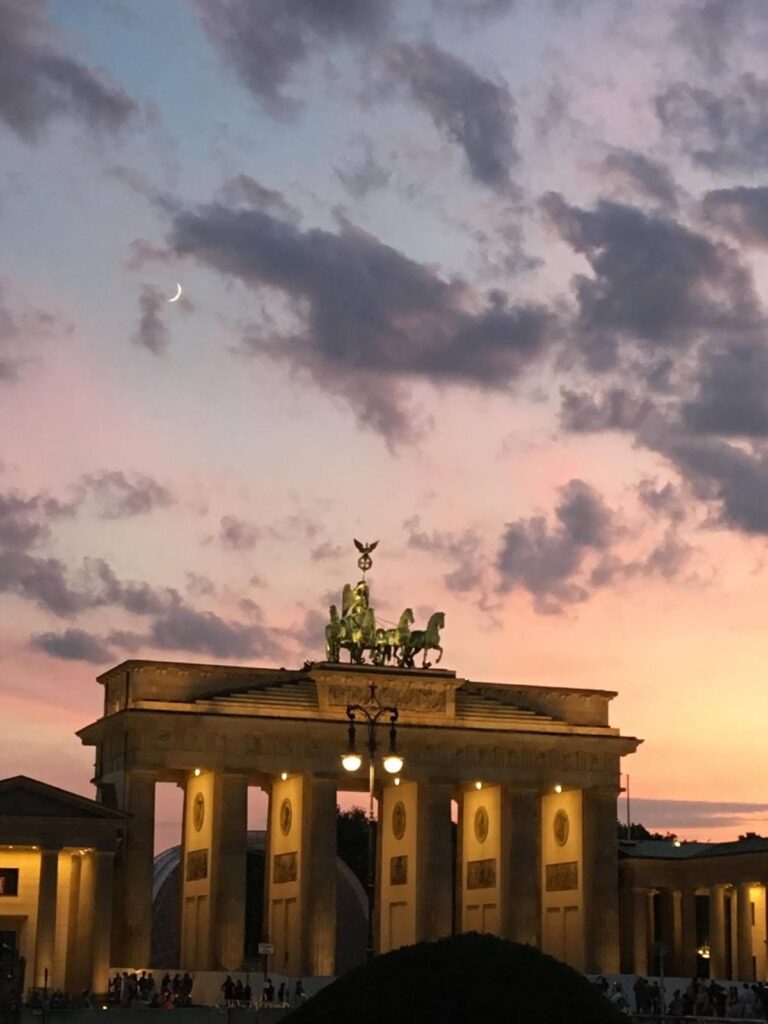
While visiting Berlin, the Brandenburg gate quickly becomes more than just a landmark, it becomes a focal point of the city’s history. Standing at Pariser Platz, we faced a structure built between 1788 and 1791 under King Frederick William II of Prussia. Designed by architect Carl Gottheard Langhans, the gate was inspired by classical Greek architecture. Its […]

