Boot & Show Workers Union Dues Book
When I first picked up this small dues book, I thought of it as simply another family keepsake. The more I learned about it, however, the more I realized it represented one of the first chapters of my grandfather’s life in America.
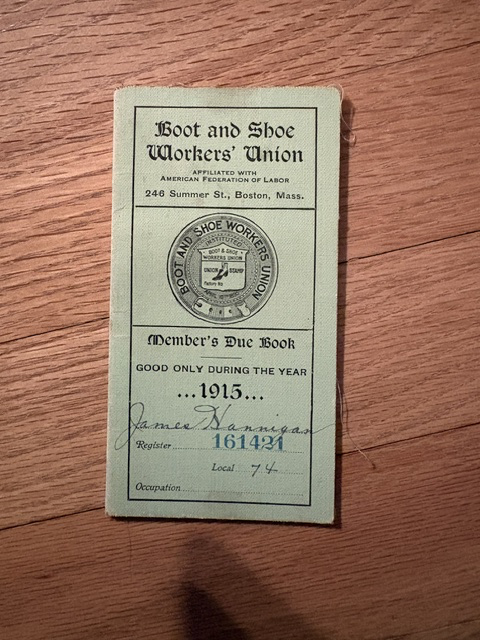
This was the 1915 membership book of the Boot and Shoe Workers’ Union, issued to my grandfather, James Hannigan. Like many Irish immigrants arriving in New England during the early twentieth century, he found work in one of Massachusetts’ largest industries: shoe manufacturing.
At the time, Massachusetts was considered the shoe-making capital of America. Cities and towns throughout eastern Massachusetts were filled with factories producing millions of pairs of shoes each year. Skilled workers cut leather, stitched uppers, assembled soles, and finished footwear that was shipped across the country and around the world. For thousands of immigrants, these factories offered steady employment and the chance to build a new life.
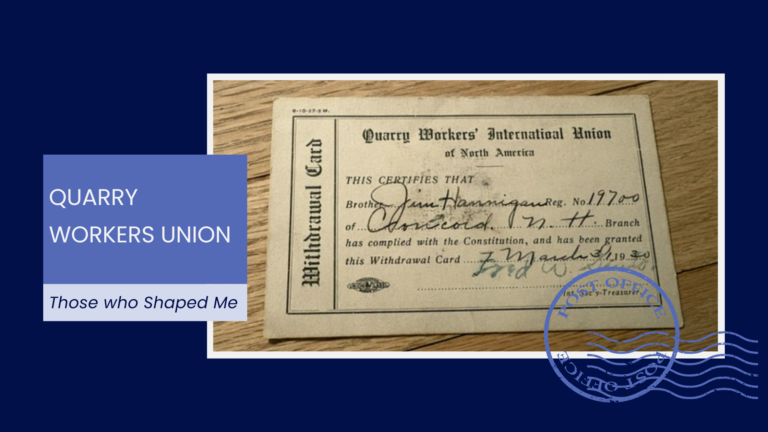
The Boot and Shoe Workers’ Union was organized in Boston in 1895 and quickly became one of the nation’s most influential unions representing workers in the footwear industry. Affiliated with the American Federation of Labor, it sought to improve wages, hours, and working conditions for thousands of men and women employed in New England’s shoe factories
This little dues book tells me that by 1915, my grandfather had done more than simply arrive in America. He had found his place in the workforce. He had become part of a skilled trade. He had joined an organization that represented thousands of working men striving to improve their lives and those of their families.
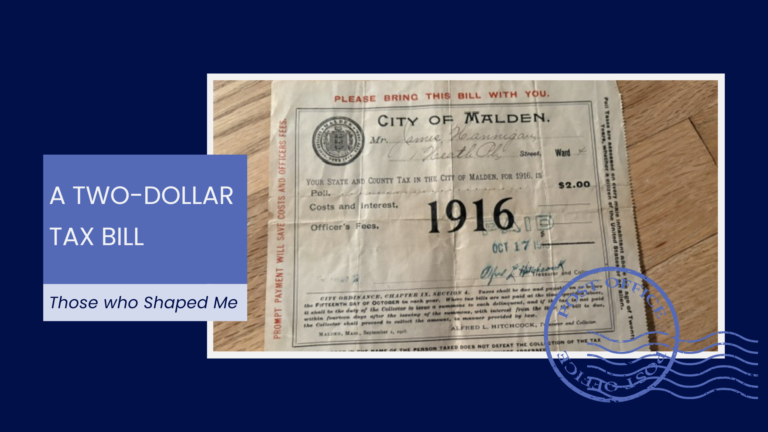
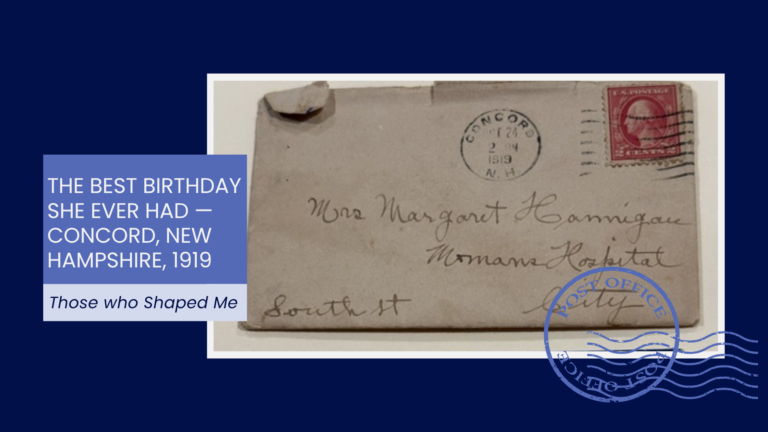
Within a year, James would marry my grandmother, Margaret Dawson, another Irish immigrant who had made her home in Malden. Together they would begin building their family before eventually moving to Concord, New Hampshire, where my mother was born in 1919. Looking back, I realize that their years in Malden were relatively brief, but they were among the most significant. It was there that they established themselves in America, found one another, and laid the foundation for everything that followed.
Today, this worn booklet reminds me that history is often preserved in the smallest of objects. It is not valuable because of the paper or the ink, but because it tells the story of a young immigrant who was determined to succeed. Every dues stamp represented another week or another month of honest work, another step toward stability, and another investment in a future he hoped would be better than the past he had left behind.
For me, this is more than a union book. It is a symbol of perseverance, dignity, and the pride of a working man who crossed an ocean in search of opportunity and found it.