Alcatraz
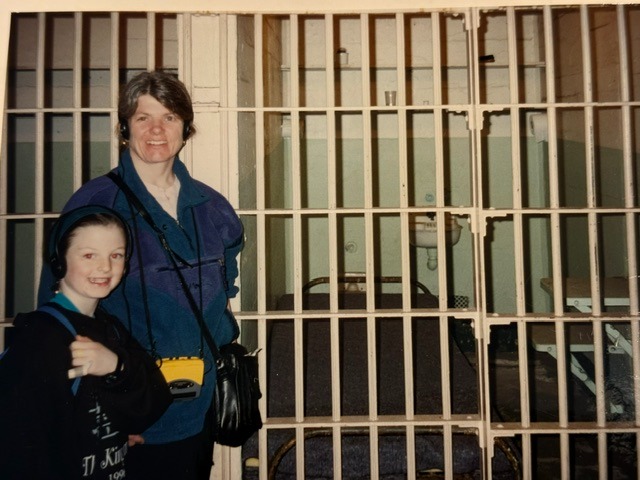
During our travels in San Francisco, we toured Alcatraz. Walking through the cellhouse brought us close to a place we had known mainly through its reputation. The long corridors, stacked rows of cells, and barred doors gave that history a physical setting. Inside each small cell, a bed, sink, and toilet defined the limits of a prisoner’s private space.
Alcatraz’s history began well before its years as a federal penitentiary. During the nineteenth century, the island served as a military fort protecting San Francisco Bay. Its original lighthouse began operating in 1854, becoming the first on the United States’ Pacific Coast. Military prisoners arrived in 1859, and the island’s isolation helped establish its continuing role as a place of confinement.
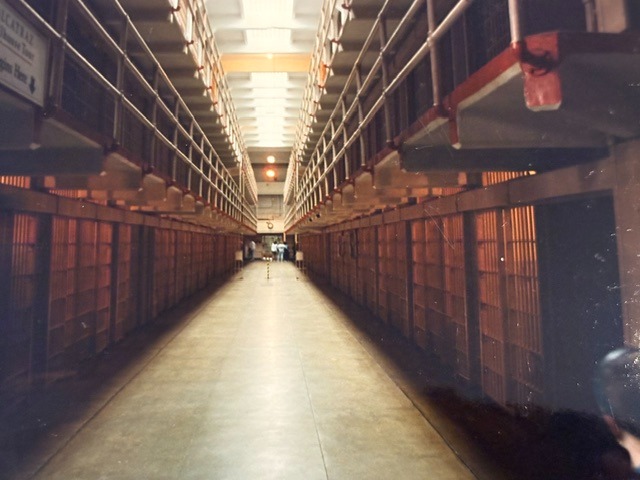
The main cellhouse was completed by the military in 1912. It later became the center of the federal penitentiary, which operated from 1934 to 1963. Among its prisoners were Al Capone and George “Machine Gun” Kelly, but the institution also held men whose escape attempts or disciplinary problems had made them difficult to manage elsewhere.
Life inside followed a tightly controlled routine. Prisoners occupied individual cells, while opportunities to work, use the library, pursue music or painting, and correspond with family were privileges they could earn. Touring the corridors offered a way to consider the daily experience behind the prison’s famous name: confinement, repetition, and limited contact with the outside world.
The surrounding bay was part of Alcatraz’s security. Cold water and powerful currents made escape exceptionally dangerous. Nevertheless, prisoners tried. In June 1962, Frank Morris and brothers John and Clarence Anglin escaped from their cells and disappeared from the island. Their ultimate fate remains unresolved, contributing to one of Alcatraz’s best-known stories.
The penitentiary closed on March 21, 1963, because of high operating costs and extensive repair needs. The isolation that had made the island useful as a prison also made it expensive to maintain and supply.
Another important chapter followed when Native American activists occupied the island from 1969 to 1971, drawing national attention to Indigenous rights and sovereignty. That occupation became part of the island’s historical significance alongside its military and prison years.
Our visit gave us an opportunity to look beyond Alcatraz’s notoriety. The cellhouse made the realities of imprisonment more tangible, while the island’s broader history revealed how one small place in San Francisco Bay had served very different purposes over time.