The Cloth Hall
Standing in the center of Kraków’s Main Market Square, the Cloth Hall, known in Polish as Sukiennice, has been part of the city’s commercial life for more than seven centuries. Its location reflects Kraków’s importance as a medieval trading center, positioned along routes connecting eastern and western Europe.
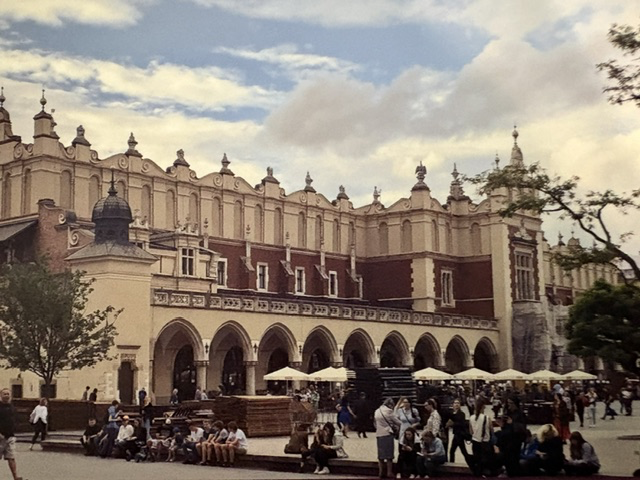
The first cloth hall was established during the thirteenth century as a place where traveling merchants could meet and conduct business. It was expanded into a Gothic trading hall during the fourteenth century and transformed again in the Renaissance style during the sixteenth century. The decorative roofline, ornamental stonework, and arcaded galleries reflect these centuries of rebuilding and adaptation.
Merchants once brought textiles, silk, leather, wax, spices, salt, and other valuable goods into the hall. Cloth was especially important, giving the building its name, while salt from the nearby Wieliczka mines helped create much of Kraków’s early wealth. The marketplace was therefore more than a collection of stalls; it connected Kraków with a much larger world of merchants, products, languages, and ideas.
By the nineteenth century, the aging building required extensive restoration. Work completed between 1877 and 1879 gave the Cloth Hall much of its present appearance, including its exterior arcades. The upper floor was repurposed for public gatherings and became the first home of the National Museum in Kraków. It now contains the Gallery of Nineteenth-Century Polish Art, preserving paintings and sculpture from a period when Poland’s culture helped sustain its national identity despite the country’s political partition.
Commerce continues on the ground floor, where small shops sell crafts, jewelry, souvenirs, and traditional Polish goods. Although the merchandise has changed, people still enter the same historic marketplace where generations of merchants once displayed their wares.
We did more than walk through the Cloth Hall and admire its architecture. We stopped here for lunch, surrounded by the activity of the Main Market Square. Sitting beside a marketplace that had welcomed merchants and travelers for centuries allowed us to become part of its continuing story. For a brief time, this historic landmark was not simply something we came to see; it became part of an ordinary family meal and one of our memories of Kraków.
Read More From Nancy
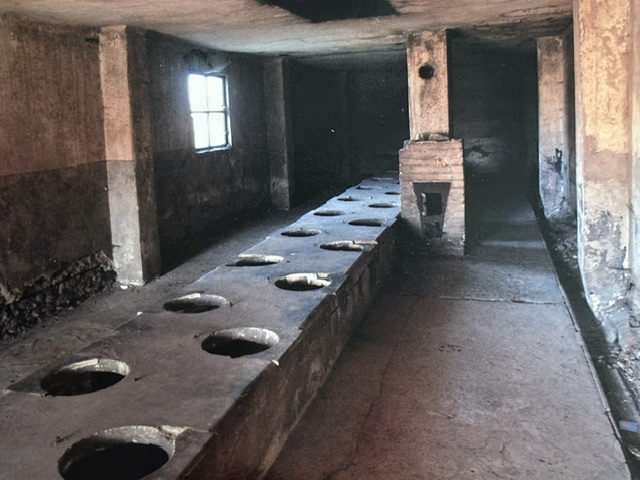
Women’s Camp at Auschwitz – Oswiecim, Poland
Marty and I had a private tour of Auschwitz-Birkenau Memorial and Museum so that we could take our time in each location, stop when we needed to and absorb the enormity of what happened there. There are few places we have ever visited that felt as haunting as this place. From the moment you walk through the […]
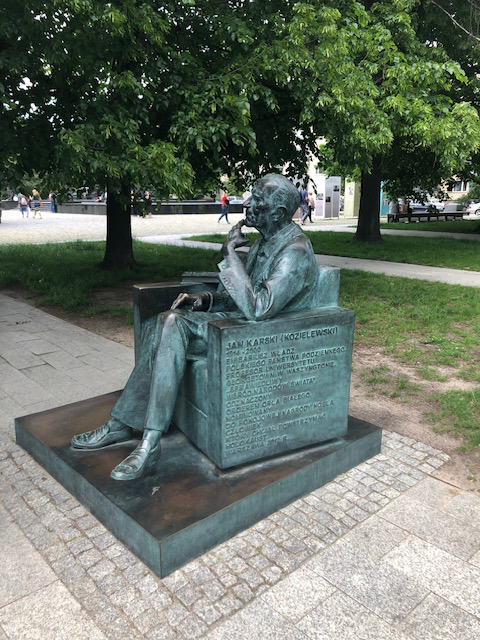
Jan Karski
While walking through Warsaw, I came upon a bronze monument that drew my attention. Unlike many statues where the figure stands high on a pedestal, this one shows a man quietly seated in a chair, holding a document in his hand. The plaque tells the story of Jan Karski, one of the most remarkable witnesses of […]
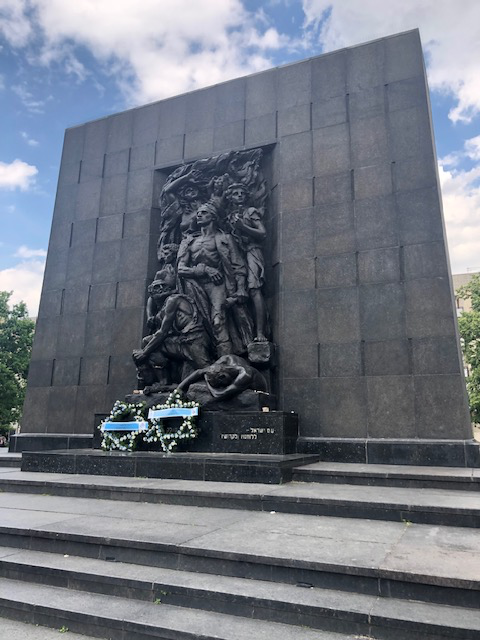
Monument to the Heroes of the Ghetto
The Monument to the Heroes of the Ghetto, confronts history. Standing in the heart of the Warsaw Jewish ghetto, this monument carries a weight that is impossible to ignore. Unveiled in 1948, the monument commemorates the Warsaw Ghetto Uprising, one of the most extraordinary acts of resistance during the Holocaust. In April of 1943, as the remaining […]

