Conrad Mansion
While traveling through Montana, we stopped in Kalispell to visit the Conrad Mansion. From the outside, it is an impressive reminder of the wealth that came to parts of the American West during the late 19th century. But walking through the house revealed something much more interesting in the details of how a prosperous family actually lived in a relatively new Montana community in the 1890s.
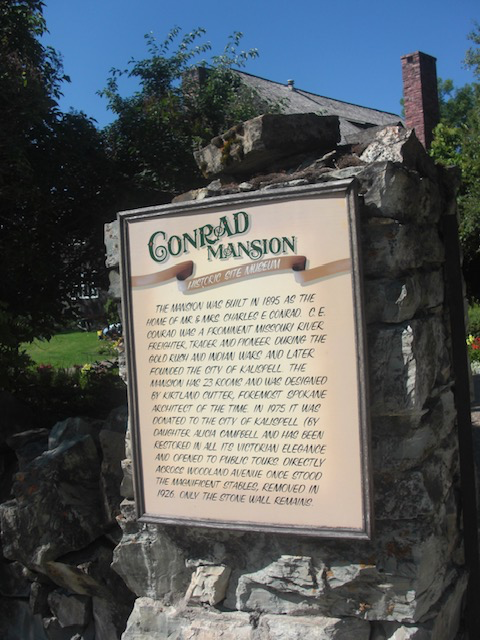
The mansion was completed in 1895 for Charles E. Conrad and his wife, Alicia “Lettie” Conrad. Charles had made his fortune as a freighter and trader along the Missouri River before becoming involved in banking, ranching and other businesses. He helped establish Kalispell in the early 1890s, and the mansion he and Lettie created became one of the most substantial homes in the young community.
Designed by prominent Spokane architect Kirtland Cutter, the house contained 26 rooms spread across three floors. The size alone is impressive, but it is the variety of spaces that makes the house particularly interesting. There was a Great Hall, formal dining room, library, music room, billiard room and butler’s pantry, along with the family’s bedrooms and children’s playroom. There was even a fernery, a room devoted to growing and displaying plants indoors.
The house also reveals how much work took place behind the scenes to support a wealthy household. Separate spaces included the kitchen, laundry, trunk room and other service areas. These rooms remind us that a mansion like this wasn’t maintained by the family alone. Its elegant public rooms depended upon servants working throughout the house.
One of the more unexpected spaces was a room specifically used for guns. The Conrads maintained an extensive firearms collection, and the room contained buffalo-horn rifle hooks where the family’s guns could be stored. Twenty firearms associated with Charles Conrad were eventually discovered in the collection of the Montana Historical Society after having been separated from the house for decades.
All these details make the mansion an interesting combination of Victorian refinement and life in the American West. A music room, fernery and formal dining room existed under the same roof as a dedicated gun room. The house wasn’t trying to recreate eastern Victorian life in isolation; it reflected the world the Conrads inhabited in Montana.
The family itself adds another dimension. Lettie Conrad was educated and musically inclined and played an important role not only in raising their children but also in managing the estate and participating in the developing community. Contemporary recollections describe Charles and Lettie as enthusiastic hosts who enjoyed filling their home with guests.
Perhaps the most remarkable thing about visiting the Conrad Mansion, however, is its authenticity. This isn’t simply an old house that was later filled with appropriate Victorian antiques. The family’s youngest daughter, Alicia, lived in the mansion for much of her life and worked to preserve both the house and its collection. In 1974, she donated the mansion and its contents to the City of Kalispell in memory of her parents.
Charles Conrad died in 1902, only a few years after the mansion was completed, but the house remained part of his family’s life for decades afterward. Lettie continued living there, as did their children at different times, allowing the mansion to accumulate layers of family history rather than becoming frozen at a single moment in 1895.
The Conrad Mansion gave us a chance to look beyond Montana’s spectacular landscape and into the lives of some of the people who helped build its communities. Because one daughter understood the importance of preserving her family’s home, more than a century later we can still walk through the rooms and discover the details of their lives. That is when a historic house becomes more than a beautiful building. It becomes a family story that somehow survived.

