Derby Academy — A Woman’s Vision for Education
The story of Derby Academy begins with Sarah Langley Hersey Derby, a woman who had received little formal education herself but became convinced that education should offer children more than was commonly available in eighteenth-century New England, particularly girls.
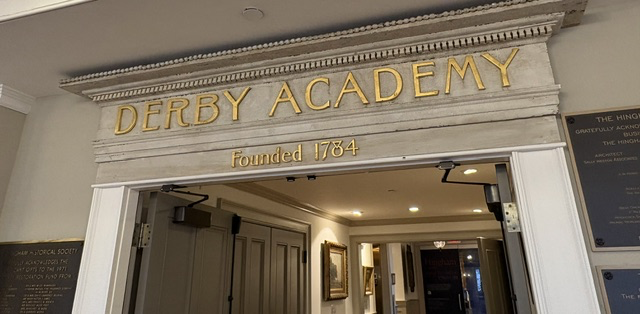
Born in Hingham in 1714, Sarah eventually became a woman of considerable means. Twice widowed and without children of her own, she decided to use her resources to create an educational institution for the children of her community. In 1772, at the age of 58, she deeded land on Main Street for a school. In 1784, the framework for what became the Derby School was formally established. Sarah died in 1790, just months before the school she had planned finally opened its doors on April 6, 1791.
What she created was remarkably progressive for its time. Derby was one of the earliest coeducational schools in America and is considered the oldest co-educational independent school in New England. Boys and girls initially attended separate classes and studied somewhat different subjects, but they were taught by the same teachers. This was an unusual arrangement in an era when educational opportunities for girls were far more limited. Sarah’s will also provided money for clothing and books for children whose families could not afford them, creating an early form of financial assistance.
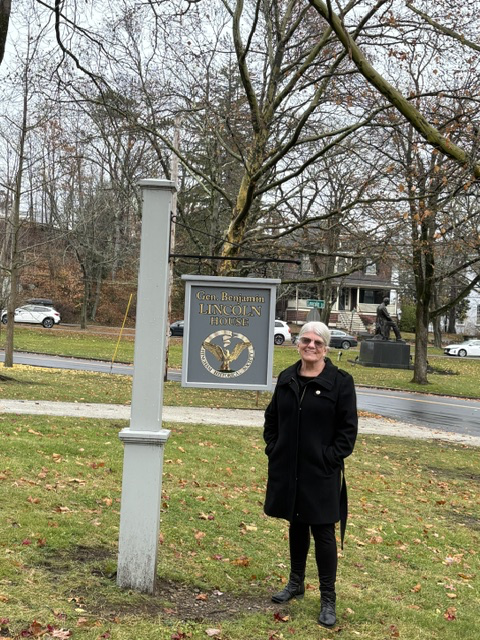
The people involved in establishing the school connect Derby directly with the founding generation of the United States. General Benjamin Lincoln, a Hingham resident who had accepted the British surrender at Yorktown in 1781, was one of its original trustees. Another trustee, John Thaxter Jr., had studied law with John Adams, tutored the young John Quincy Adams and later served as John Adams’s secretary in Europe during the negotiations that led to the Treaty of Paris. John Hancock, then governor of Massachusetts, signed Derby’s charter.
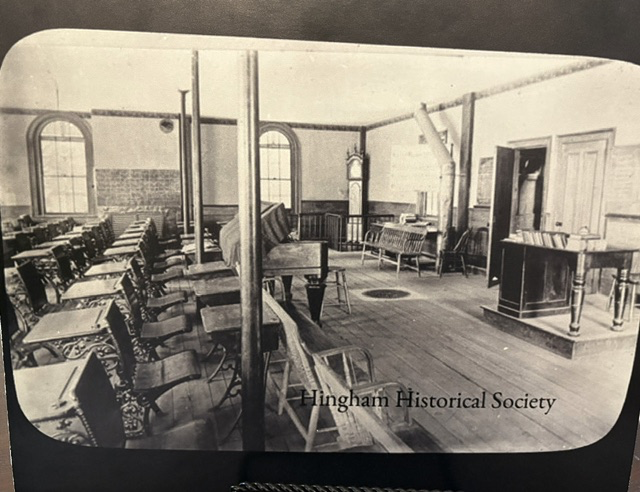
The school eventually occupied the building now known as Old Derby, constructed in 1818. Generations of Hingham children passed through its classrooms. Beginning in 1923, Derby gradually moved to a new campus overlooking Broad Cove. The younger grades remained at Old Derby until 1966, when the entire school was finally united on the present campus and the historic building was acquired by the Hingham Historical Society.
Perhaps the most remarkable part of the Derby story, however, is its continuity. The school has survived more than two centuries of enormous changes in American life while retaining an idea established by its earliest trustees. Its original seal depicted a head and a heart with the words “Improve Both”. That eventually became the school motto, “Improve Both Mind and Heart“.
Read More From Nancy
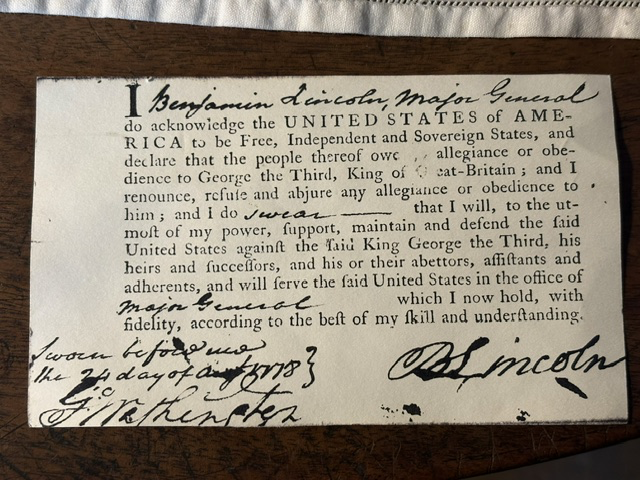
Benjamin Lincoln’s Oath of Allegiance
Inside the Benjamin Lincoln House in Hingham, we found this remarkable document bearing Lincoln’s signature. It is his oath of allegiance to the United States, sworn on May 2, 1778, while the Revolutionary War was still being fought. The printed portion begins: “I Benjamin Lincoln, Major General do acknowledge the UNITED STATES of AMERICA to […]
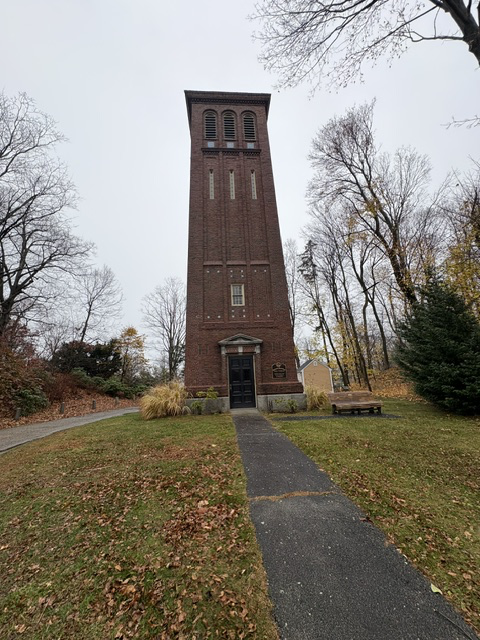
Bell Tower
The Hingham Memorial Bell Tower rises above the historic center of Hingham. Built in 1912, the tower was created to commemorate the 275th anniversary of the founding of Hingham and to honor the generations of townspeople who shaped the community over centuries. The tower houses a remarkable set of bells that were intended as living parts of the […]
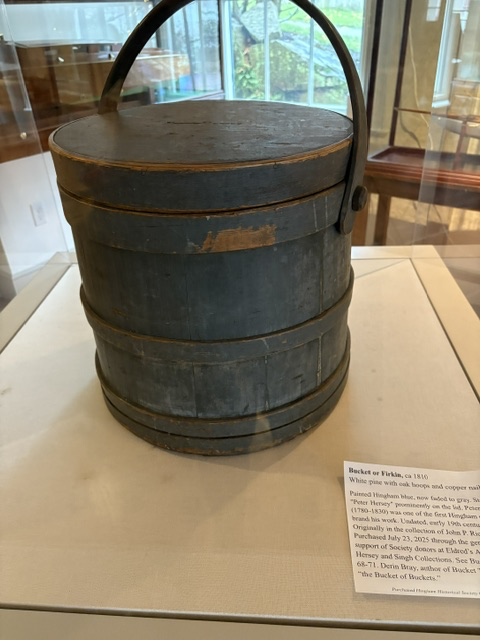
A Hingham Firkin
At first glance, this blue-painted wooden bucket seems like an ordinary household object. It was made to carry water, collect grain, or store food and was one of the countless tools that quietly supported daily life in early New England. Yet in Hingham, Massachusetts, a bucket was much more than a useful container. It represented […]

