A Gift of Faith
As I continue exploring the papers my parents left behind, I occasionally come across a document that tells a story far beyond the words printed on the page. This small membership card in the Confraternity of the Little Flower is one of those discoveries. The card enrolled my father, Roger E. Watson, for one year beginning on October 20, 1944, only two months after his honorable discharge from military service. At first, I assumed it was something he had joined himself. But as I looked more closely, I began to wonder if it was a gift.
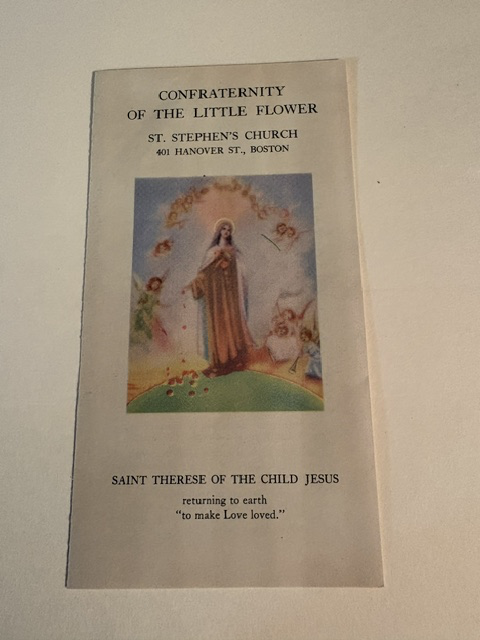
The card bears the signature of Maude M. Kirk, a name that appears in several of our family letters. I know she lived in Boston, and I cannot help but think she may have enrolled my father herself. For Catholics of that generation, this would have been a deeply meaningful gesture.
Much like having a Mass offered for someone or placing a loved one on a parish prayer list, enrolling a person in the Confraternity was a way of surrounding them with prayer and spiritual support during an important time in their life.
The Confraternity of the Little Flower was devoted to Saint Thérèse of Lisieux, affectionately known as the Little Flower. Founded in 1923 by the Carmelite Fathers, it quickly became one of the largest Catholic devotional societies in the United States. Members shared in the prayers and Masses offered by the Carmelites and sought to live according to St. Thérèse’s “Little Way” and the belief that a life of simple faith, humility, kindness, and trust in God could be every bit as holy as one marked by extraordinary accomplishments.
The brochure that accompanied my father’s membership points to St. Stephen’s Church in Boston’s North End, where Masses and devotions were regularly celebrated for members of the Confraternity. Knowing that this little booklet traveled with the membership card makes me believe it was intended to reassure its recipient that he was being remembered in prayer, even from hundreds of miles away.
I like to imagine Maude thinking of my father during those uncertain months after the war. He had returned home safely, but he was beginning life all over again. Like so many young veterans, he was trying to find his footing in a world that had changed. If she enrolled him in the Confraternity, perhaps this was her quiet way of saying, “I’m praying for you”.
Of course, I cannot know that for certain. But that possibility feels entirely consistent with the faith my parents lived and the way Catholics of their generation cared for one another. Prayer was not simply private; it was something that could be shared. Enrolling someone in a devotional society was an act of encouragement, hope, and love.
As I hold this small card more than eighty years later, I realize it is not really about membership at all. It is about someone who cared enough to place my father in the prayers of a community devoted to one of the Church’s most beloved saints. It is a quiet reminder that some of the greatest kindnesses are the ones that leave almost no trace, except for a small piece of paper carefully saved in a family drawer, waiting decades to tell its story.
Read More From Nancy
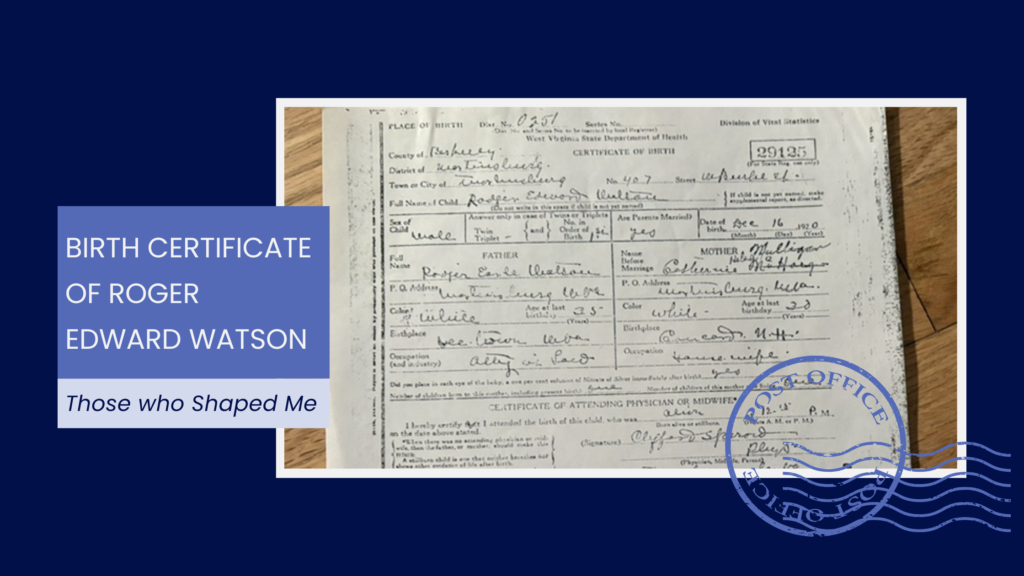
Birth Certificate of Roger Edward Watson
Every birth certificate marks the beginning of a life, but this one also tells the story of two families whose histories had already begun to intertwine. My father, Roger Edward Watson, was born on December 16, 1920, in Martinsburg, West Virginia. His father, Roger Edward Watson, was a West Virginian and an attorney. His mother, […]
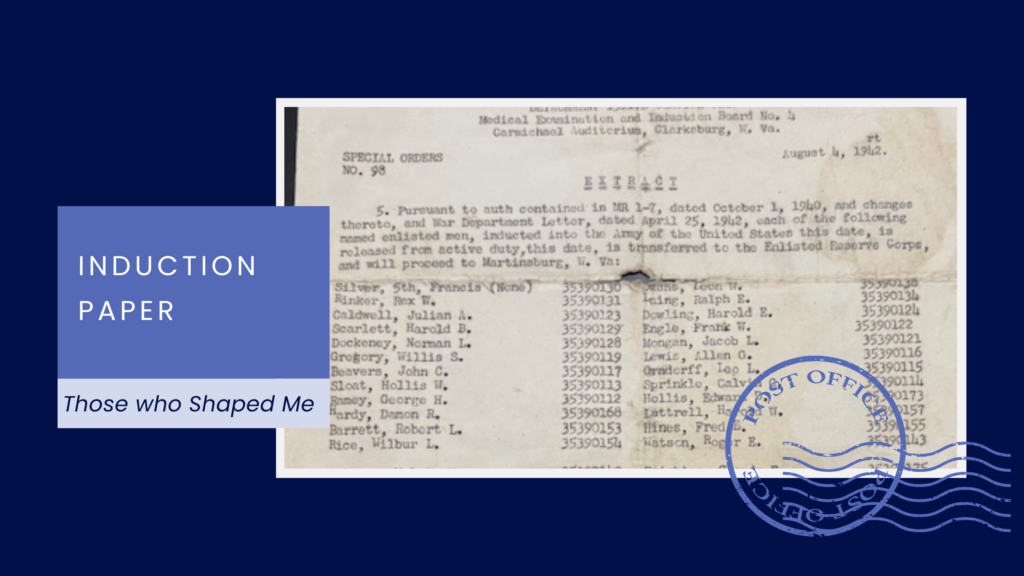
Induction Paper
What this document records is a clearly defined sequence in my father’s entry into military service during World War II, set within the structured and highly organized process of Army induction in 1942. On August 4, 1942, my father, Roger E. Watson, was among a group of men processed through the induction center in Clarksburg, West Virginia. […]
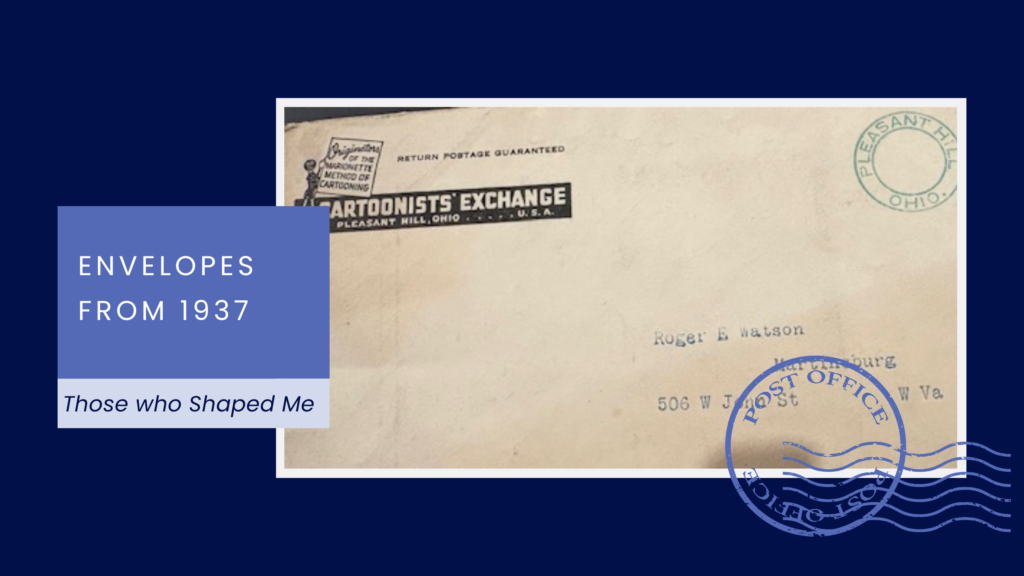
Envelopes from 1937
There is a different address that appears on several envelopes in the fall of 1937, all addressed to my father in Martinsburg, WV. He would have been just about seventeen at the time. I am puzzled by the address. These envelopes were not sent to his mother’s home. Instead, they carry a different street in […]

