António Alves de Oliveira
One of the things I enjoy most when traveling is stopping to learn about the people honored in a town’s public squares. Every community chooses its monuments carefully. Some commemorate kings or military heroes, while others recognize the local citizens whose vision changed everyday life. I often find those stories to be the most meaningful.
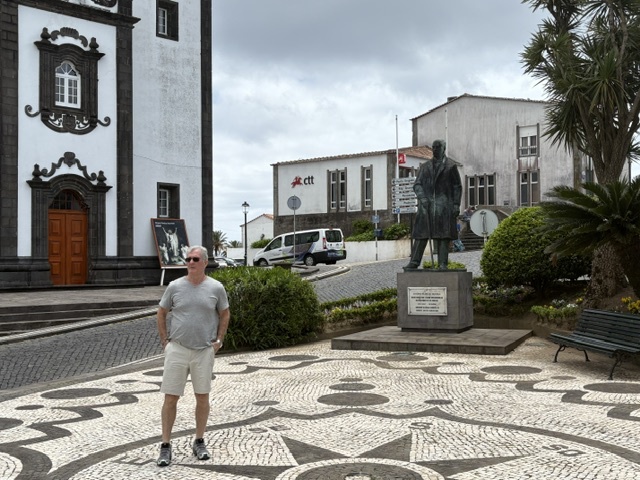
While exploring the beautiful town of Nordeste on the island of São Miguel in the Azores, Marty and I came upon this statue of António Alves de Oliveira. Until that moment, I had never heard his name. Reading the plaque, however, made it clear that the people of Nordeste considered him one of the most important figures in their history, describing him as a “distinguished benefactor and great promoter of the development of this municipality”.
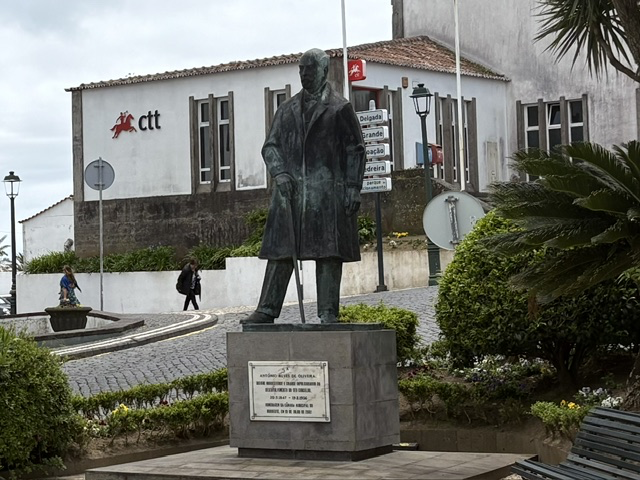
Born in 1847, António Alves de Oliveira devoted much of his life to improving one of the most remote regions of São Miguel. During the late nineteenth and early twentieth centuries, Nordeste was isolated by rugged mountains and steep valleys. Under his leadership and influence, roads were improved, bridges were constructed, the harbor was expanded, and public services such as schools, water systems, and communications were developed. He also helped bring the construction of the Farol da Ponta do Arnel, the first lighthouse in the Azores, giving ships a safer passage through these Atlantic waters.
Standing in the town square, I was reminded that communities are often shaped by people whose names never become widely known. They are not remembered for leading armies or discovering continents, but for seeing what their neighbors needed and working to make life better. The roads we travel, the bridges we cross, and the towns we enjoy often exist because of the quiet determination of individuals like António Alves de Oliveira.
That is one of the reasons I enjoy pausing at monuments like this. Every statue invites a question: Who was this person, and why did this community believe they should be remembered? Often, the answer tells us as much about the town as it does about the individual. In Nordeste, the people chose to honor a man whose legacy was not conquest or fame, but service, vision, and a lifelong commitment to the place he called home.

