Auschwitz II–Birkenau Memorial and Museum
There are places where history is preserved not to celebrate the past, but to ensure that it is never forgotten. Auschwitz II–Birkenau is one of those places.
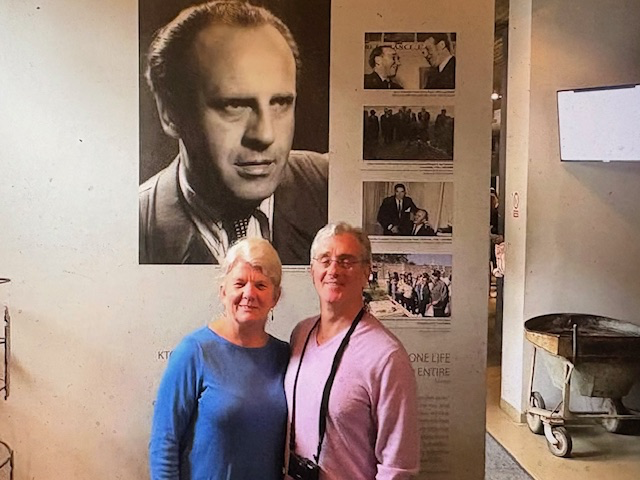
As Marty and I have traveled throughout Europe, we have intentionally chosen to visit these darker chapters of human history. Whenever we explore places connected to Jewish history, I almost always hire a private guide, not simply to show us the sites, but to help me understand the people, the events, and the impossible choices that shaped them. Books and museums can teach facts, but walking these places with someone who knows their history brings a depth of understanding that cannot be found anywhere else.
Located near the town of Oświęcim in southern Poland, Birkenau was constructed by Nazi Germany beginning in 1941 as an immense concentration and extermination camp. It became the largest of the Auschwitz complex and the primary site where more than one million people, most of them Jews, were murdered during the Holocaust.
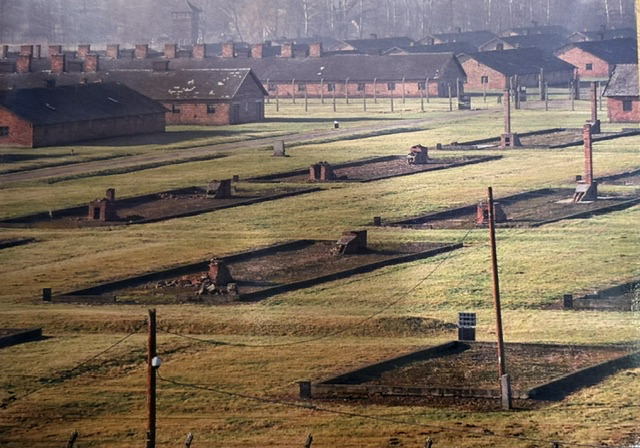
This photograph captures one of the most haunting views within Birkenau. Stretching into the distance are the remains of rows upon rows of wooden and brick prisoner barracks. Today, many of the wooden buildings are gone, leaving only the brick chimneys standing in long, silent lines across the landscape. Each chimney marks the place where hundreds of people once lived under unimaginable conditions. What remains is enough to help visitors begin to comprehend the staggering scale of the camp.
Birkenau was designed not only as a prison but as a vast, industrialized center of mass murder. Trains arrived daily, carrying men, women, and children from across occupied Europe. Families were separated within minutes of arrival. Many were sent directly to the gas chambers, while others were selected for forced labor under brutal conditions. For those imprisoned here, survival often depended upon circumstances beyond their control.
As the war ended in January 1945, the Nazis attempted to destroy evidence of their crimes, demolishing many of the crematoria and forcing prisoners on death marches. Yet enough of Birkenau remained for the world to witness the reality of what had taken place.
In 1947, the site was preserved as the Auschwitz-Birkenau State Museum, and in 1979 it was designated a UNESCO World Heritage Site. Today, visitors from around the world walk these same paths, not as tourists, but as witnesses to history. No matter how many times I visit places like Auschwitz-Birkenau, I find them impossible to fully comprehend. The scale of the suffering, the cruelty, and the loss defy understanding. Standing before this vast field of chimneys and foundations, I know I will never truly grasp what happened here or what it must have been like for those who endured it.
I will continue to walk these grounds, to listen, to ask questions, and to learn the impossible. Remembering is one of the ways we honor those whose lives were taken here. While I may never fully understand the depths of humanity’s capacity for evil, I believe we have a responsibility to bear witness. Each visit deepens my commitment to ensuring that these stories continue to be told, because forgetting is something we can never allow ourselves to do.