Race Street
Walking down Race Street in Jim Thorpe feels like stepping into an earlier version of the town. The narrow roadway, closely spaced stone and brick houses, and steep wooded hillside behind them preserve much of the character of nineteenth-century Mauch Chunk.
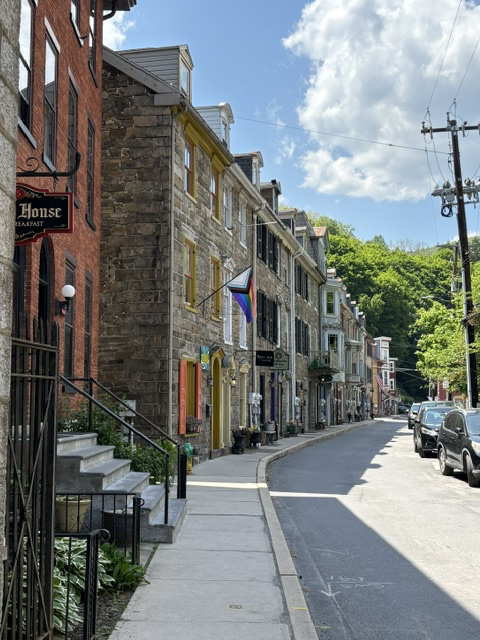
The street itself has roots in the town’s early industrial history. Its name comes from a mill race, a channel that carried water to provide power for early mills. Long before Mauch Chunk became known for its elaborate Victorian homes and tourism, waterpower was essential to the small industries developing in the valley.
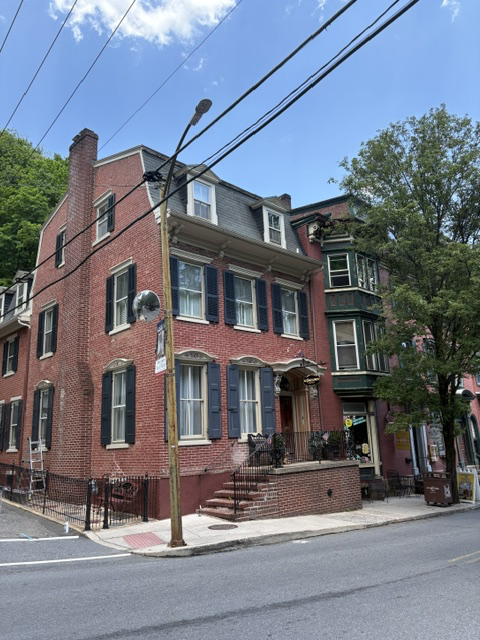
As Mauch Chunk prospered, Race Street became increasingly residential. In 1849, Asa Packer, who would become one of the region’s most important railroad and coal entrepreneurs, constructed a group of houses here. Building on such a narrow strip of land between the hillside and the street required some ingenuity. Several of the houses were arranged in an unusual way, with rooms and residences adapted vertically to the steep terrain rather than following the more conventional layouts found on level ground.
Race Street also became closely associated with Mauch Chunk’s growing immigrant population. By the middle of the nineteenth century, Irish immigrants made up an important part of the community. Many worked in the mines, on the canals and railroads, and in the industries that made the region prosper. Families lived in neighborhoods like this one, only a short distance from the businesses and transportation networks where they worked.
As I looked down the street, I was struck by how much of that nineteenth-century streetscape remains. The buildings hug the sidewalk, each slightly different from its neighbor, yet together they form an almost continuous wall of historic homes climbing through the narrow valley.
Today, Race Street is recognized as part of the historic landscape surrounding the Asa Packer Mansion. But even without knowing any of that history, there is something about this view that makes you want to stop and look. It is not a reconstruction or a recreated historic village. It is a living street that has evolved for nearly two centuries while still preserving a remarkable sense of old Mauch Chunk. This was one of those places where the history was not contained inside a particular building. It was right there in the street itself.
Read More From Nancy
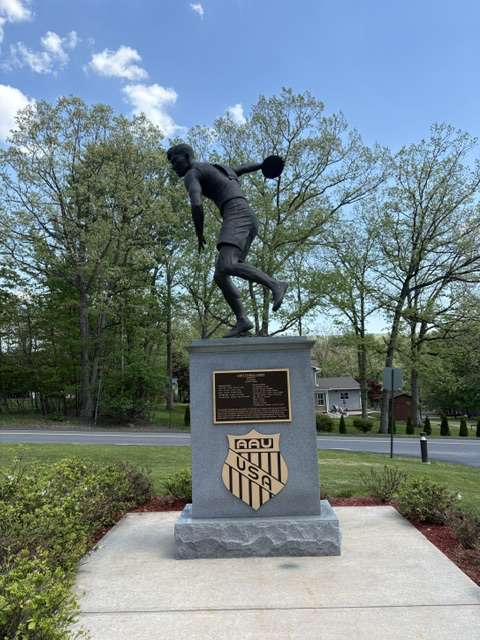
Two Sculptures of Jim Thorpe
At the Jim Thorpe Memorial, two larger-than-life bronze sculptures capture the extraordinary athletic range of the man for whom the town is named. One depicts Thorpe running with a football tucked beneath his arm; the other shows him in the act of throwing the discus. Together, they represent two very different sides of his remarkable […]
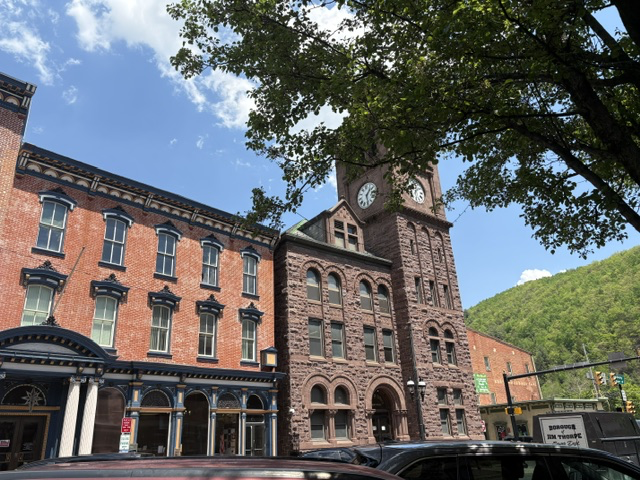
The Carbon County Courthouse
Standing prominently at the corner of Broadway in Jim Thorpe, the Carbon County Courthouse is one of the buildings that immediately draws your eye. Its massive stone walls and tall clock tower seem perfectly suited to the narrow valley and steep mountains surrounding the town. The courthouse we see today is the third to occupy […]
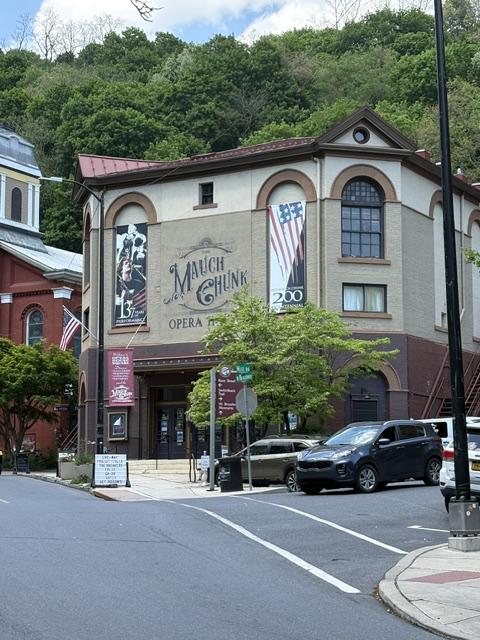
The Mauch Chunk Opera House
Walking through Jim Thorpe, the Mauch Chunk Opera House immediately caught my attention. Its name alone is a reminder that this town was once Mauch Chunk, a prosperous nineteenth-century community built around coal, railroads and industry. The Opera House was built in 1881, during the height of that prosperity. Designed by Philadelphia architect Addison Hutton, […]

