A Town Built into the Mountain
As we walked through Jim Thorpe, I found myself looking not only at individual historic buildings, but at how the entire town had been fitted into the landscape. This view captured that relationship particularly well.
What was once Mauch Chunk developed in an unusually confined setting. The Lehigh River runs through a narrow valley surrounded by steep mountains, leaving relatively little level ground for streets, businesses and homes. As the community expanded during the nineteenth century, builders had to adapt to the terrain rather than simply spread outward.
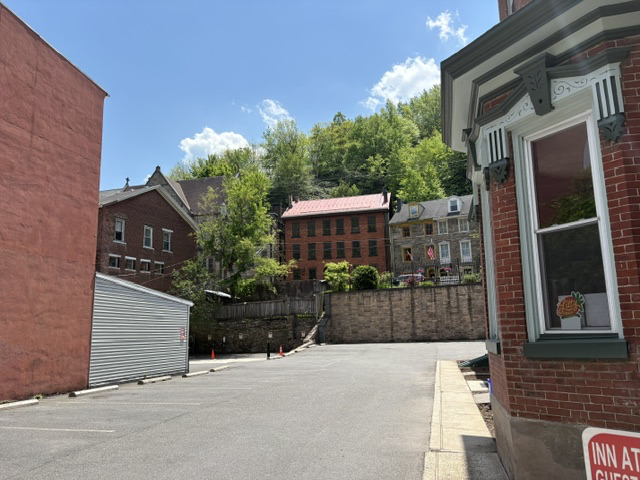
This photograph shows the result. From where I was standing, a substantial stone retaining wall creates another level of the town. A narrow staircase climbs to the buildings above, while still more wooded hillside rises behind them. Houses and commercial buildings seem almost stacked one above another.
These retaining walls, stairways and elevated buildings were not simply architectural choices. They were practical solutions to the geography of Mauch Chunk. Every usable piece of land mattered in a community that was growing rapidly because of anthracite coal, canals and railroads.
There is an interesting irony in that relationship. The mountains created the very conditions that made Mauch Chunk prosperous. Anthracite buried within them brought mining, transportation, industry and wealth to the region. Yet those same mountains restricted where the people drawn here by that prosperity could build. The result was a town that grew vertically as much as horizontally. Streets followed the contours of the valley, houses climbed the hillsides, and stone walls held back the earth to create small terraces of usable land.
Today those practical nineteenth-century solutions have become part of Jim Thorpe’s distinctive character. The stairways, stone walls, narrow passages and buildings perched above one another give the town an appearance unlike communities built on broad, level ground. This photograph may not capture one famous landmark, but that is precisely why I like it. It captures something larger. It shows how the landscape itself helped create Mauch Chunk.
Read More From Nancy
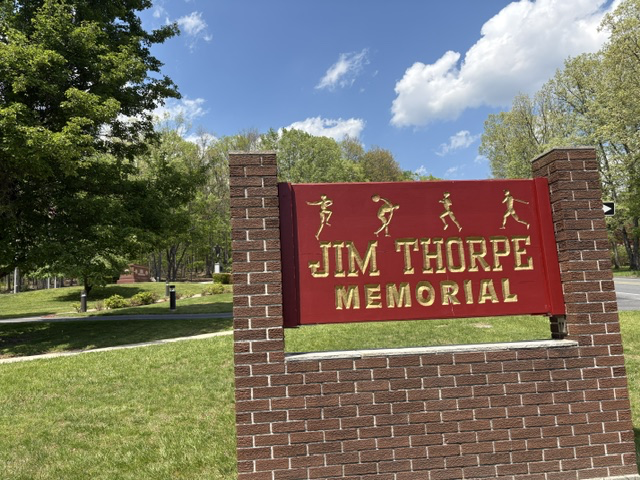
The Jim Thorpe Memorial
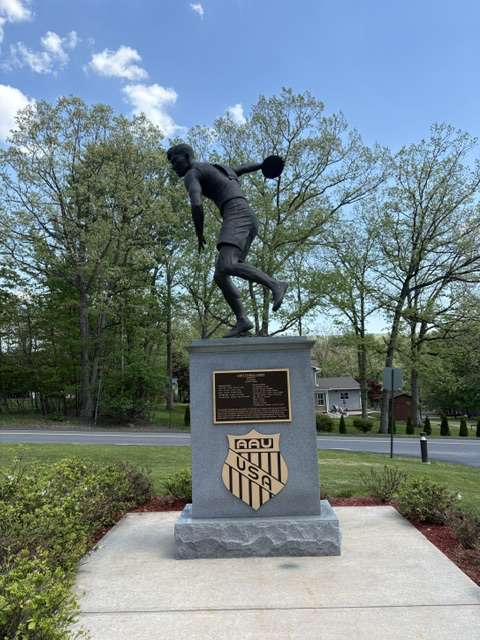
After exploring the town that carries his name, we came to the Jim Thorpe Memorial. The simple red and gold entrance sign leads into a quiet wooded park, but what lies beyond it tells the story of one of the most remarkable athletes in American history. Throughout the grounds, Jim Thorpe’s life unfolds, from his […]
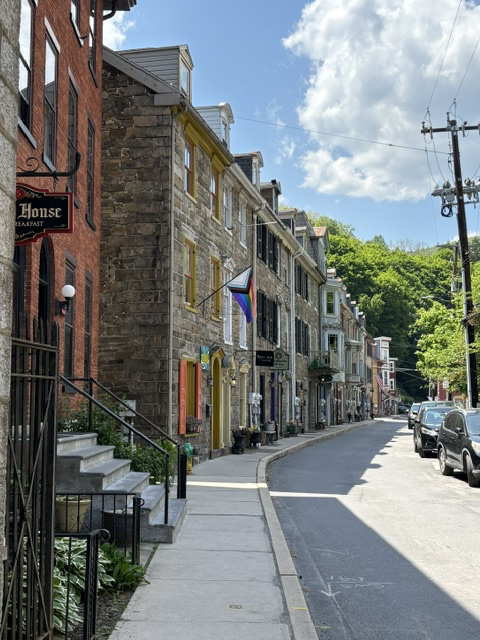
Race Street
Walking down Race Street in Jim Thorpe feels like stepping into an earlier version of the town. The narrow roadway, closely spaced stone and brick houses, and steep wooded hillside behind them preserve much of the character of nineteenth-century Mauch Chunk. The street itself has roots in the town’s early industrial history. Its name comes […]
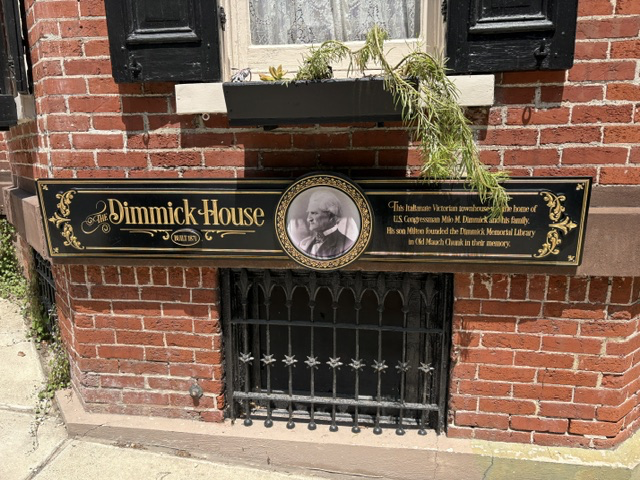
The Dimmick House
Along Broadway stands another reminder of the people who shaped Mauch Chunk during its prosperous nineteenth-century years. The Dimmick House, built in 1871, was the home of former U.S. Congressman Milo M. Dimmick and his family. This handsome Italianate Victorian townhouse is part of the impressive collection of residences along Broadway often referred to as […]

