Guy Lombardo
July 1944Dearest Reader,
By 1944, Guy Lombardo and His Royal Canadians, were more than a popular band, he was institutional. He was the soundtrack for weddings. honeymoons and dances. Even people who didn’t follow big-band music knew who Guy Lombardo was.
In a world unsettled by war, Lombardo’s music offered something romantic and familiar. He was widely known for what fans called “the sweetest music this side of Heaven, ” a phrase that appears in advertisements and reviews from the era. It is exactly the language my mother wrote in her letter to my father on July 19, 1944:
“Let me correct you on the fact that Guy Lombardo is our second favorite band. He’s my first favorite, has been since the night of May 5. I’ll always associate him with that glorious evening we had together all by ourselves, down where no one knew us, and dancing to the ‘sweetest music this side of Heaven’ with the sweetest guy in the world, my husband.”
During World War II, the structure of big-band touring changed. Travel restrictions, fuel rationing, and the draft meant that many orchestras reduced long, cross-country tours. Bands like Lombardo relied on extended residences in major cities, especially New York. Lombardo was associated with the Roosevelt Grill at the Hotel Roosevelt, where he and his orchestra performed regularly and broadcast nationally by radio.
During my parents’ honeymoon, on May 5, 1944, my parents spent an evening at the Roosevelt Hotel in New York where Guy Lombardo was performing. It was there, together, in a place where no one knew them, that my mother fixed Guy Lombardo in her memory. His “sweetest music this side of Heaven, became inseparable from that night and from the young man beside her, her husband.
Dr. Nancy Watson
Washington
Read More From Nancy
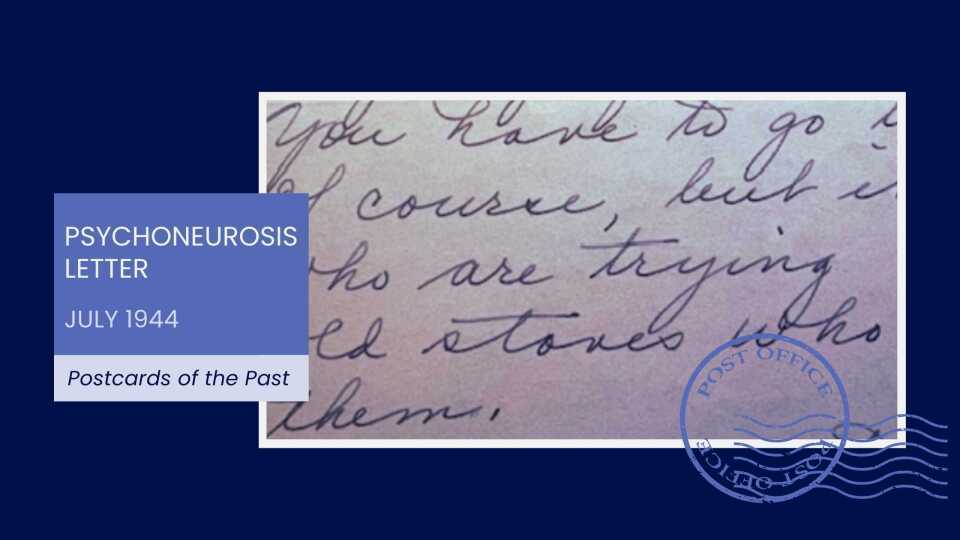
Psychoneurosis Letter
Reading my grandmother’s words, it is clear how complicated and emotionally charged the term psychoneurosis was in 1944, She writes: “You will note that Dr. Link, a noted psychologist, does not believe in the use of that term, that to call a man a ‘psychoneurotic’ is to go a long way towards making him one. […]
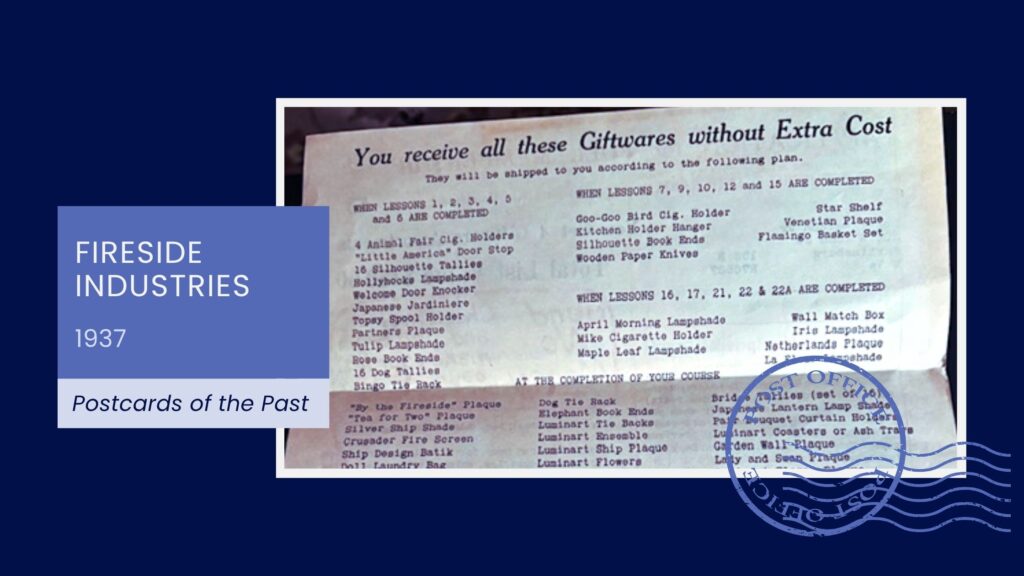
Fireside Industries
Another company that reached out to my father was Fireside Industries of Adrian, Michigan. They offered him a free rug hooking course, an invitation to learn a craft that could be done at home and perhaps turn into a source of income. But the offer did not stand alone. With membership, he would also receive […]
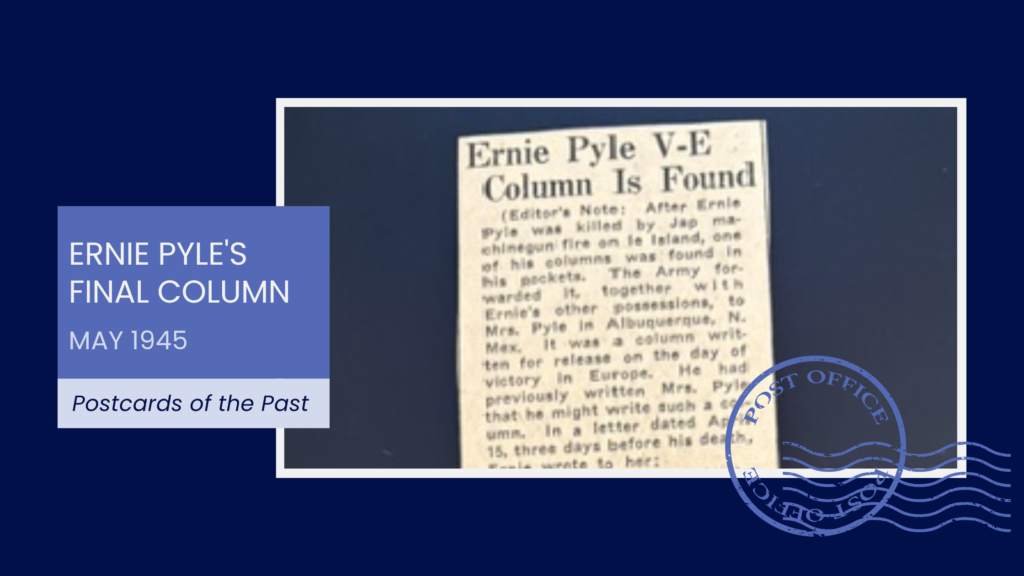
Ernie Pyle’s Final Column
Among my parents’ papers was this newspaper clipping titled “Ernie Pyle V-E Column Is Found,“ with the handwritten date of May 11, 1945. I do not know why they chose to save it, but its preservation suggests that it held some significance for them during the closing days of World War II. The article reports the publication […]

