Dr. Woods – Ophthalmologist
July 1944Dearest Reader,
“I would like to get you under Dr Woods who, I understand, is the head of the Wilmer Institute”
Dr Alan Woods was one of the most respected ophthalmologists of the mid-20th century and a leading figure in American eye medicine. A graduate of Johns Hopkins, Woods trained under the pioneering ophthalmologist William Wilmer and went on to become his successor. In 1934, Woods was appointed Director of the Wilmer Ophthalmological Institute, the nation’s first university-based eye hospital devoted entirely to research and training in ophthalmology. By 1937, he was placed at the forefront of clinical and academic innovation in eye disease. Under his leadership, Wilmer became the premier center for diagnosing and treating complex ocular disorders.
Dr Woods specialized in the most challenging eye conditions. His research contributed to advancements in corneal disease, optic nerve disorders and visual impairment. He was the physician to see when an eye condition needed authoritative assessment. In 1944, my grandmother wanted my father to be assessed by Dr Wood, so that his condition could be seen, heard and diagnosed by one of the foremost ophthalmologists of the era.
Dr. Nancy Watson
Washington
Read More From Nancy
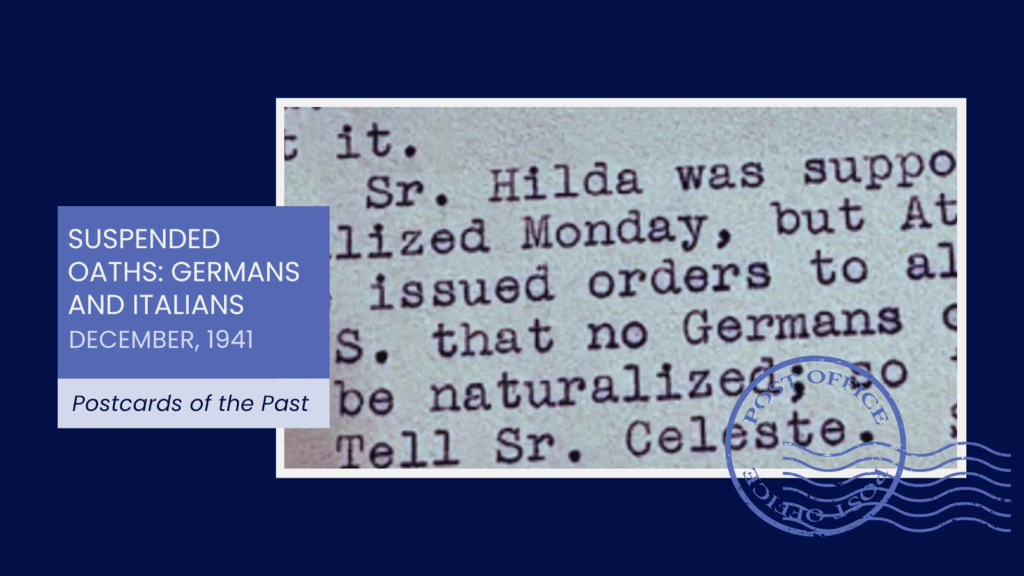
Suspended Oaths: Germans and Italians
In a letter dated December 13, 1941, just six days after the attack on Pearl Harbor, my grandmother recorded how quickly the war reached into ordinary lives. My father was living in Saginaw, Michigan at the time, having just turned twenty-one, and the country was still reeling from the shock of December 7. The United […]

Harold T. Smith
The headlines is direct: “Harold T. Smith, 25, with Coast Guard, Dies of Injuries“ The article tells his story in the same way as the other clippings: name, address, family, education and service. He was from Queen Street in Martinsburg, the only son of his parents, a graduate of Martinsburg High School, trained in aeronautics, and in the Coast […]
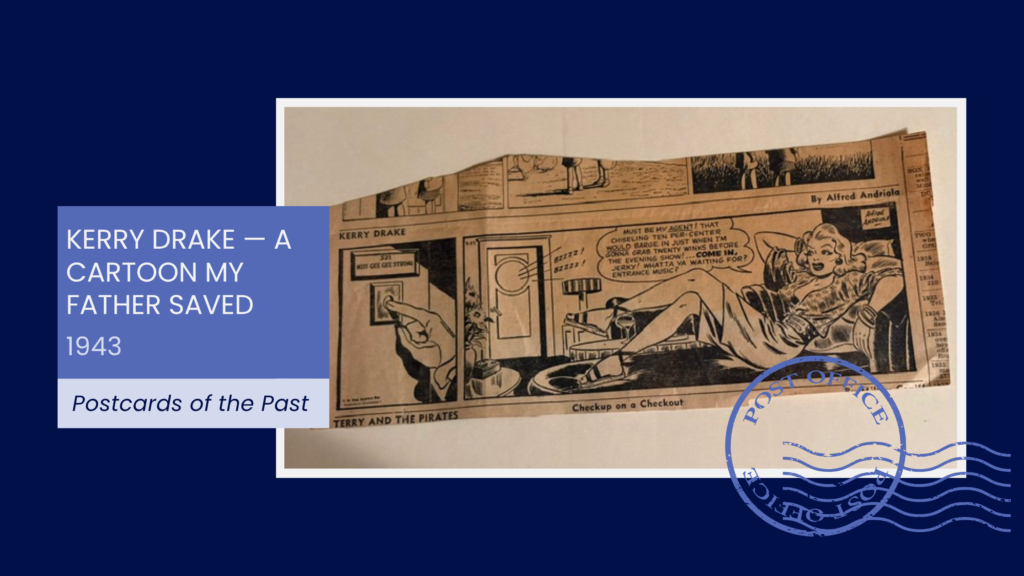
Kerry Drake — A Cartoon My Father Saved
Among my father’s papers is this small newspaper clipping from the comic strip Kerry Drake. There is no date, no newspaper name and nothing written on it to explain why he chose to cut it out and keep it. All that remains is this fragment of a story. Kerry Drake was a popular American detective […]

