Benjamin Lincoln’s Oath of Allegiance
Inside the Benjamin Lincoln House in Hingham, we found this remarkable document bearing Lincoln’s signature. It is his oath of allegiance to the United States, sworn on May 2, 1778, while the Revolutionary War was still being fought.
The printed portion begins:
“I Benjamin Lincoln, Major General do acknowledge the UNITED STATES of AMERICA to be Free, Independent and Sovereign States…”
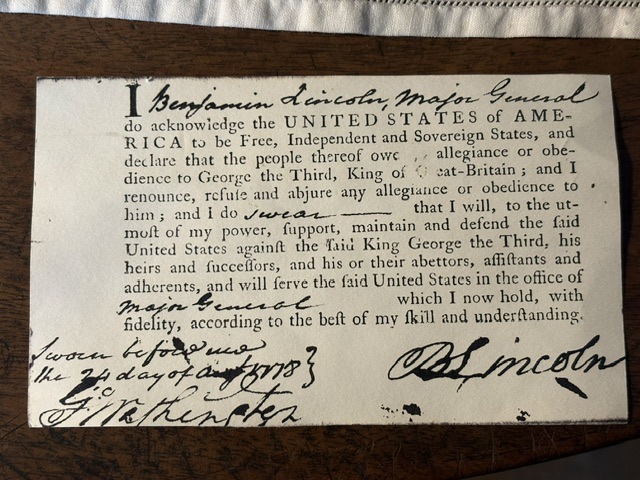
Lincoln then renounced allegiance to George III and Great Britain and swore that he would “support, maintain and defend” the United States against the king and his supporters. At the bottom is his distinctive signature, along with the handwritten certification that he had sworn the oath.
The date is important. Independence had been declared in 1776, but in 1778 the outcome of the Revolution was far from certain. The Continental Army was still fighting for the survival of the new nation. For Lincoln, this was not simply a symbolic declaration of political loyalty. He was already a major general in the Continental Army, and his life and military career were committed to the cause he was promising to defend.
Benjamin Lincoln had been born in this Hingham house in 1733. He came from a prominent local family and initially followed a life of farming and public service. With the Revolution, however, he emerged as one of Massachusetts’s important military leaders and eventually became one of George Washington’s senior generals.
Only a few months before signing this oath, Lincoln had been seriously wounded during the Saratoga campaign. A musket ball shattered his right ankle at the Battle of Bemis Heights in October 1777. His injury was severe enough to keep him away from active command for months. Yet by 1778 he remained committed to Continental service.
His military story would soon take another dramatic turn. Lincoln was given command of the Southern Department of the Continental Army and was forced to surrender Charleston to the British in May 1780—one of the largest American defeats of the Revolution.
But Lincoln’s story did not end with that surrender. At Yorktown in October 1781, when the British army under Lord Cornwallis surrendered to Washington, Cornwallis claimed illness and sent General Charles O’Hara to surrender in his place. Washington directed O’Hara to Benjamin Lincoln. It was Lincoln who accepted the formal British surrender – the same American general who had endured the humiliation of surrendering Charleston the previous year.
When Benjamin Lincoln placed his signature on it in May 1778, Yorktown was still more than three years away. No one knew that the Americans would ultimately win the war or that the United States would survive. Lincoln was pledging himself to a nation whose future remained uncertain.
Finding this document inside the house where he was born brought that history down to a very personal level. We often encounter the Revolution through battles, monuments and famous names. Here we were looking at Benjamin Lincoln’s own signature beneath the words in which he personally renounced George III and pledged his loyalty to the new United States.
It is a small document, but it captures an enormous moment—the point at which allegiance to the British Crown was replaced by allegiance to a nation that was still being created.
Read More From Nancy
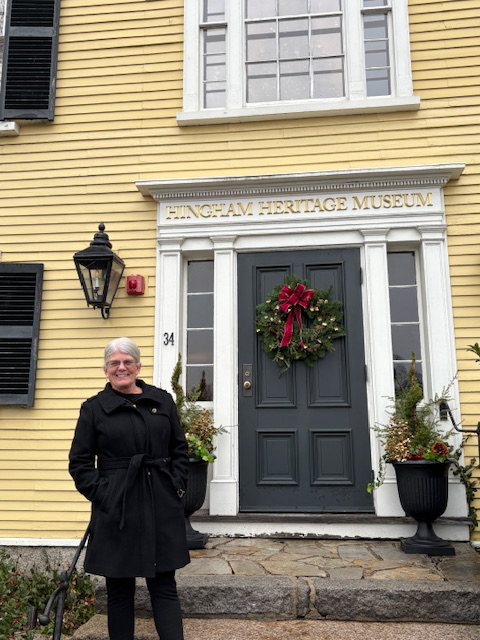
Hingham Historical Society
While visiting Hingham for the day, we stopped by the Hingham Historical Society to learn more about what this town is most proud of. Hingham is one of the oldest towns in Massachusetts, founded in 1635, and its museum captures much of the town’s story, from its colonial roots to its maritime heritage and civic […]
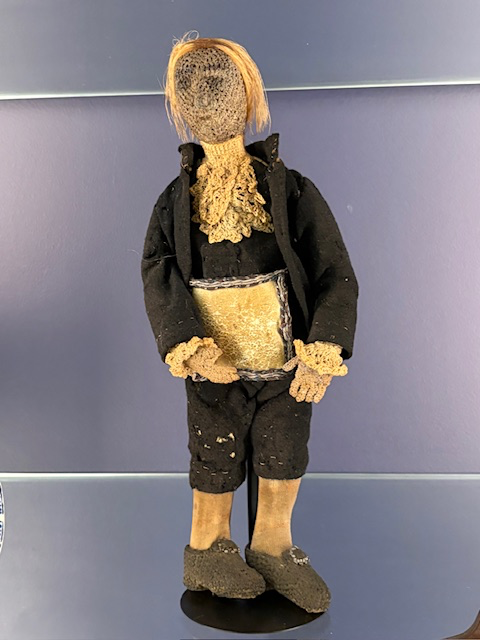
Washington Doll
In the years immediately following the American Revolution, George Washington became a living symbol of a new nation. Across the young republic, admiration for him inspired countless small acts of devotion. This rare type of commemorative doll is an example of this admiration. It was crafted from wool in 1790. These were not toys but expressions of patriotism, Washington’s image […]
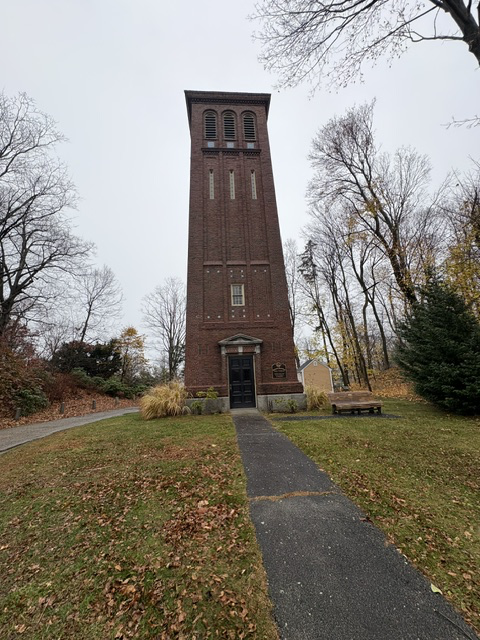
Bell Tower
The Hingham Memorial Bell Tower rises above the historic center of Hingham. Built in 1912, the tower was created to commemorate the 275th anniversary of the founding of Hingham and to honor the generations of townspeople who shaped the community over centuries. The tower houses a remarkable set of bells that were intended as living parts of the […]

