A Hingham Firkin
At first glance, this blue-painted wooden bucket seems like an ordinary household object. It was made to carry water, collect grain, or store food and was one of the countless tools that quietly supported daily life in early New England. Yet in Hingham, Massachusetts, a bucket was much more than a useful container. It represented the livelihood of an entire community and the craftsmanship that made this small coastal town known throughout New England.
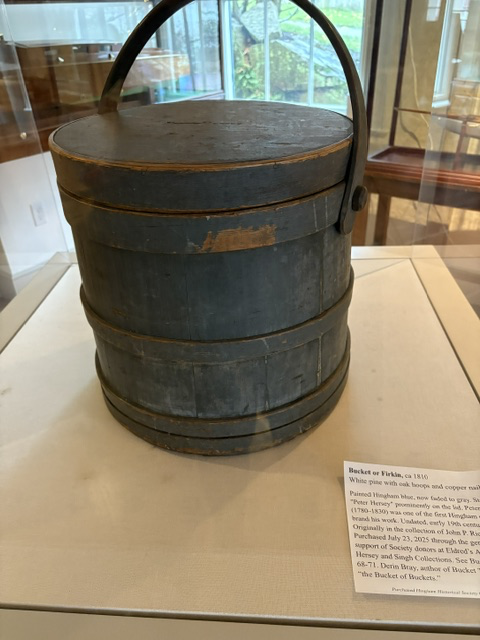
For much of the eighteenth and nineteenth centuries, Hingham was America’s center for the production of wooden household ware. So many buckets, tubs, pails, churns, firkins, and pantry boxes were made here that neighboring towns gave Hingham the nickname “Bucket Town.” What may have begun as a playful jab eventually became a badge of honor. Hingham craftsmen had perfected the art of transforming local timber into practical objects that were used in homes, farms, and businesses across the region.
This bucket, dating to around 1810, comes from the height of that industry. Every part of it reflects the skill of its maker. Thin wooden staves were carefully shaped, so they fit tightly together without gaps. Wooden hoops held the vessel securely in place, while the sturdy bentwood handle made it easy to carry. Even the rich blue paint had a purpose. It protected the wood from moisture and wear while giving the bucket a distinctive appearance that became associated with Hingham’s products.
Unlike barrels made by coopers for shipping goods, Hingham buckets were designed for everyday life. They carried water from wells, transported milk from barns, held apples during harvest, stored grain in pantries, and accompanied families through countless daily chores. They were the kind of object that rarely appeared in paintings or family portraits because they were so commonplace. Yet without them, the routines of nineteenth-century life would have been far more difficult.
The town’s location also played an important role in its success. Situated along Boston Harbor, Hingham could easily ship its woodenware by coastal vessels to markets throughout New England and to ports farther south and in the Caribbean. What began as a local craft evolved into a thriving commercial enterprise, bringing prosperity to a community whose name became synonymous with quality wooden products.
Looking at this bucket, it is easy to overlook the remarkable skill required to make something so seemingly simple. Every stave had to be cut with precision. Every joint had to fit tightly enough to hold water without leaking. The graceful curve of the handle required experience, patience, and an intimate understanding of wood. Long before assembly lines and mass production, each bucket represented hours of careful handwork by a craftsman whose reputation depended upon its quality.
One of the things I enjoy most about visiting museums is discovering how an ordinary object can reveal an extraordinary story. This firkin is not remarkable because it is ornate or exceptionally rare. It is remarkable because it represents a time when the prosperity and identity of an established New England town came to be defined by the skill of its craftsmen. Hingham had already flourished for nearly two centuries before woodenware became its signature industry, but it was the thousands of buckets, firkins, tubs, and pantry boxes produced here that earned the town a reputation far beyond its harbor.
Read More From Nancy
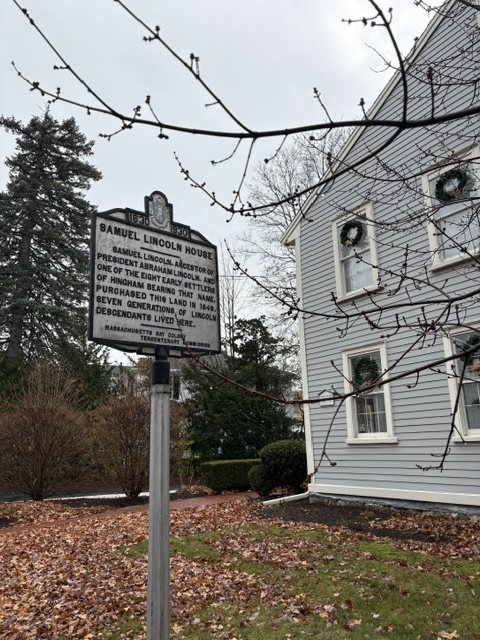
The Samuel Lincoln House
This house on North Street in Hingham marks the beginning of President Abraham Lincoln’s family story in America. The historical marker beside it identifies the property purchased in 1649 by Samuel Lincoln, the president’s fourth great-grandfather. Samuel Lincoln was born in England in 1622 and came to Massachusetts while still a teenager. Known as “Samuel […]
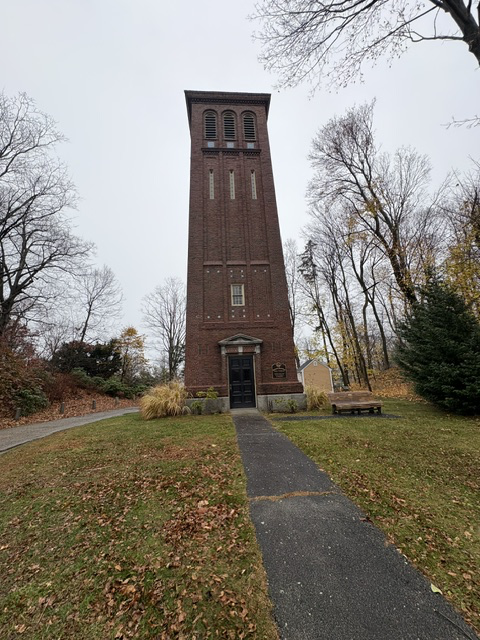
Bell Tower
The Hingham Memorial Bell Tower rises above the historic center of Hingham. Built in 1912, the tower was created to commemorate the 275th anniversary of the founding of Hingham and to honor the generations of townspeople who shaped the community over centuries. The tower houses a remarkable set of bells that were intended as living parts of the […]
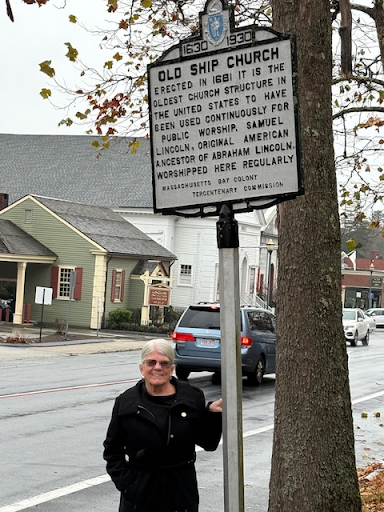
Old Ship Church
Walking through Hingham, Massachusetts, one of the oldest towns in the Commonwealth, first settled in 1633 and incorporated in 1635, it doesn’t take long to sense how deeply the past is woven into the town’s streets. No place captures that feeling more than the Old Ship Church, a building that has anchored this community for […]

