The Red Stone School
When Henry Ford purchased the Wayside Inn in 1923, he saw more than an old colonial tavern, he saw the beginnings of a “living village”. He wanted a place where the essential virtues of early American life could be preserved. He wanted a community in which each building represented a foundation value. This schoolhouse would be the place where discipline and character would take root.
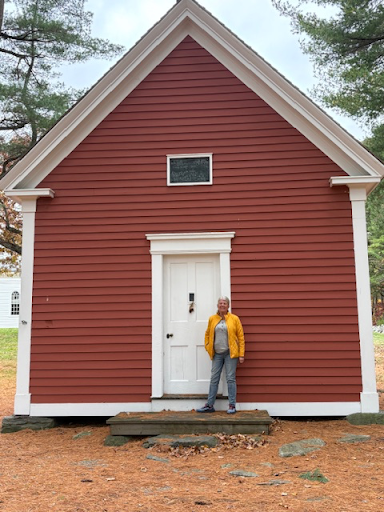
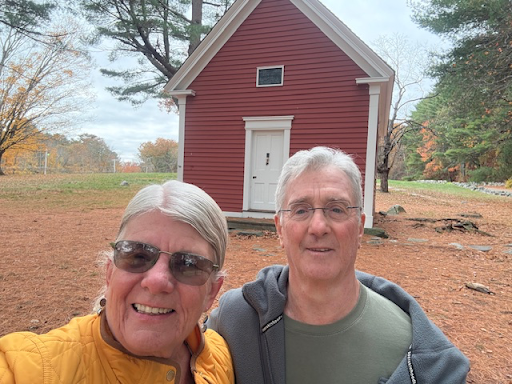
The Red Stone School, completed in 1927, was created as a tribute to the woman who had shaped Ford more than anyone else: his mother: Mary Litogot Ford. As a young woman in 1871, she had taught at the original Redstone Schoolhouse in Sterling, MA, before marrying Willian Ford and moving to Michigan. Ford believed those early teaching years revealed the essence of her character. He often said that his mother had taught him not only in the classroom but at the hearth. To honor her, he arranged for stones from the original Sterling schoolhouse to be brought to Sudbury and set in the new building’s foundation.
The schoolhouse functioned as a working one-room school for children in Sudbury. When it opened in 1927, local boys and girls gathered each day under the instruction of a single teacher. Each student received a hot lunch cooked in the Wayside Inn kitchen, an innovation that was unheard of in rural schools at this time.
Ford believed that real education came from doing and grew critical of overly academic abstract schooling. He created the Wayside Inn School of Practical Arts, a working trade school that operated from 1919 to 1947. This program was built on Ford’s belief that young people developed character through craftsmanship and learned best by producing something of value.
Ford hoped that by creating this living village, he could preserve the virtues he believed were slipping away. Today, the Red Stone School remains a quiet symbol of his vision.
Read More From Nancy
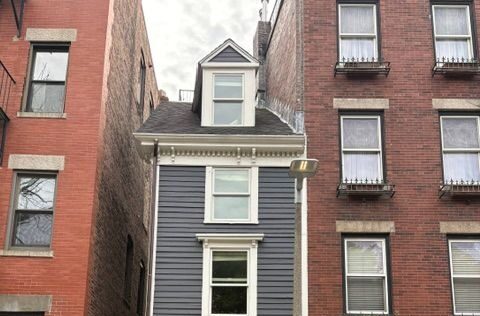
The Skinny House
Across from Copp’s Hill Burying Ground, a remarkably narrow wooden house stands among the larger brick buildings of Boston’s North End. At 44 Hull Street, the Skinny House rises four stories while measuring only about ten feet across its street-facing exterior. Its entrance is tucked into the alley beside it, allowing the slender front to […]
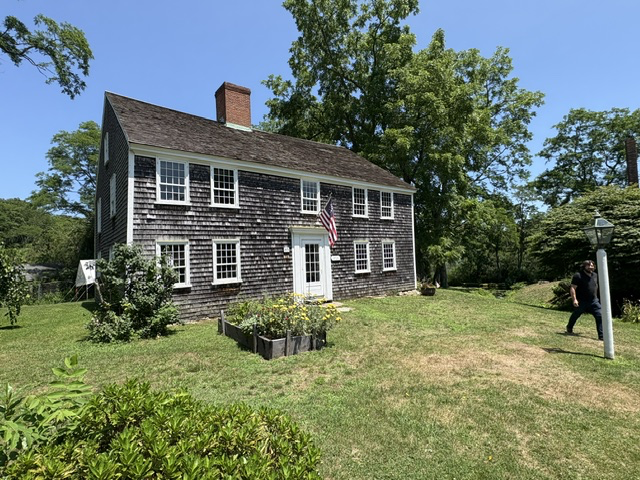
The Benjamin Nye Homestead
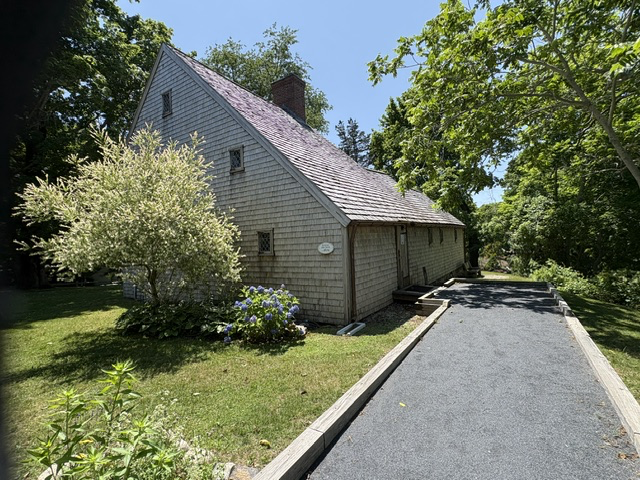
While exploring East Sandwich, I stopped at the Benjamin Nye Homestead. From the outside it looks like the kind of weathered, shingled house that seems completely at home on Cape Cod. What I didn’t initially appreciate was just how old it is. The earliest portion of this house was built in 1678, making it one […]
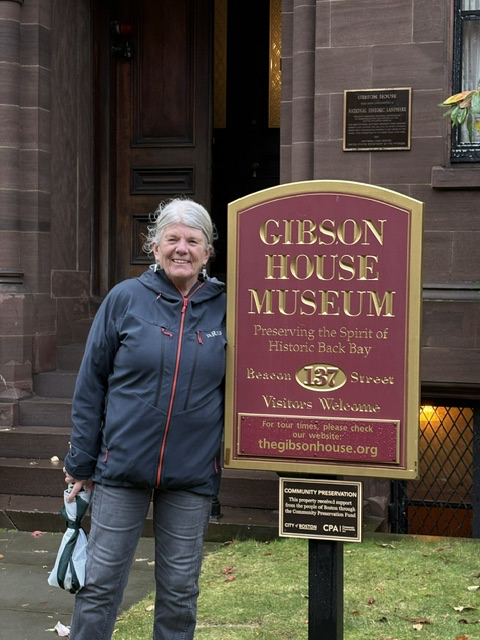
The Gibson House
On a rainy day, with gale-force winds sweeping through Boston, Marty and I made our way into the Back Bay to visit the Gibson House Museum. The weather seemed appropriate for stepping back in time. As we stood on Beacon Street, surrounded by modern Boston, it was hard to imagine that behind this brownstone door […]

