Colliers Beach
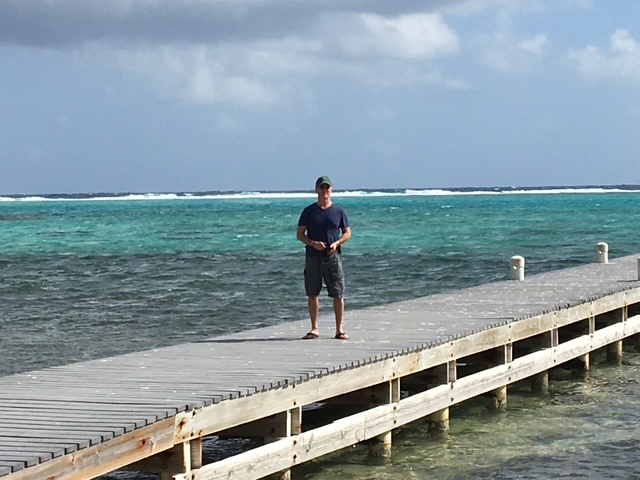
Standing on the pier at Colliers Public Beach is Marty during our visits to Grand Cayman. Like many travelers, we could have spent our entire vacation enjoying the famous Seven Mile Beach. Instead, we decided to drive across the island to the quieter East End, wanting to discover another side of Grand Cayman beyond the resorts and cruise ship crowds.
The drive itself is part of the experience. As you leave the busy western end of the island, the traffic fades, the development becomes less dense, and the landscape begins to reflect what Grand Cayman was like before tourism became its largest industry. Small communities, local homes, and stretches of undeveloped coastline replace luxury hotels and shopping districts. It is a reminder that this island has a rich history that extends far beyond its reputation as a tropical vacation destination.
Colliers Public Beach sits along this peaceful eastern shoreline. The water here is remarkably clear, with brilliant shades of turquoise stretching toward the horizon. Offshore, a fringing coral reef forms a natural barrier that protects much of the coastline from the open Caribbean Sea. The white line of breaking waves in the distance marks the reef, while the calm, shallow water closer to shore creates a peaceful setting for swimming, snorkeling, and simply enjoying the view.
For generations, the people of the East End depended on the sea. Fishing, turtling, boatbuilding, and seafaring shaped both their livelihoods and their way of life. The reefs provided abundant marine life, but they also demanded respect from those navigating Cayman waters. Long before visitors arrived seeking sunshine and beaches, these coastal communities were built on the skills and resilience of people who understood the sea.
One of the things Marty and I enjoy most when we travel is venturing beyond the places everyone expects you to see. Sometimes those drives lead to historic villages, sometimes to overlooked museums, and sometimes to a quiet beach like Colliers. It reminded us that every destination has more than one story, and often the most memorable experiences are found just a little farther down the road.