Restricted Rails
May 1944Dearest Reader,
My parents were married in May of 1944 while my father was home on furlough, a brief pause in the turmoil of a world at war. The letters they left behind include tender notes between two young newlyweds and the steady, pleading correspondence from my grandmother to her only son. These letters form an intimate archive of a family trying to build a future.
There is much for me to explore within these pages: their personal dreams and fears that are giving me windows into the understanding of these people that I was born to 8 years later. Woven through my grandmother’s letters, are a glimpse into life in 1944 as a civilian.
America was fighting on two fronts: Europe and the Pacific and the entire country was mobilized. The U.S. instituted the draft in 1940, the first peacetime draft in history and it changed everything. Over the next five years, 10 million men were drafted, my father among them. Countless young couples, like my parents, began their married life with this uncertainty and distance.
My grandmother shared: “I am afraid they are going to restrict civilian travel so much that I won’t be able to go” in a letter of July 1944. By this time, the American rail system was under the greatest pressure it had ever faced. The country was only weeks past the D-Day landings, and troop movements were at the peak. Railroads had been strained moving more than 90% of all military personnel. Everyday hundreds of troop trains crossed the country, carrying soldiers to training camps, hospitals and deployment centers.
Because of this massive military transport, civilian train travel had been restricted, though not formally banned. By 1944, the Office of Defense Transportation was reallocating cars, engines and crews to military use. Many long-distance routes were eliminated entirely and civilian trains that remained in service were overcrowded, some running at 200-300 % of their intended capacity.
Soldiers traveled with priority boarding and civilians were often bumped from trains even if they held a ticket. The government issued warnings urging the public to avoid all nonessential travel and by July 1944, there were warnings that there would be additional restrictions at any time.
My grandmother wanted to visit a person that was ill in Boston, and as she tried to decide what to do, she shared a small window into what had happened to the train systems in 1944.
Dr. Nancy Watson
Washington
Read More From Nancy
Now Located in New Guinea
Among my family’s papers is this small newspaper clipping from World War II. At first glance, it is easy to overlook. It is only a few inches long and contains just a brief paragraph about Private Harold V. Thompson. Yet documents like this remind us how closely communities followed the lives of the young men […]
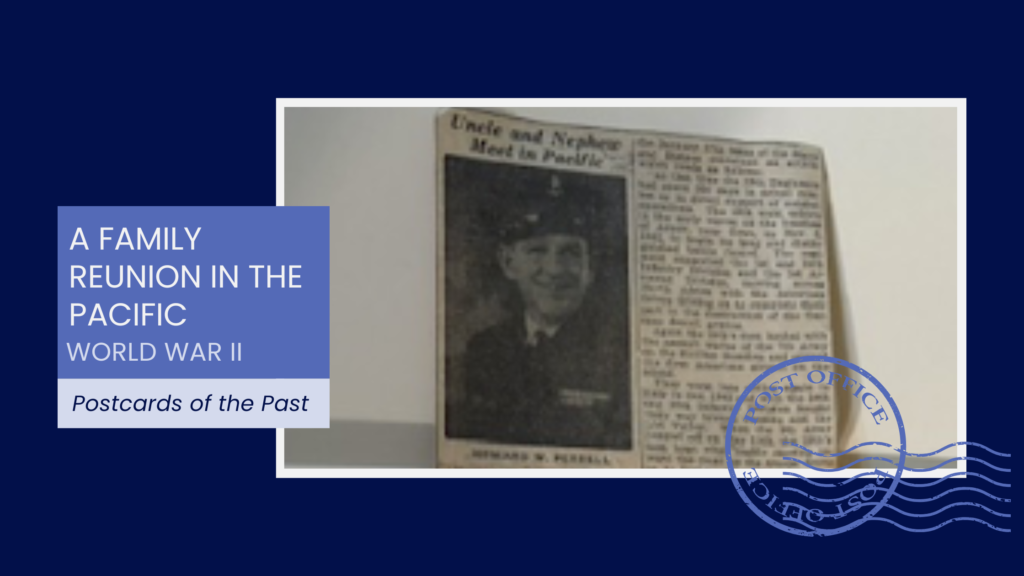
A Family Reunion in the Pacific
Among the newspaper clippings my parents saved is this remarkable story titled “Uncle and Nephew Meet in Pacific.“ During World War II, millions of Americans were serving around the globe, making it almost unimaginable that two relatives from the same hometown would unexpectedly find one another thousands of miles from home. The article tells the story of […]
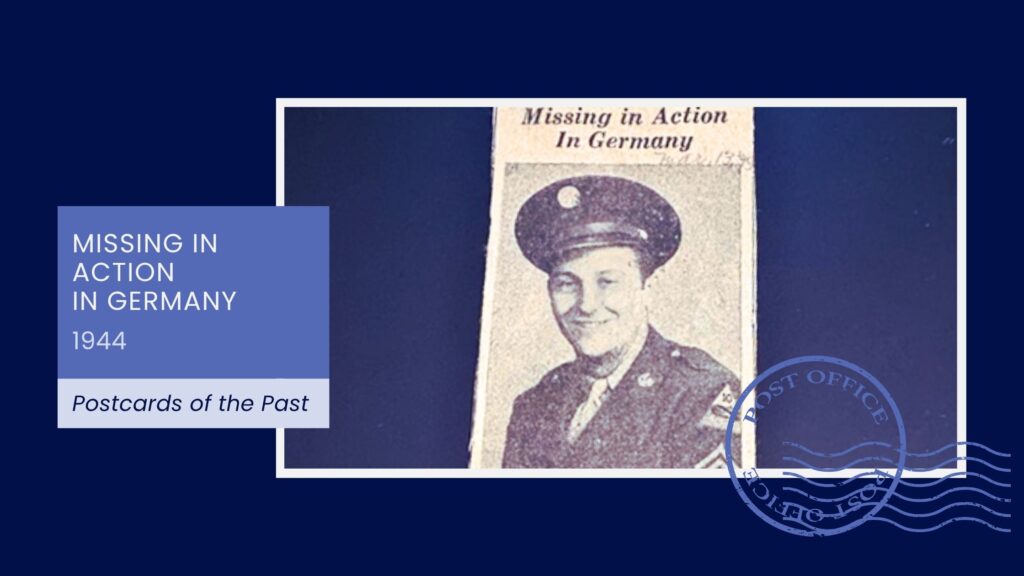
Missing in Action in Germany Clipping
Sometimes it is not immediately clear why certain papers were saved. As I sort through the letters and clippings my parents kept, I occasionally come across items whose meaning is not obvious at first. One such folder contains a collection of small newspaper clippings about servicemen. The articles seem to come from many different places and […]

