Beechwood
One of the highlights of visiting New York Harbor was taking the ferry to Governors Island. Although millions of people admire the Statue of Liberty and Ellis Island, far fewer make the short boat ride to this remarkable island. As the skyline of Manhattan faded behind us, it became easy to appreciate why Governors Island has been such an important strategic location for more than four centuries.
The first structure that caught my attention was the impressive sandstone gate leading into Fort Jay. Completed in 1802, it is the oldest surviving part of the fort and has changed remarkably little since it welcomed soldiers more than two centuries ago. Built of sandstone and crowned with a carved American eagle, the gate served as the formal entrance to one of the nation’s earliest permanent coastal fortifications.
Fort Jay traces its origins to the American Revolution, when an earthen fort was hastily constructed in 1776 to defend New York Harbor. After the war, recognizing the harbor’s importance to the young nation, the federal government rebuilt the fort in brick and stone as part of America’s first permanent system of coastal defenses. Working together with nearby Castle Williams, Fort Jay guarded the entrance to what would become the nation’s busiest port.
One of the most interesting things I learned was that Fort Jay never fought the great battle for which it was designed. It stood ready throughout the War of 1812, when many Americans feared a British attack on New York City, but the attack never came. The fort continued to serve the nation during the Civil War, the Spanish-American War, and both World Wars, primarily as a military headquarters, recruiting center, and command post. In many ways, its greatest success was that its presence helped deter an attack before one ever occurred.
After serving the United States Army for nearly two centuries and later the United States Coast Guard, Governors Island entered a new chapter in its history. In 2001, the federal government transferred most of the island to the people of New York. Two years later, on January 19, 2003, President George W. Bush established Governors Island National Monument to preserve Fort Jay and nearby Castle Williams, recognizing their importance in the defense of New York Harbor and the early history of the United States.
Read More

Read More From Nancy
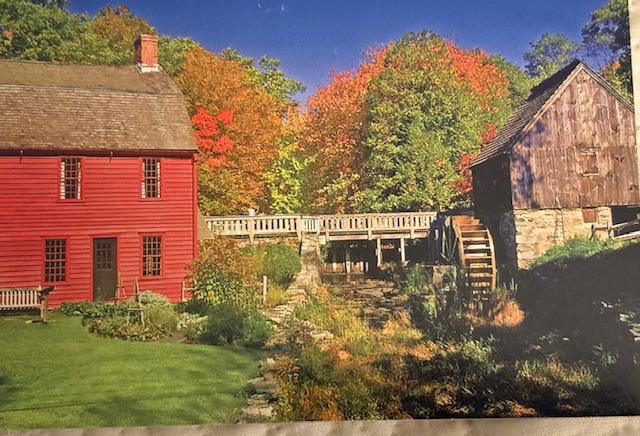
Gilbert Stuart Birthplace
Gilbert Stuart went on to fame as the portrait artist of Geroge Washington, the very image that appears on every dollar bill. Our first visit to this site was during my homeschooling days. Visiting historic houses was a part of our homeschooling adventures, and I would purposely seek out places like this, homes where history felt real […]
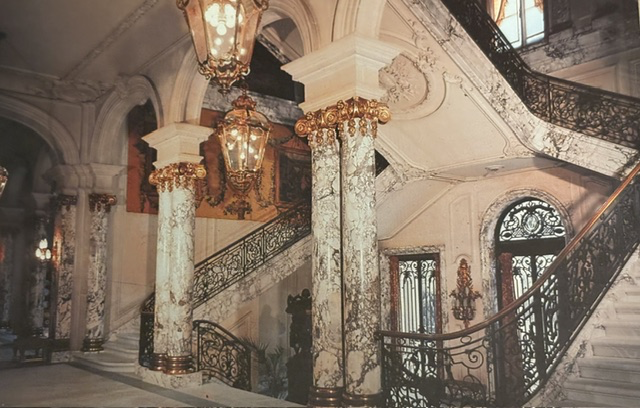
The Elms
Over the years, we have visited all the historic homes in Newport, Rhode Island. Newport itself has layers of history, from its colonial seaport beginnings to its role in early American trade, but it is the extraordinary collection of Gilded Age mansions that draws so many people to explore the town today. Walking through Newport feels like stepping into another […]
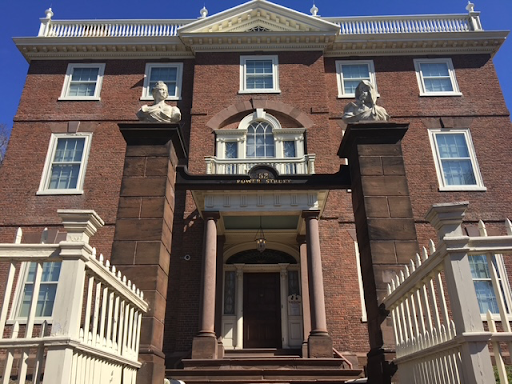
John Brown House
Perched on College Hill in Providence, Rhode Island, the John Brown House stands as one of the finest surviving examples of 18th-century American architecture. It also is a powerful reminder of wealth, ambition and the moral complexity of early American life. John Brown was one of Providence’s most prominent citizens in the late 1700s. Brown […]

