The Olson House
There are some places where the landscape tells only part of the story. The Olson House in Cushing, Maine, is one of those places. Sitting quietly atop a gentle hill overlooking the fields and Muscongus Bay, this weathered farmhouse appears much as it did when Andrew Wyeth first arrived here in 1939. It is an unassuming home, yet it became the setting for one of the most recognized paintings in American history.
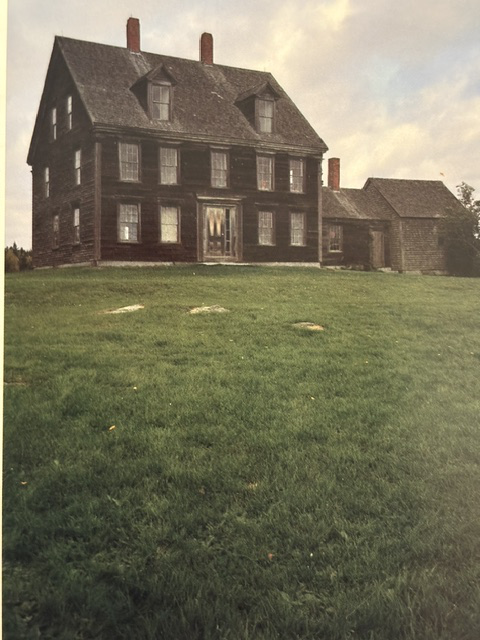
The house belonged to Christina and Alvaro Olson, siblings who lived here their entire lives. Christina suffered from a progressive neuromuscular disorder that gradually robbed her of the ability to walk. Fiercely independent, she refused to let her disability define her. Rather than relying on a wheelchair, she often pulled herself across the fields with her arms, determined to care for herself and the family home. Her quiet perseverance became the inspiration for Wyeth’s 1948 masterpiece, Christina’s World, a painting that has become an enduring symbol of resilience, hope, and determination.
Over the next three decades, Wyeth returned to the Olson House again and again, creating more than 300 paintings and drawings inspired by the house, its surroundings, and the lives of Christina and Alvaro. His work transformed this modest farmhouse into an icon of American art and introduced millions of people around the world to Christina’s story.
The paintings inspired by the Olson House eventually became extraordinarily valuable, while Christina and Alvaro continued to live modestly, facing the hardships of rural life and Christina’s increasing disability. Although Wyeth maintained a close friendship with the siblings, there is little evidence that he provided them with significant financial support. He believed his greatest gift was preserving their lives through his art.
Today, preserved by the Farnsworth Art Museum as a National Historic Landmark, the Olson House stands not only as a tribute to one of America’s greatest artists, but also as a monument to Christina Olson herself—a woman whose strength and perseverance became immortal, inviting each visitor to reflect not only on the painting, but on the remarkable life behind it.
Read More From Nancy

Sarah Orne Jewett House
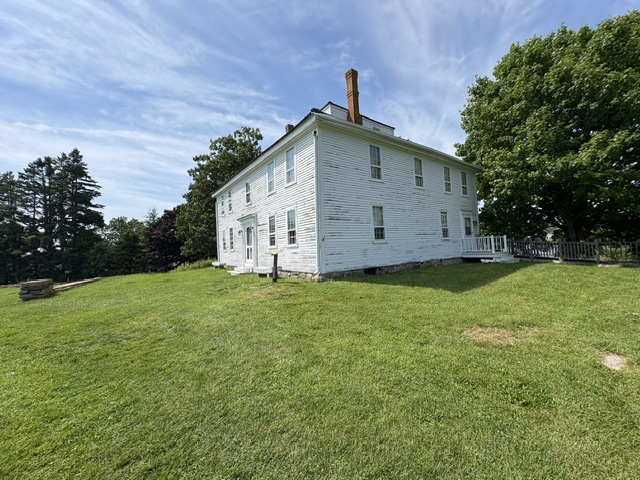
One of the highlights of visiting South Berwick, Maine, was touring the Sarah Orne Jewett House, one of New England’s important literary landmarks. Built in 1774 and expanded over generations, the house reflects both the architectural evolution of a prosperous New England family and the rich cultural heritage of the community. Best known as the lifelong home of author […]
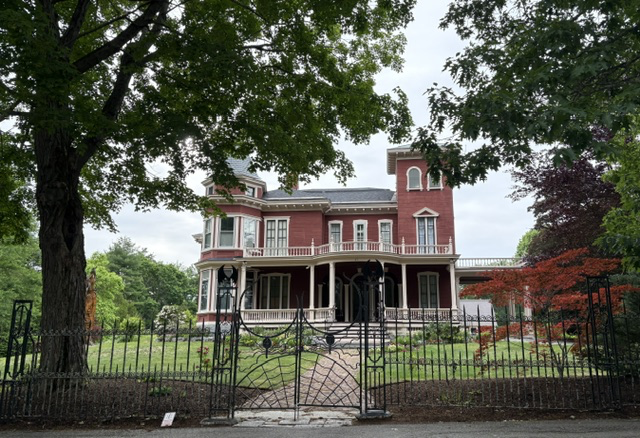
Stephen King’s House
Driving home through Maine after teaching a seminar in Halifax, we made a stop in Bangor to see the home of one of America’s most prolific authors, Stephen King. The house has become a destination because of its distinctive Victorian architecture and the famous wrought-iron gates decorated with spiders, bats, and other gothic designs that […]
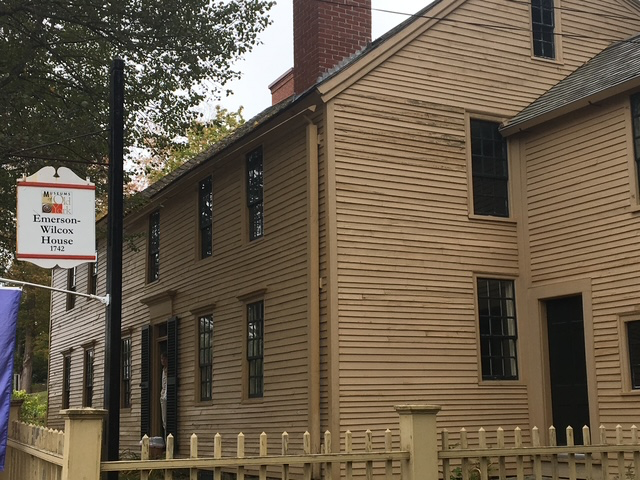
Emerson-Wilcox House
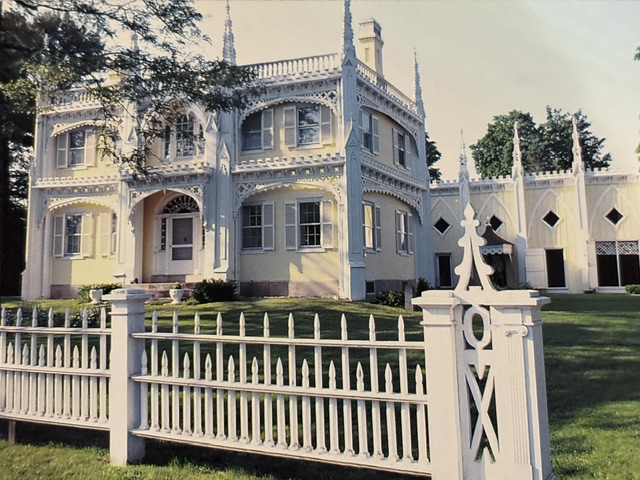
In the historic village of York stands one of the quiet survivors of early New England life: The Emerson-Wilcox House, a structure whose story stretched back nearly three centuries. Built between 1735 and 1742, the house began as a center-chimney colonial dwelling. The early form revolved around a massive central fireplace, the heart of the home […]

