Prudence Crandall House
I still remember my first visit to the Prudence Crandall House in Canterbury, Connecticut. Before that day, I had never heard her name. By the time I left, I understood why she deserves to be remembered.

Prudence Crandall was an educator who believed that every young woman deserved an education. In 1833, when a young Black woman asked to enroll in her school, Crandall admitted her. When the families of her white students objected and withdrew their daughters, she made an extraordinary decision. Rather than close the school, she reopened it as a boarding school exclusively for Black girls, welcoming students from several states.
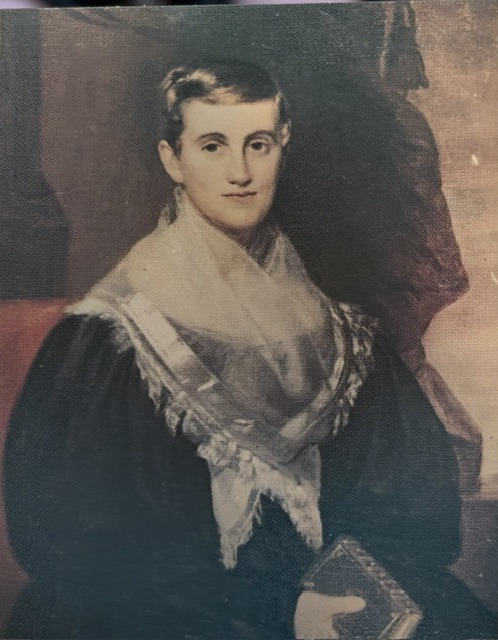
Her decision was met with fierce resistance. The Connecticut legislature passed what became known as the “Black Law,” making it illegal for her to educate out-of-state Black students without local approval. She was arrested, jailed overnight, and put on trial. Although her conviction was eventually overturned on a legal technicality, the harassment only intensified.
The attacks became personal and relentless. Residents refused to sell food to the school. They poisoned the well, broke windows, and repeatedly vandalized the property. In September 1834, a violent mob attacked the house, attempting to force their way inside and setting fire to parts of the building. Fearing for the safety of her students, Prudence Crandall made the difficult decision to close the school.
As I stood in front of this house, it was impossible not to think about the strength it must have taken to remain faithful to her convictions. She knew the personal cost of her actions, yet she refused to abandon what she believed was right. Although her school was open for little more than a year, it became one of the earliest and most significant efforts to provide higher education for Black women in the United States.
Years later, Connecticut formally recognized the injustice she had endured. In 1995, Prudence Crandall was designated Connecticut’s State Heroine, and her home is now preserved as a museum dedicated to her life and legacy.
History is often told through the lives of presidents, generals, and famous reformers. Sometimes, however, it is one determined teacher in a small New England town who changes the course of history. Visiting the Prudence Crandall House reminded me that lasting change often begins with a single person willing to stand by their principles, even when standing alone.
Read More From Nancy
Hill-Stead Museum
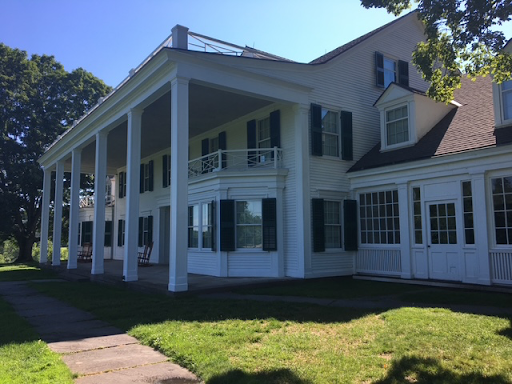
On a day trip to Connecticut, we stopped to tour a remarkable home set quietly back on the rolling lawns in Farmington. We walked past the white facade with black shutters into the rooms covered with early impressionist paintings. These works once challenged convention and helped shape the future of art. Hill-stead was completed in 1901 […]
Eugene O’Neill’s Monte Cristo Cottage
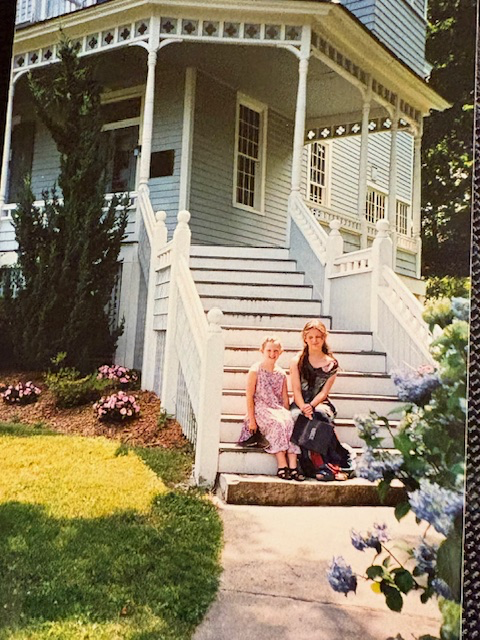
Connecticut is not too far for a good road trip and on this day, it brought us to Eugene O’Neill’s home in New London. This house, known as the Monte Cristo Cottage, was the family’s summer home, and decades later it became immortalized as the setting for “Long Day’s Journey into Night”. This is one of […]
Nathan Hale Homestead
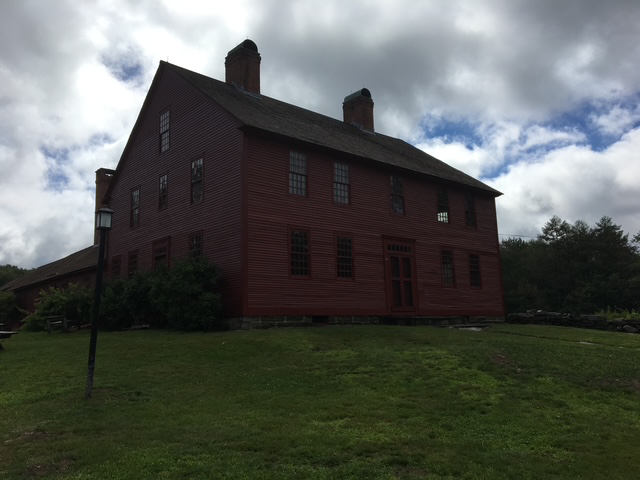
Tucked amid the rolling fields and stone-walled roads of Coventry, Connecticut, stands the Nathan Hale Homestead, built around 1772 by Richard Hale, the father of Nathan. Though Nathan did not grow up in this particular house, it stood on the family’s farmland where he had spent his boyhood. By the time the house was finished, […]

