James Monroe Museum
Although Monroe never lived in the building that now houses the museum, it contains the nation’s largest collection of artifacts, manuscripts, and personal belongings relating to America’s fifth president. In many ways, it serves as the closest equivalent to a presidential library, preserving the story of his remarkable life and public service.
Monroe is perhaps best remembered for the Monroe Doctrine, announced in 1823 during his presidency, which declared that the Western Hemisphere was no longer open to European colonization. The policy became a cornerstone of American foreign policy and helped define the nation’s role in the world.
His presidency is also remembered as the “Era of Good Feelings,” a period marked by growing national pride and westward expansion. Yet beneath that optimism were challenges that foreshadowed the nation’s future. The Missouri Compromise of 1820 temporarily eased the growing conflict over slavery, while the acquisition of Florida strengthened the young republic.
Monroe also found himself navigating the ambitions of General Andrew Jackson during the First Seminole War. Jackson’s unauthorized actions in Spanish Florida created significant debate within Monroe’s Cabinet, but Monroe ultimately chose a course that maintained national unity while allowing Jackson’s popularity to continue to grow.
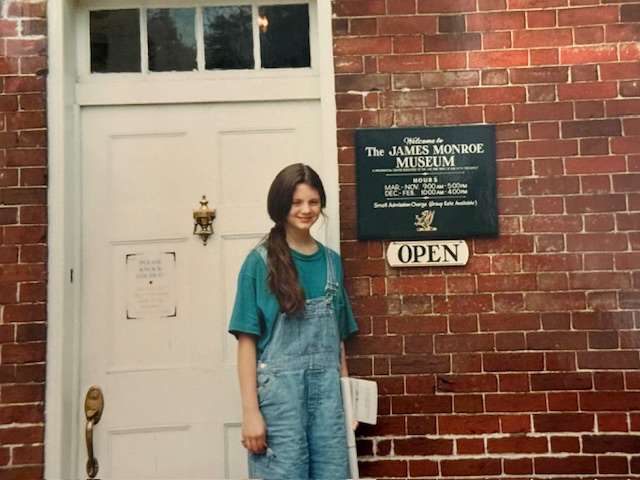
Looking back at this photograph of our daughter standing outside the museum, I am reminded that our family vacations often included stops like this. Long before I began writing these reflections, we were visiting presidential homes, museums, and historic sites together. Those trips not only taught us about the people who shaped our nationbut also created family memories that have become just as meaningful as the history itself.

