Martinsburg Roundhouse Plagues
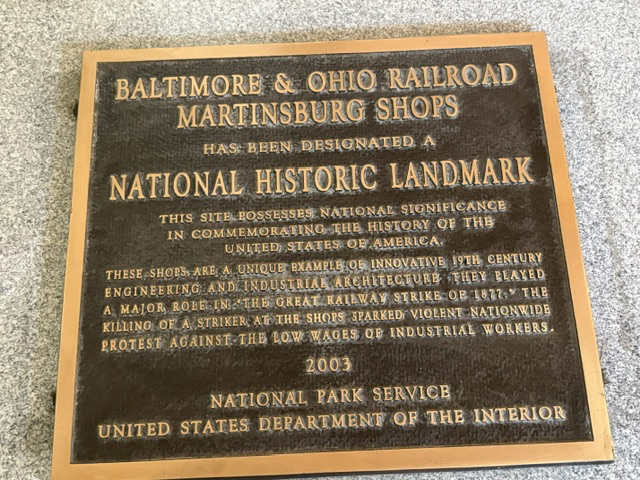
The beauty of the Martinsburg Roundhouse was not fully evident until I stepped inside. Looking upward, I found myself captivated by the extraordinary ceiling soaring above the turntable. A circle of windows beneath the cupola filled the vast interior with natural light, while an intricate web of iron supports and wooden trusses radiated outward like the spokes of a wheel. What had once been a busy industrial workplace possessed an almost cathedral-like quality.
What I learned during the tour made the sight even more remarkable. The Martinsburg Roundhouse is the only surviving cast-iron framed roundhouse of its kind in the world. Rebuilt after the Civil War and completed in 1872, the structure represented some of the most advanced engineering of the nineteenth century. The cast-iron components were fabricated and assembled into a framework that has survived for more than 150 years, creating a space that is both functional and unexpectedly beautiful.
Inside the roundhouse, I also noticed a plaque dedicated to United States Senator Robert C. Byrd. Byrd served West Virginia in Congress for more than half a century, including over fifty years in the United States Senate, making him one of the longest-serving legislators in American history. A native of West Virginia, he became one of the state’s most influential political figures and was known for securing support for highways, schools, bridges, and historic preservation projects throughout the Mountain State. His efforts helped ensure that the Martinsburg Roundhouse would be restored and preserved for future generations.
Standing beneath that magnificent dome, I realized I was looking at something truly irreplaceable. Thousands of roundhouses once served the railroads of America, but almost all have disappeared. Hidden away in my father’s hometown is a masterpiece of engineering and craftsmanship—a place where industry, labor history, preservation, and architectural beauty come together in one unforgettable space.
Read More From Nancy
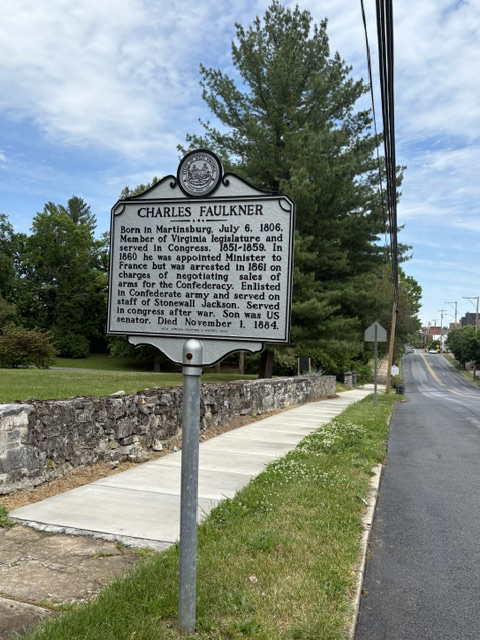
Charles James Faulkner
Walking through Martinsburg, I wanted to capture as many of the landmarks and stories as possible that might have been familiar to my father during his youth. One of the markers I encountered honored Charles James Faulkner, one of the most distinguished citizens ever to come from the town. Born in Martinsburg in 1806, Faulkner […]
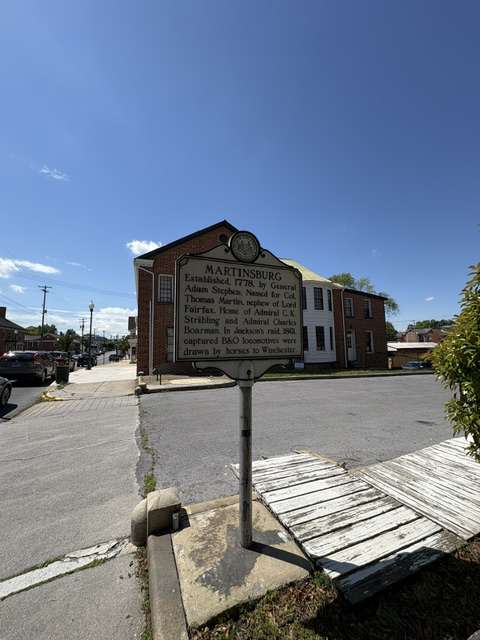
Jackson’s Great Train Raid of 1861
Established, 1778, by Gen. Adam Stephen. Named for Col. Thomas Martin, nephew of Lord Fairfax. Home of Admiral Charles Sterling and Admiral Charles B. Caldwell. In Jackson’s raid, 1861, captured 8,500 locomotives and 300 miles of railway. This marker is referring to a remarkable railroad operation of the Civil War, commonly known as Stonewall Jackson’s […]
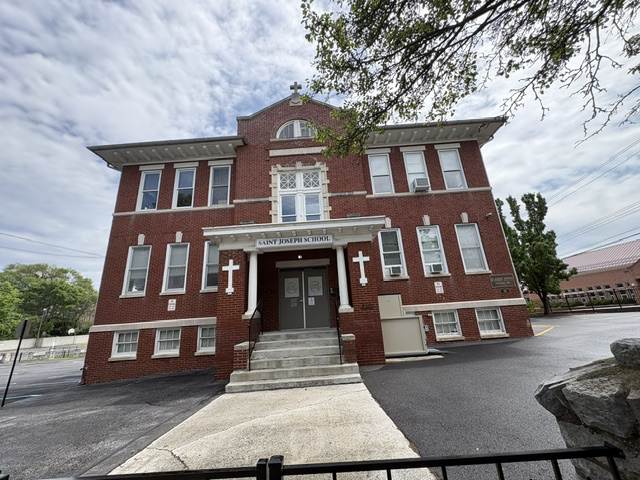
St. Joseph’s School
One of the places I most wanted to see in Martinsburg was St. Joseph School. Founded in 1885, the school has been educating children for nearly a century and a half and has long been an important part of the city’s Catholic community. Standing in front of this red brick building, I was reminded that this was my […]

