Cast-Iron Ceiling of B&O Roundhouse
What captivated me most about the Martinsburg Roundhouse was the extraordinary ceiling overhead. During the tour, I learned that the building is not just an old railroad structure, it is the only surviving cast-iron framed roundhouse in the world. Designed by engineer Albert Fink and rebuilt after the Civil War, the structure was revolutionary for its time.
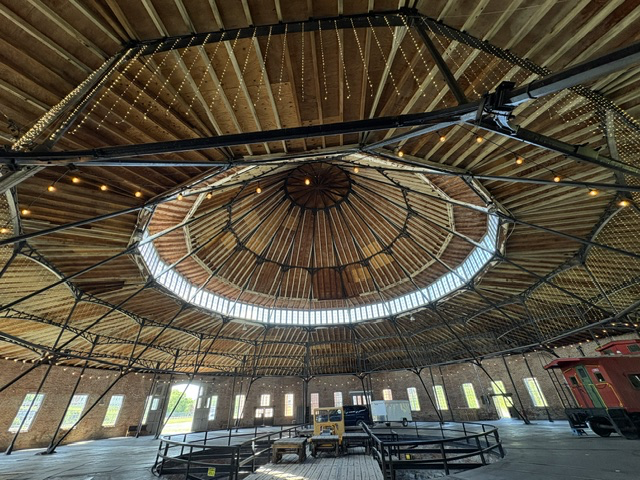
Unlike most nineteenth-century industrial buildings, which relied heavily on timber, the roof of the roundhouse is supported by a framework of cast-iron columns, beams, and struts. The iron components were cast in Baltimore, shipped to Martinsburg, and assembled like a giant three-dimensional puzzle. The intricate pattern radiating from the central cupola resembles a spider’s web, with triangular wooden trusses extending outward like the spokes of a wheel. More than 150 years later, the original structure still stands.
What amazed me was that this engineering marvel was created for purely practical purposes. Railroad companies wanted a building that was strong, spacious, and less vulnerable to fire. Yet the result was something unexpectedly beautiful. Looking upward, the iron framework and wooden ceiling created a space that felt more like a cathedral than a machine shop.
Historians have called the Martinsburg Roundhouse one of the most important surviving cast-iron buildings in North America. Thousands of roundhouses once dotted the country, but almost all disappeared with the age of steam. Standing beneath this ceiling, I realized I was looking at something truly irreplaceable: a masterpiece of nineteenth-century engineering hidden inside a railroad building in my father’s hometown.
Read More From Nancy
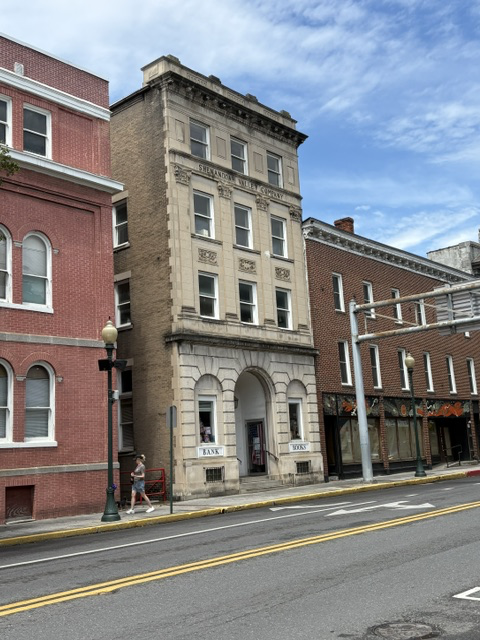
Shenandoah Valley Company Building
Walking the historic downtown of Martinsburg, I found myself searching for the buildings that would have been familiar to my father during his youth. Many storefronts have changed but some of the city’s grand commercial buildings remain much as they appeared when he walked these streets. One structure that caught my attention was the Shenandoah Valley […]
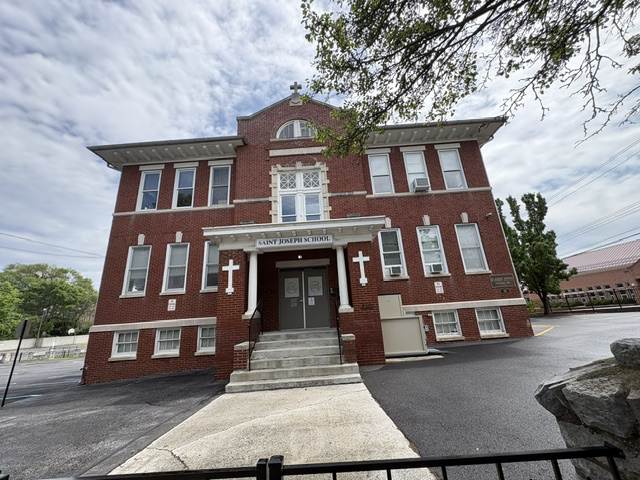
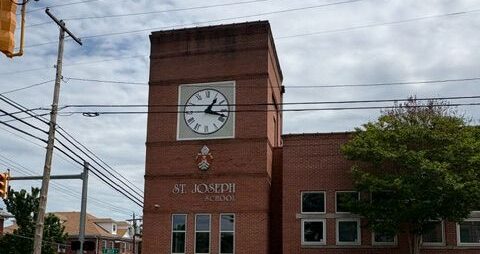
St. Joseph’s School
One of the places I most wanted to see in Martinsburg was St. Joseph School. Founded in 1885, the school has been educating children for nearly a century and a half and has long been an important part of the city’s Catholic community. Standing in front of this red brick building, I was reminded that this was my […]
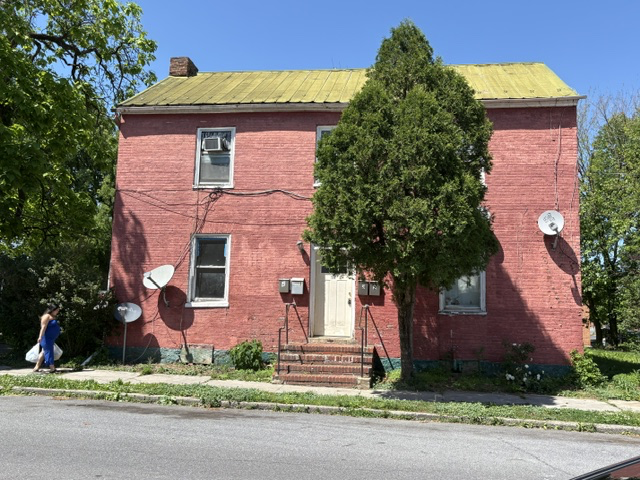
506 West John Street
This address appears on so many envelopes preserved in my parents’ papers that I felt compelled to include it in my exploration of Martinsburg. During my visit, I made a point of finding 506 West John Street and taking a photograph of the house. From the outside, I saw no obvious connection to my father, […]

