Sigmund Freud Museum
While visiting Vienna, Marty and I visited the Sigmund Freud Museum, located in the apartment and office where Freud lived and worked from 1891 until 1938. This museum offers a glimpse into the environment where one of the most influential thinkers of the modern era developed the theories that would transform psychology and forever change the way people think about the human mind.
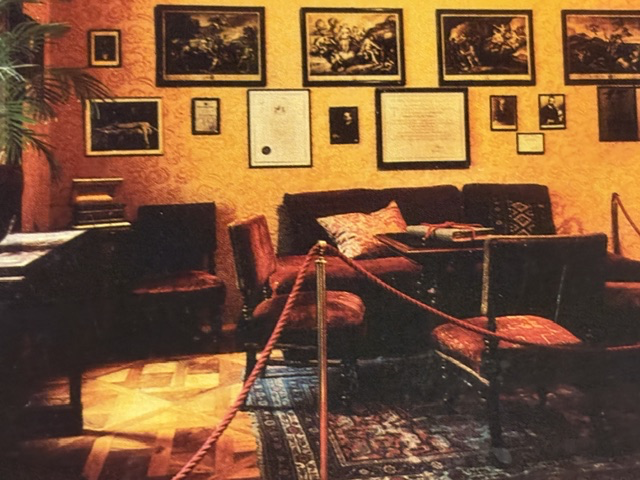
Freud spent nearly half a century in this building at Berggasse 19. It was here that he saw patients, wrote many of his most important works, and developed the foundations of psychoanalysis. His ideas about the unconscious mind, dreams, memory and human behavior challenged conventional thinking and influenced not only psychology but also medicine, literature, art and popular culture. There is no doubt that Freud’s work shaped intellectual life throughout the twentieth century.
The museum also tells a much more personal and sobering story. Freud was Jewish, and after Nazi Germany annexed Austria in 1938, life became increasingly dangerous for him and his family. The Gestapo searched his home, interrogated family members, and confiscated property. At the age of eighty-two, Freud was eventually able to to escape Vienna with his wife, Martha, and his daughter Anna, thanks to efforts of friends and supporters who worked tirelessly to secure his release.
Not everyone was able to leave. Four of Freud’s sisters remained behind in Austria. All four would later be deported by the Nazis and murdered in concentration camps. Their tragic fate serves as a start reminder that behind the story of Freud’s escape lies the larger story of countless Jewish families whose lives were shattered during the Holocaust
The Sigmund Freud Museum stands as one of Vienna’s important cultural landmarks. It offers visitors the opportunity to explore the life and work of a pioneering thinker while also remembering a chapter of history that should never be forgotten.