Women’s Camp at Auschwitz – Oswiecim, Poland
Marty and I had a private tour of Auschwitz-Birkenau Memorial and Museum so that we could take our time in each location, stop when we needed to and absorb the enormity of what happened there. There are few places we have ever visited that felt as haunting as this place. From the moment you walk through the gates, there is a heaviness that settles over everything.
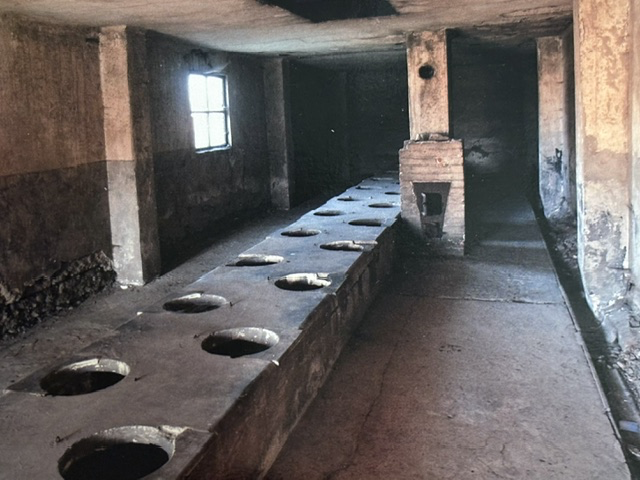
This photo is from the women’s camp at Auschwitz concentration camp system and captures one of the many ordinary, yet deeply disturbing spaces. The long row of exposed latrine openings, the stark concrete roo and the complete absence of privacy reveal the brutal reality of daily life for the women imprisoned here during the Holocaust.
What makes Auschwitz so overwhelming is that we walked through the actual barracks, prison cells, crematoriums, fences, sleeping quarters and washrooms where people lived and died. Every building forces us to confront the reality that these were human beings who were stripped of dignity, identity and freedom.
The women imprisoned here came from many countries and backgrounds and they endured horrific overcrowding, disease, starvation, forced labor and unimaginable fear. In spaces like this, even the most basic human needs become another form of degradation and suffering.
Preserving these buildings ensures that future generations can witness where hatred, racism, antisemitism and authoritarian power led. Leaving Auschwitz, we carried not only sadness, but a sense of responsibility to remember what happened here. Some places change the way to see history and Auschwitz’s is unquestionable one of them.
Read More From Nancy
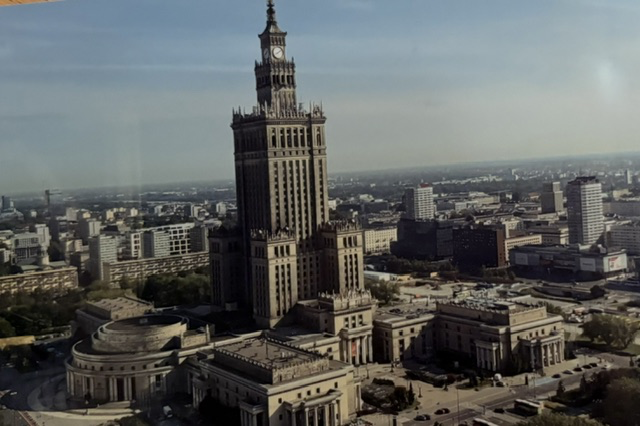
Palace of Culture and Science
Some buildings become symbols of pride. Others become symbols of history itself. The Palace of Culture and Science dominates the skyline of Warsaw, standing more than 750 feet above the city. It is impossible to ignore. Whether you admire it or dislike it, every road through central Warsaw seems to lead your eyes back to […]
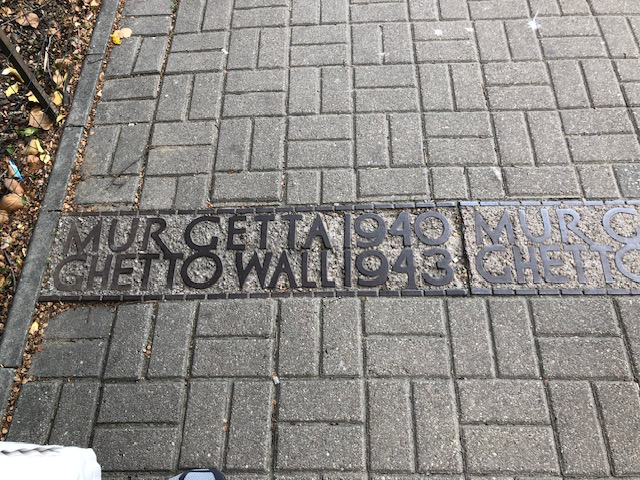
Warsaw Ghetto
Today, Warsaw Poland is a rebuilt and thriving city. Walking around the city, there are powerful reminders of its history. Nowhere is this more evident than along the boundary markers of the former Warsaw Ghetto. These modest markers trace the outline of what was once the largest Jewish ghetto in Nazi-occupied Europe. In November […]
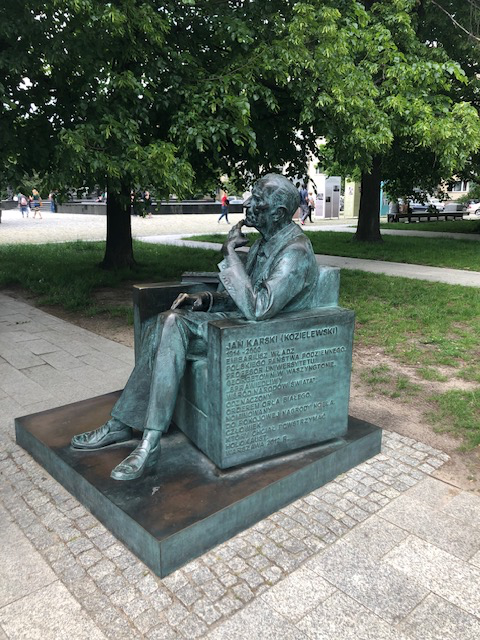
Jan Karski
While walking through Warsaw, I came upon a bronze monument that drew my attention. Unlike many statues where the figure stands high on a pedestal, this one shows a man quietly seated in a chair, holding a document in his hand. The plaque tells the story of Jan Karski, one of the most remarkable witnesses of […]

