Hector Pieterson Memorial
Visiting the Hector Pieterson Memorial on our tour of Soweto, was a historically powerful experience of our time in South Africa. This place felt deeply personal. The history that unfolded here in 1976 still lives vividly in the memory of South Africa and continues to shape the country today.
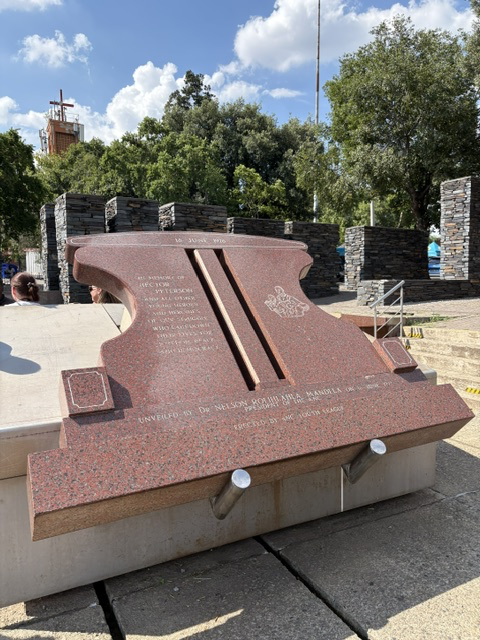
The memorial commemorates the young students who participated in the Soweto Uprising on June 16, 1976. Under the apartheid system, Black South Africans face severe racial segregation and inequality in every part of life, including education.
Thousands of students marched through the streets of Soweto to protest. What began as a student demonstration turned tragic when police confronted the marchers and opened fire on the children and protesters. Many students were killed or wounded that day, and the uprising quickly spread across the country, becoming a turning point in the international fight against apartheid.
The most recognized symbol of the uprising was young Hector Pieterson, a 12-year-old boy who was shot during the protests. The photograph of Hector being carried by another student while his sister ran beside him in anguish became one of the defining images of the twentieth century. That single image shocked the world and exposed the brutal realities of apartheid to an international audience.
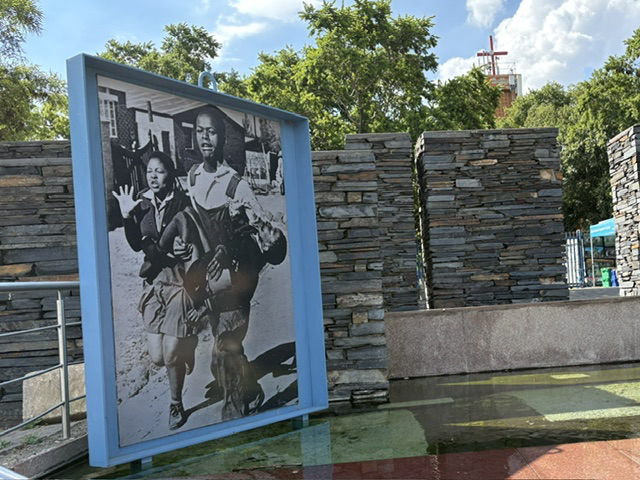
There is a heaviness that is over this space. The red granite monument with its fractured design feels symbolic of a nation divided by injustice and violence. Water flowing through the memorial adds an emotional dimension. Around the memorial are the streets where students once marched.
The experience reminded me how powerful memorials can be when they are in the very places where history happened. Standing in Soweto allowed me to feel the environment, walk the streets and better understand the courage it took for young students to challenge such an oppressive system.

