Concord Coach
Inside the Historic Museum is this beautifully preserved Concord coach, an object representing one of the most important contributions Concord made to the wider world.
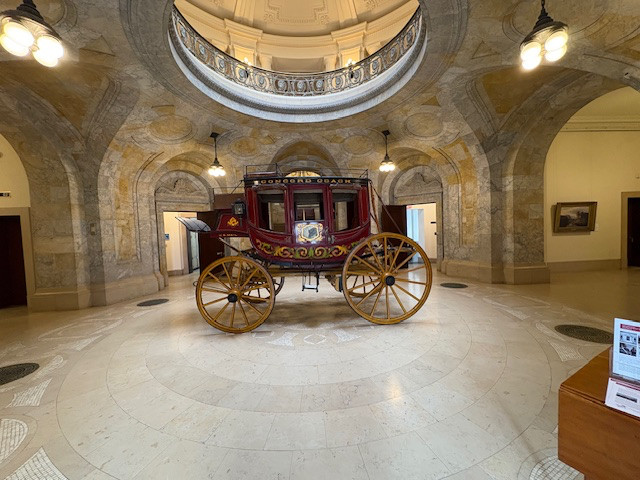
The Concord Coach was developed and built in the 19th century by the Abbot-Downing Company, a firm founded in the early 1800s. From this small New England city came a vehicle that would become the standard for overland travel across America.
The Concord Coach was designed to travel long distances over rough, uneven roads. The body was suspended on leather thoroughbrace, allowing it to sway and absorb the motion of the road. This gave passengers a smoother, more stable ride, something essential for journeys that could last days or weeks.
Concord Coaches were used on stagecoaches connecting towns and cities, as well as in the expansion westward across the United States carrying passengers, mail and goods across difficult terrain. They became a symbol of movement of a country stretching beyond its original boundaries.
These coaches were exported and used around the world, including South America and South Africa. A vehicle built in New Hampshire became part of the infrastructure of growing regions across continents.
Read More From Nancy
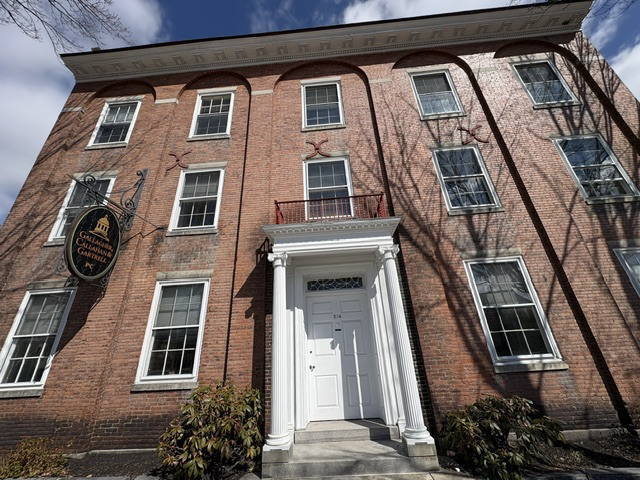
The Merrimack County Bank Building
Walking along North Main Street in Concord, this stately brick building immediately caught my attention. Its elegant Federal architecture, tall windows, and classical entrance suggest that it has witnessed much of the city’s history. As I discovered, it certainly has. Completed in 1826, the building was constructed as the home of the Merrimack County Bank, […]
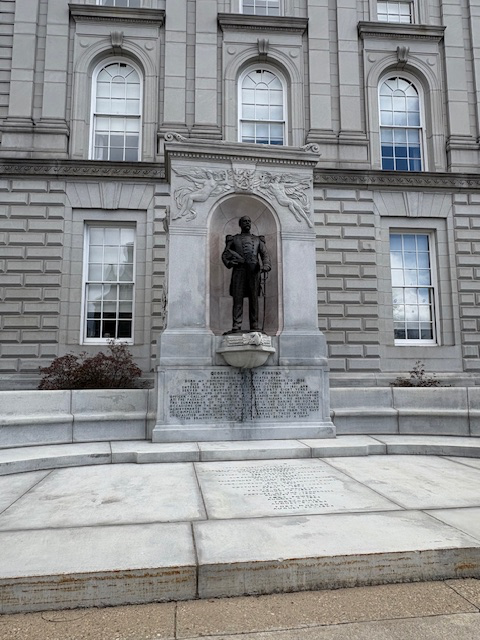
George H. Perkins Statue
On the backside of the New Hampshire State House stands this monument to George H. Perkins. Born in Hopkinton, Perkins rose to become one of the most respected naval officers of the Civil War. He served under Admiral Farragut and played a critical role in the Battle of Mobile Bay, one of the defining naval battles […]
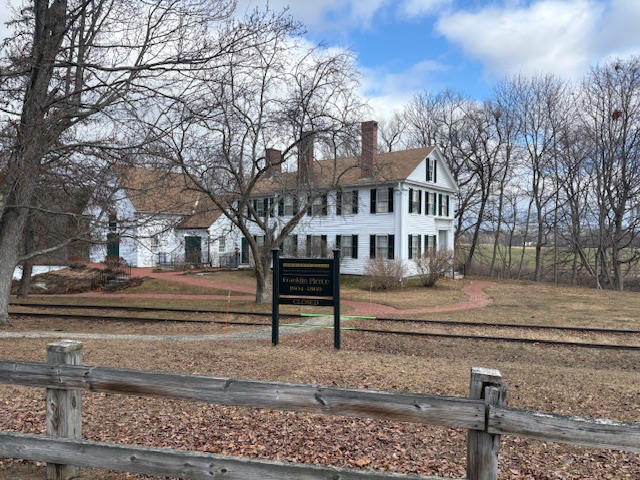
Pierce Manse
The Pierce Manse, in Concord, NH, is the home most closely associated with Franklin Pierce during his adult life. Built in 1838, this was the house Pierce returned to after his years in Washington. It was here that he lived before, during, and after his presidency, a place that remained constant through both his rise and the challenges […]

