Pierce Gravesite
Tucked within the quiet grounds of the Old North Cemetery in Concord lies the gravesite of Franklin Pierce, more personal than presidential.
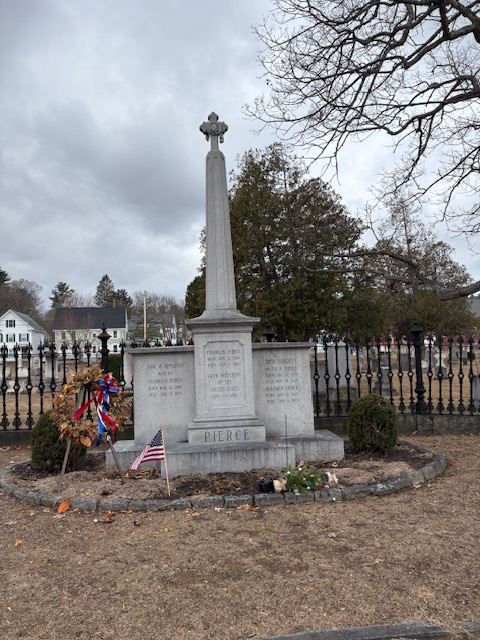
Pierce, the 14th President of the United States, was born in New Hampshire and remained deeply connected to Concord throughout his life. This graveside does not have the grandeur that you might expect for a president. The monument is modest, reflecting the complicated legacy he left behind.
The site is part of the Pierce family plot. He is buried alongside his wife, and their children. Their lives were marked by deep personal tragedy. All three of their sons died young, including one just weeks before Pierce’s inauguration, when their only surviving son was killed in a train accident. It is said that this grief never left him.
The monument is a granite obelisk, rising above the family plot. Around it is smaller stones marking the lives of those closest to him. This is not a presidential memorial, but more of a family resting place.
Pierce’s grave reminds us that behind the title of president was a man shaped by loss, duty, and the weight of a divided nation.
Read More From Nancy
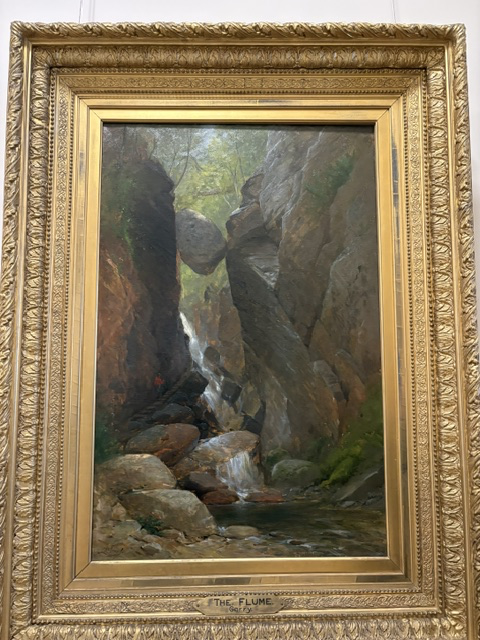
The Flume by Samuel Gerry
Samuel L. Gerry’s The Flume draws the viewer into one of New Hampshire’s most dramatic natural passages. The tall, narrow canvas follows the shape of the gorge itself, with steep walls of granite rising on both sides and leaving only a small opening to the forest and sky above. Water descends through the center, winding […]
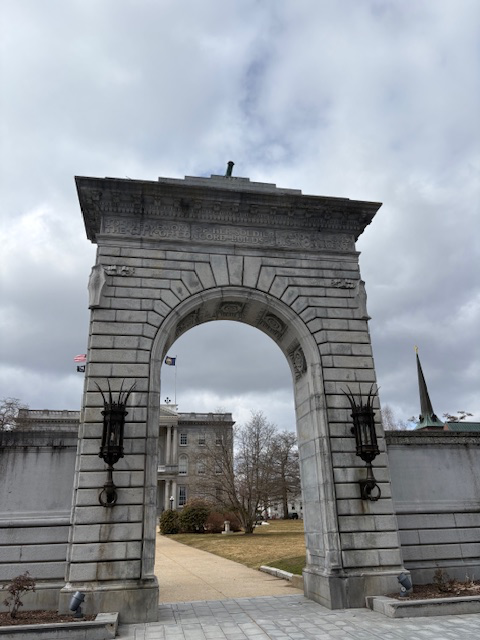
The Soldiers and Sailors Memorial Arch
At the front of the New Hampshire State House lawn stands the granite arch that quietly frames everything beyond it: The Soldiers and Sailors Memorial Arch. The State House itself was completed in 1819, built of locally quarried granite and designed to reflect both permanence and simplicity. It remains the oldest state capital in the United States […]
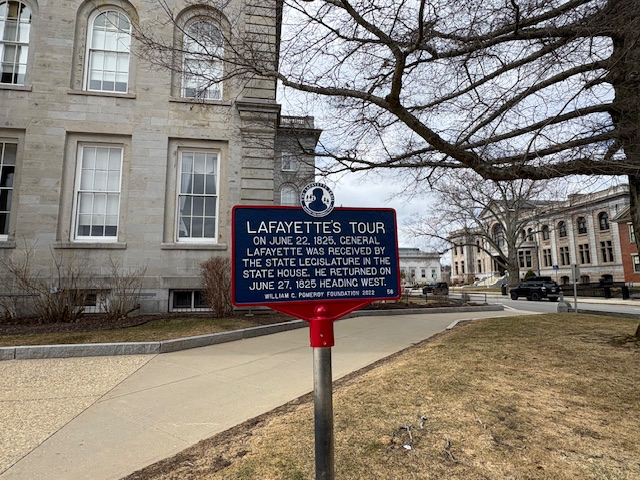
Lafayette’s Tour Sign
This simple marker, outside of the New Hampshire State House, tells the story of a visit that carried a deep meaning for a young nation finding its identity. The sign commemorates the return of Marquis de Lafayette during his grand tour of the United States in 1824-1825. Nearly fifty years after the American Revolution, Lafayette was […]

