Lafayette’s Tour Sign
This simple marker, outside of the New Hampshire State House, tells the story of a visit that carried a deep meaning for a young nation finding its identity.
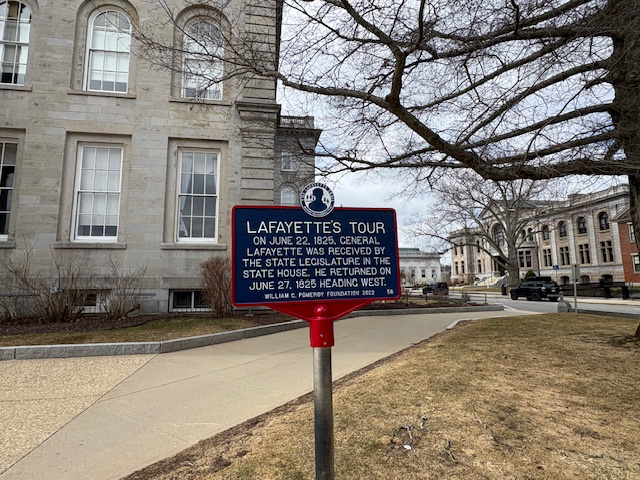
The sign commemorates the return of Marquis de Lafayette during his grand tour of the United States in 1824-1825. Nearly fifty years after the American Revolution, Lafayette was invited back to the country he had helped to secure.
As he traveled from state to state, Lafayette was welcomed with ceremonies, parades and gatherings. His presence was a living connection to the founding of the nation. When he arrived in Concord in Jne of 1825, he was formally received by the state legislature at the State House. The citizens gathered to honor a man who had stood beside Washington and helped share the country’s independence.
I am drawn to markers like this. They are windows into moments and remind me that history is not distant. These markers create my own kind of tour and invite me to move from place to place, connecting stories and gathering a deeper understanding of the path that has led us to where we are today.
Read More From Nancy
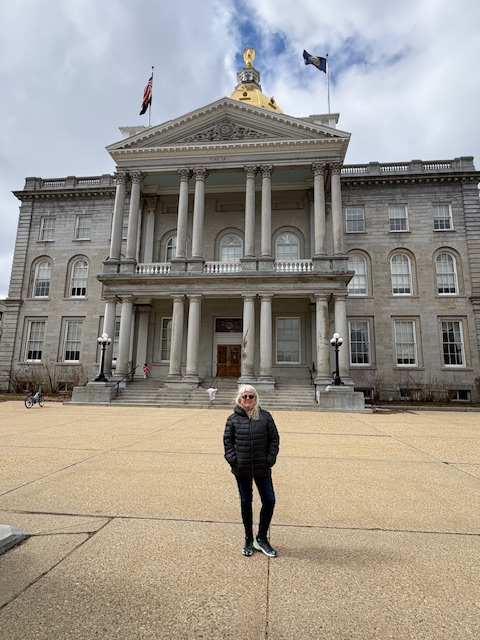
New Hampshire State House
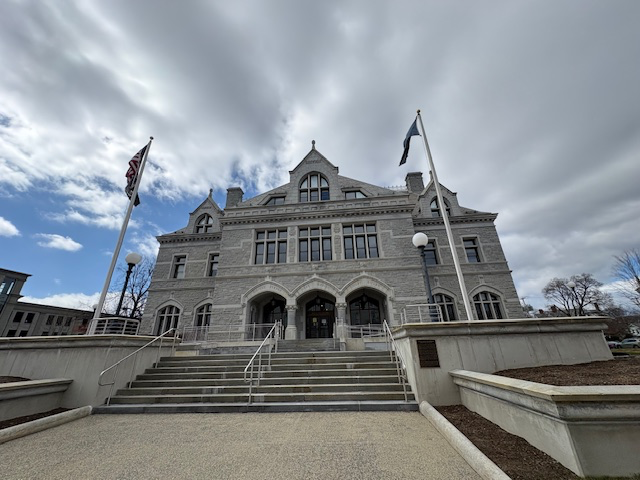
This is the New Hampshire State House in Concord, one of the most historically significant and enduring capitol buildings in the United States. Built between 1816 and 1819, it holds a unique distinction. It is the oldest state capitol in the country where the legislature still meets in its original chambers. This is not just a […]
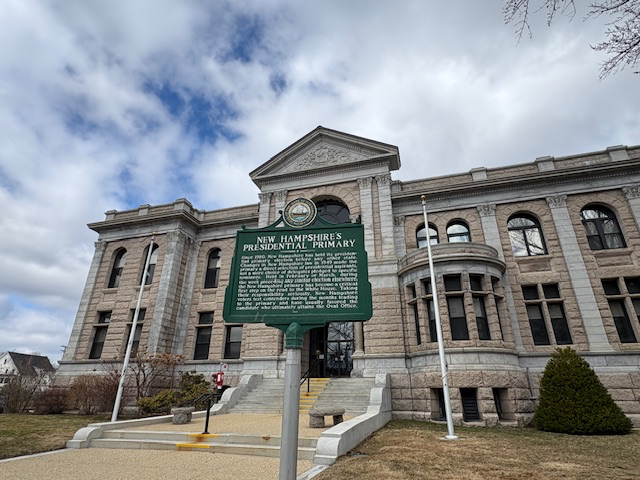
First in the Nation
In front of this stately building in Concord is this simple marker. The sign marks the New Hampshire Presidential Primary, a tradition that has shaped the political landscape of the United States for generations. Since 1920, New Hampshire has held the first primary in the nation, giving its voters a uniquely powerful voice in choosing presidential […]
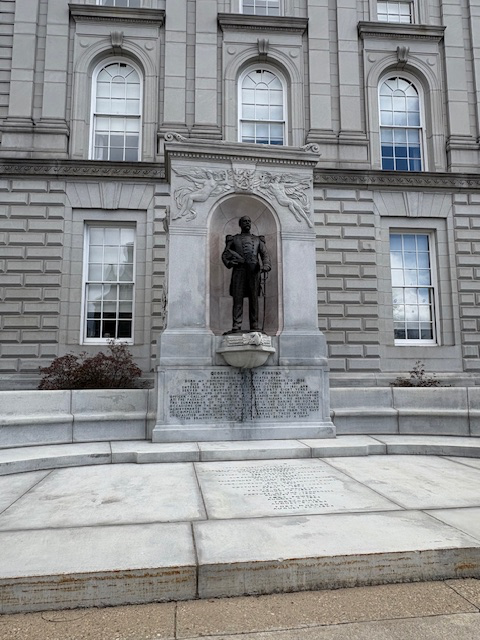
George H. Perkins Statue
On the backside of the New Hampshire State House stands this monument to George H. Perkins. Born in Hopkinton, Perkins rose to become one of the most respected naval officers of the Civil War. He served under Admiral Farragut and played a critical role in the Battle of Mobile Bay, one of the defining naval battles […]

