Emerson-Wilcox House
In the historic village of York stands one of the quiet survivors of early New England life: The Emerson-Wilcox House, a structure whose story stretched back nearly three centuries.
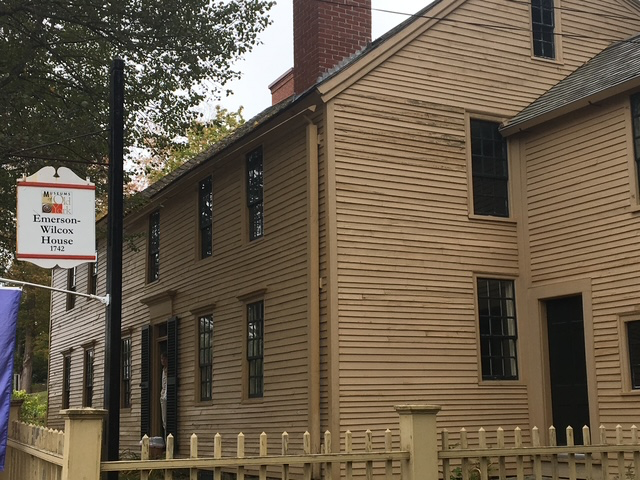
Built between 1735 and 1742, the house began as a center-chimney colonial dwelling. The early form revolved around a massive central fireplace, the heart of the home during long Maine winters.
In 1760, Edward Emerson expanded the house. He moved an earlier structure and physically attached it to the existing house. This created the distinctive L-shaped form that still defines the building today. Over time, the home continued to grow, eventually reaching about fifteen rooms.
The Emerson-Wilcox house was never just a private residence, at different times, it served as a general store, stage tavern, tailor shop and post office. This constant adaptation offers a glimpse of how early towns functioned, where one building could serve many purposes.
Today, this house is preserved by the Old York Historical Society as part of a collection of historic buildings that together tell the story of one of Maine’s earliest settlements.
Read More

Read More From Nancy
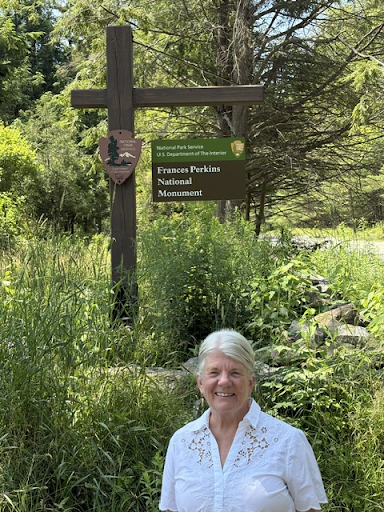
Frances Perkins National Monument
One of America’s newest additions to the National Park System is the Frances Perkins National Monument in Newcastle, Maine. Established in 2024, it preserves the homestead where Frances Perkins spent much of her life reflecting, writing, and welcoming visitors interested in public service. One of the reasons I appreciate the National Park System is that […]
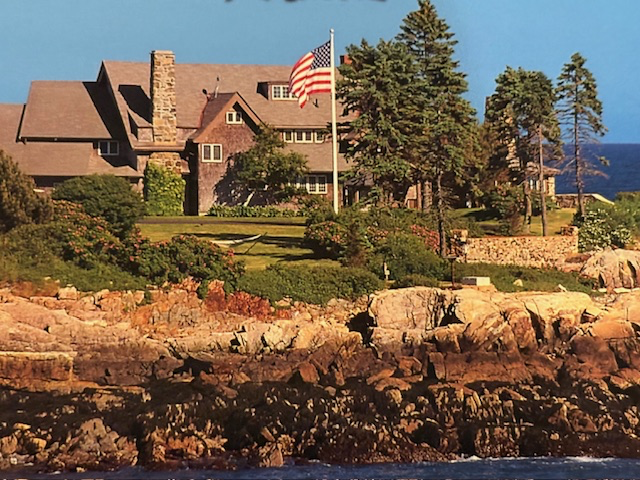
Walker’s Point
In the coastal town of Kennebunkport sits the Bush family home at Walker’s Point, a place that blends personal history with a broader national story. Perched on a rocky stretch of coastline overlooking the Atlantic, the home has been in the Bush family since the early 1900s. It became widely known as the summer residence of George […]
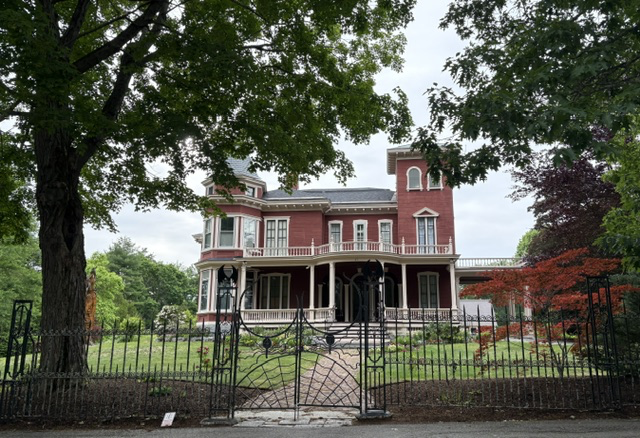
Stephen King’s House
Driving home through Maine after teaching a seminar in Halifax, we made a stop in Bangor to see the home of one of America’s most prolific authors, Stephen King. The house has become a destination because of its distinctive Victorian architecture and the famous wrought-iron gates decorated with spiders, bats, and other gothic designs that […]

