Martin Van Buren National Historic Site
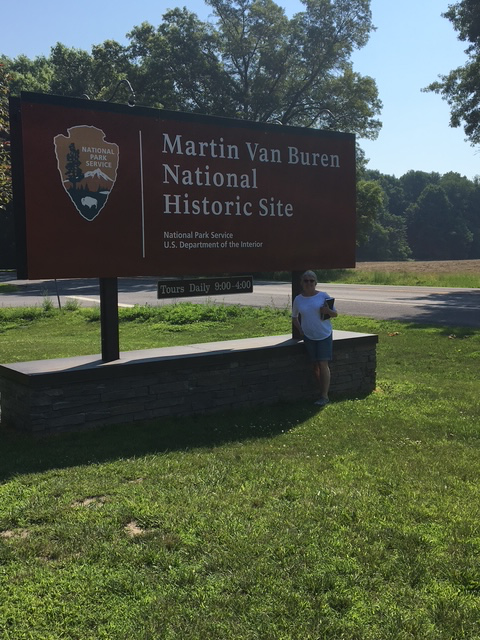
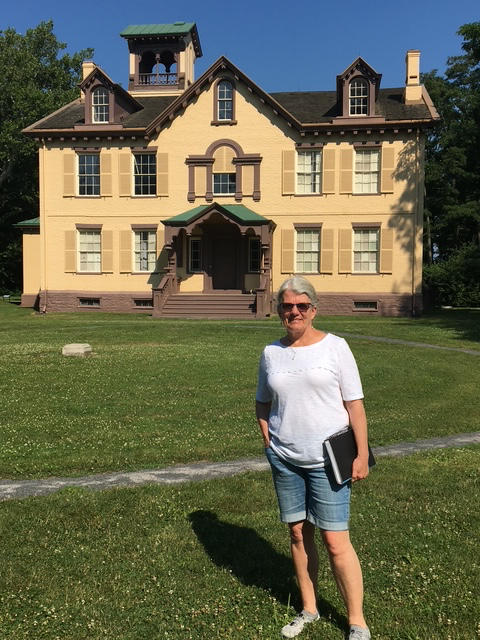
An often-forgotten president, Martin van Buren, is remembered at his home, Lindenwald, in Kinderhook, New York. This site is now preserved as the Martin Van Buren National Historic Site. I have visited this house a couple of times, and the house itself leaves an impression, especially with its distinctive French scenic wallpaper that wraps entire rooms in sweeping pastoral scenes. It feels both refined and bold for a mid-19th century American statesman.
Lindenwalds began as an 18th century Dutch farmhouse before being expanded into a grand Federal style home. Van Buren purchased it in 1839 after leaving the White House, and it became his political and personal retreat for the rest of his life. The house reflects his Durch heritage, political sophistication and a strong attachment to Kinderhook, where he was born and raised.
Unlike many presidents who are remembered for dramatic events, Van Buren’s legacy is more foundational. He was the 8th President of the United States (1837-1841) and a key architect of the modern American political party system. As Andrew Jackson’s vice president and successor, he helped organize the Democratic Party into a national structure.
His presidency was dominated by the Panic of 1837, a severe economic depression that came shortly after he took office. The financial crisis overshadowed his term and contributed to his defeat after one term. Historians remember him as shaping the structure of American electoral politics.
This site was authorized as a National Historic Site in 1974 by Congress and signed by President Gerald Ford. Its designation recognized Van Buren’s role in developing the American party system and preserving the home where he continued to influence politics long after leaving office.
Read More From Nancy
Frederic Church’s Olana
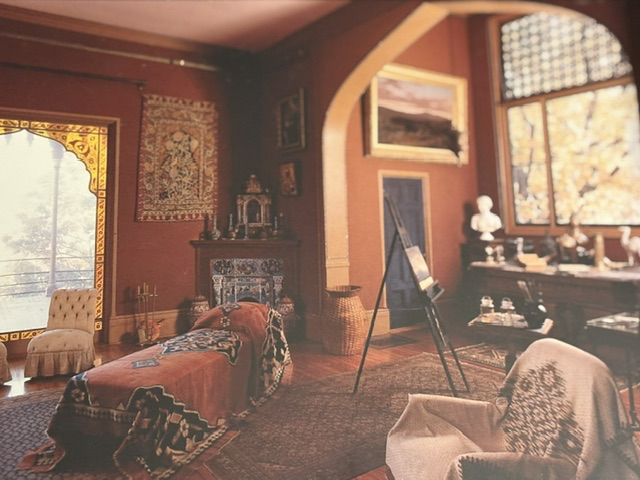
The extraordinary estate of Frederic Edwin Church overlooking the Hudson River is known as Olana. I have made the drive to Hudson, New York more than once simply to revisit this impressive home. The house itself is stunning, but it is the combination of architecture, landscape, and sweeping views that make Olana unlike any other historic home. Every window […]
Kykuit
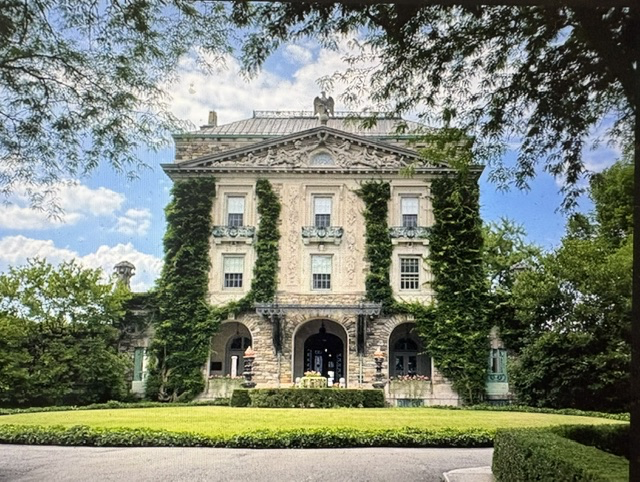
Marty and I traveled to the Hudson River Valley specifically to tour Kykuit, the Rockefeller family home, and to learn more about the family whose name became so closely connected with American industry, philanthropy, politics, conservation and the arts. I knew the Rockefeller name, of course, but visiting their home offered an opportunity to understand […]

Schuyler Mansion
After seeing Hamilton on Broadway, exploring the real-life connections from the play became a fun pastime. One stop was the Schuyler Mansion in Albany. This was the home of General Philip Schuyler and his three daughters: Angelica, Eliza and Peggy. General Schuyler was a decorated leader during the American Revolutionary War, serving as a major general […]

