The Wayside Inn
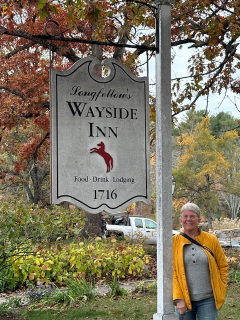
On a beautiful October day (2025), I drove to Sudbury, Massachusetts. There are so many places I’ve visited without taking a photo or leaving a written memory, so this time, I set out to capture the Wayside Inn, to record its presence and share it with you.
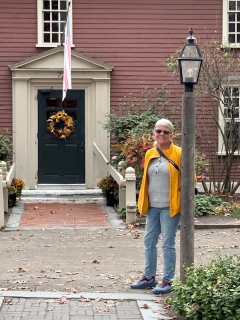
Here in New England, we are surrounded by places that trace the very beginnings of our nation, and the Wayside Inn is one of these. Tucked along a quiet stretch of the old Boston Post Road, the Inn stands as a weathered red building with white trim and a long, sloping roof. At first glance, it might look like any other colonial tavern that survived through luck or sentiment. But this house, now known as Longfellow’s Wayside Inn, is far more than that. It is a living chapter of American history, a place where stories, travelers, and centuries still meet beneath the same sturdy timbers.
The Wayside’s story began around 1716, when David Howe received a license to keep a “house of entertainment” for travelers on the rough trail between Boston and Worcester. His inn offered food, drink, and shelter to stage drivers, merchants, and weary farmers heading to market. Over time, it became a vital stop for conversation and community and a warm hearth in the heart of colonial New England.
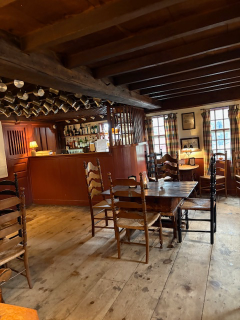
When David’s son, Ezekiel Howe, inherited the inn, it became a place of quiet defiance. During the American Revolution, Captain Howe led the Sudbury militia, and his men gathered here before marching to Concord on April 19, 1775.
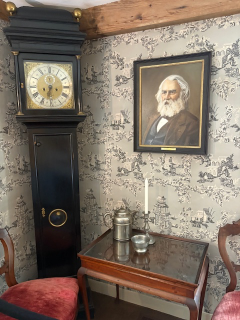
For more than two centuries, the Inn remained in the Howe family, its walls absorbing generations of stories. By the early 1800s, when Henry Wadsworth Longfellow visited, the Inn was already steeped in nostalgia. Inspired by its rustic charm, he immortalized it in his 1863 book “Tales of a Wayside Inn”, transforming this quiet roadside tavern into a symbol of New England’s endurance and character.
In the 1920s, Henry Ford discovered the inn and fell under its spell. Determined to preserve it, he purchased the property, restored it, and expanded the grounds into a small historic village. Ford’s vision was not to turn it into a museum but to keep it alive, a place where visitors could still feel the rhythm of the past beneath their feet.
Today, the Wayside Inn continues to welcome travelers much as it has for over three centuries. You can spend the night and enjoy a meal. I could still feel the hum of all who came before: the Howes, the minuteman, the poets and Henry Ford, all who left their imprint.
Read More
Read More From Nancy
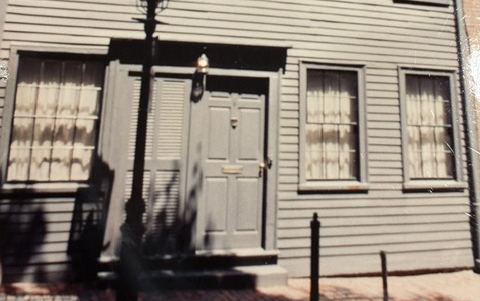
George Middleton House
Standing at 5 Pinckney Street on Boston’s Beacon Hill, the George Middleton House preserves an important chapter in the city’s early African American history. Constructed between 1786 and 1787, it is considered the oldest surviving residence on Beacon Hill and a rare example of a late-eighteenth-century Boston home built and owned by African Americans. The […]
Arrowhead
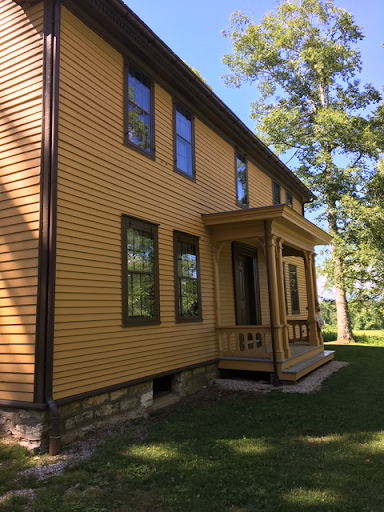
I’ve visited Arrowhead a couple of times over the years, and each visit leaves me with a deep appreciation of the home and the life that lived within its rooms. Nestled among the hills of Pittsfield, MA, this farmhouse holds an important chapter in American literary history. It was here, from 1850 to 1863, that Herman […]
The Third Harrison Gray Otis House
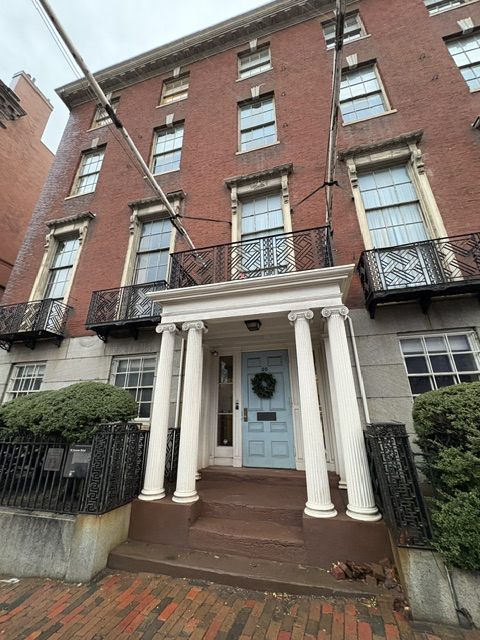
When I came across this house at 45 Beacon Street, I recognized the Otis name because I had already visited the Harrison Gray Otis House near Massachusetts General Hospital. What I didn’t realize was that the Cambridge Street house was only the beginning of the family’s story. Harrison Gray Otis eventually built three Boston houses, […]

