Golden Spike National Historical Park
There are places where history is marked by monuments, and others where it is held in the land itself. Golden Spike National Historical Park, located in northern Utah at Promontory Summit, is one of those places.
At Promontory Summit, the significance is in the simple alignment of two rail lines that once approached from opposite directions. On May 10, 1869, the Transcontinental Railroad Completion was realized when the Central Pacific and Union Pacific railroads were joined, creating the first continuous rail link across the United States. It was a moment that reshaped travel, commerce and communication, reducing what had been a months-long journey to a matter of days and fundamentally changing how the country functioned as a whole.
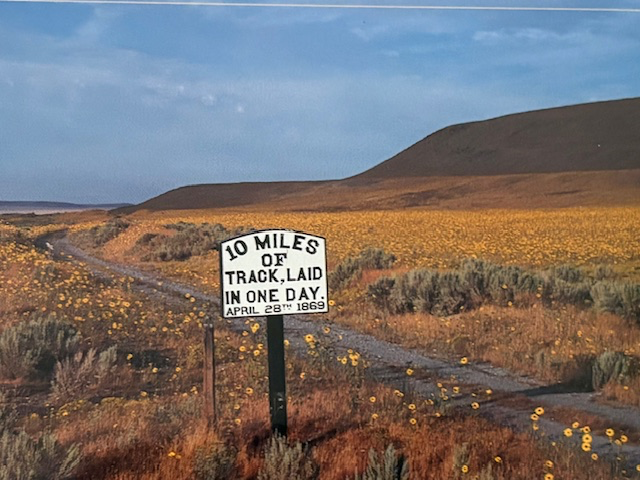
The story of this site is contained in that single ceremonial moment but is found in the work that made it possible. In the days leading up to the completion, crews pushed themselves to extraordinary limits, laying track with a speed and coordination that still seems remarkable. One marker at the site records a striking achievement: ten miles of track laid in a single day on ‘April 18, 1869’. This reflects not only efficiency, but determination carried out across a landscape that is both vast and uncompromising.
The labor that shaped this place was performed by thousands of workers, including large numbers of Chinese immigrants and Irish laborers, whose contributions were essential to the railroad’s completion. It remains an inseparable part of the site’s history.
Recognition of the importance of this location came nearly a century later. In 1957, the site was established as a national historic site by Dwight D. Eisenhoser. In 2019, Donald J. Trump redesignated a national historical park.
Golden Spike is not just about the completion of a railroad. It is about the convergence of effort, vision and persistence. It is about a moment when distance was reduced, and the idea of a connected nation became a reality.
Read More From Nancy
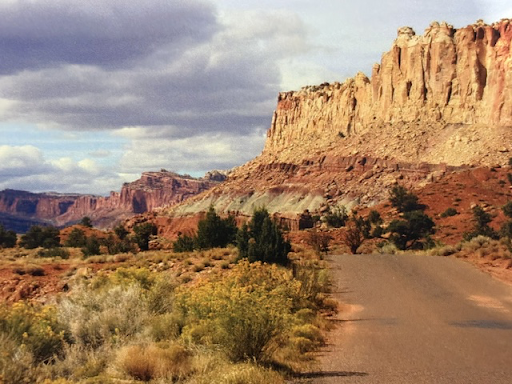
Capitol Reef National Park
Capitol Reef National Park in south-central Utah is one of those places that often surprises first-time visitors. Established as a national park in 1971, it is sometimes overshadowed by Utah’s other famous parks, yet it offers some of the most spectacular scenery in the Southwest. Driving across Utah is an experience unlike any other. It […]
Big Hole National Battlefield
On the East Coast, we speak of conflicts with Native peoples. We reference King Philip’s War in town histories and on roadside plaques, but we have not preserved large landscapes in the same way. There are markers. There are monuments. There are footnotes in local museums. But there are few expansive, protected battlefields with visitor […]
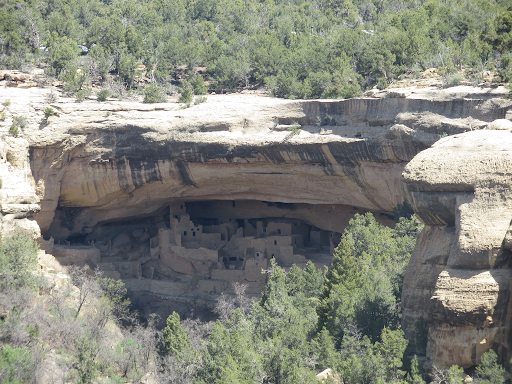
Mesa Verde National Park
Wishing to visit Mesa Verde National Park took some planning. Mapping out visits to our national parks always does, these are not places you simply pass by. They require intention. For this trip, the best place to begin was Durango, Colorado. From there, the drive slowly brings us into a landscape that feels both open and […]

