Tall Ships at South Street Seaport
A line of tall ships transformed the waterfront at South Street Seaport into a gathering of masts, rigging, and national flags. With their sails furled, the vessels revealed the framework that made ocean sailing possible: yards extending across the masts, intricate networks of lines, and long bowsprits reaching beyond the hulls. Visitors filled the piers while smaller boats moved through the water alongside them.
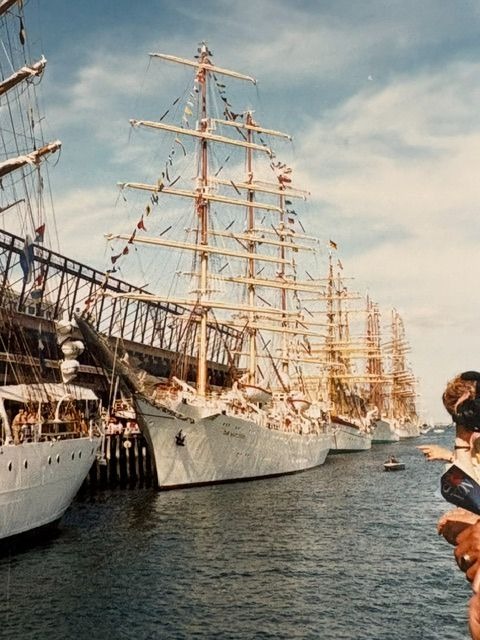
The setting connected the gathering with New York’s development as a maritime city. During the nineteenth century, South Street stood at the center of a working waterfront where ships arrived with cargo and people from distant ports. Warehouses, merchants’ offices, and businesses serving sailors developed close to the docks. The port helped establish the commercial connections through which New York grew into an international city.
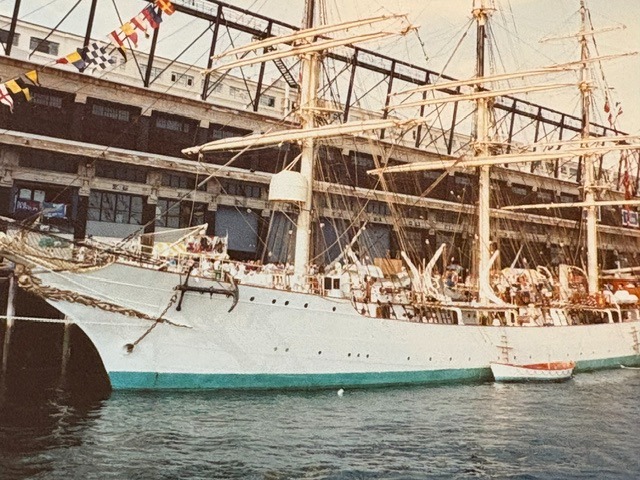
The return of large sailing vessels gave that history a visible scale. Alongside the pier buildings, their towering masts suggested how thoroughly ships once dominated the waterfront. From the water, the vessels could be appreciated as complete structures, their long hulls supporting an extraordinary arrangement of spars and rigging. What might appear delicate from a distance was equipment designed to manage considerable weight and force.
New York hosted several Operation Sail gatherings, including one in 1992, bringing vessels from different countries together in a celebration of maritime traditions. South Street Seaport participated in these events, providing berths and opportunities for public encounters with visiting ships. Although the year of our visit remains uncertain, the gathering belongs to that broader history of ships returning to a waterfront shaped by sailing.
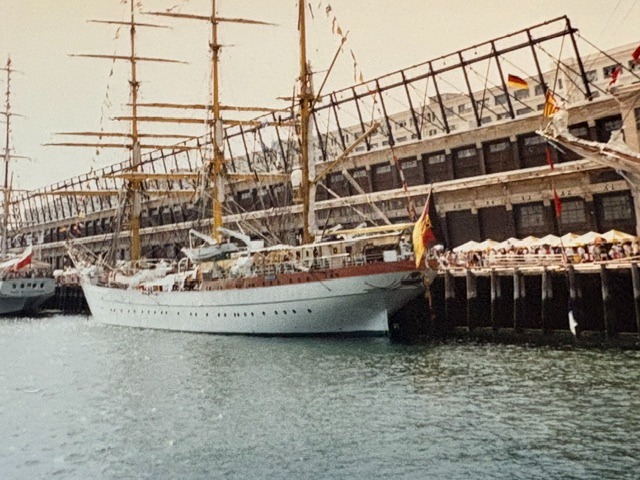
Beyond their appearance, these vessels represented the knowledge required to work at sea. Handling sails and lines depended on coordination, practiced movements, and an understanding of wind and weather. Their presence brought those skills into public view, connecting the pleasure of seeing tall ships with the labor and experience that kept them sailing.
Read More
Read More From Nancy
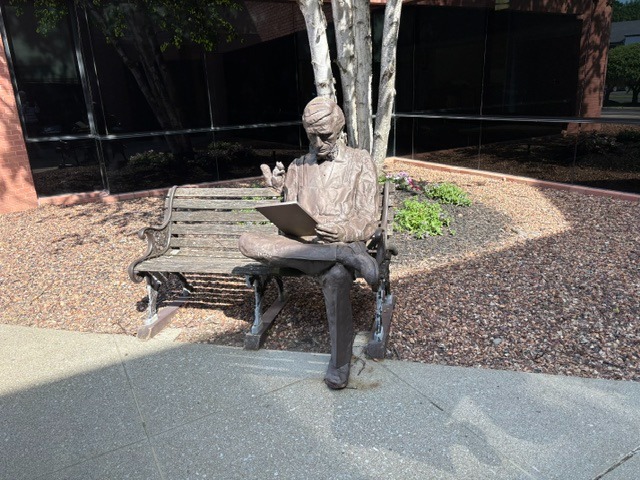
Samuel F. B. Morse Sculpture
Seated on a bench with a writing tablet in his lap, Samuel F. B. Morse appears absorbed in an idea. Created by sculptor Dennis G. Sparling and installed at Riverside Office Park on April 15, 1988, this sculpture connects Poughkeepsie with a man whose work helped transform communication. The details reward a closer look. Morse […]
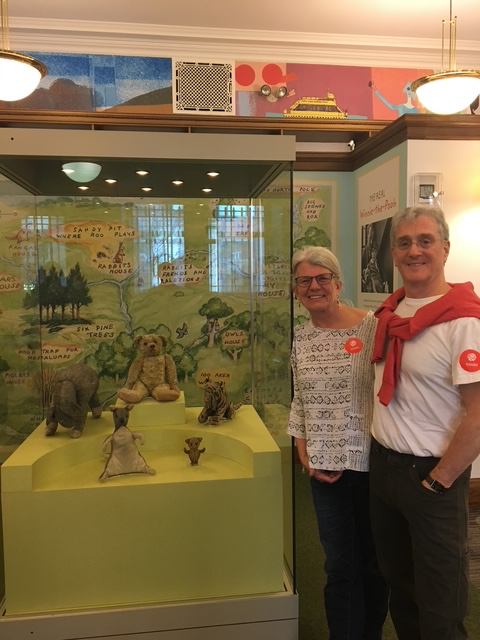
Winnie-the-Pooh Characters
During a tour of the New York Public Library, we made an unexpected stop at a glass case holding the original stuffed animals that inspired the characters of Winnie-the-Pooh. Inside the Stephen Schwarzman Building, tucked among grand marble halls and towering reading rooms, sit the well-worn toys that once belonged to Christopher Robin Milne. Pooh, […]
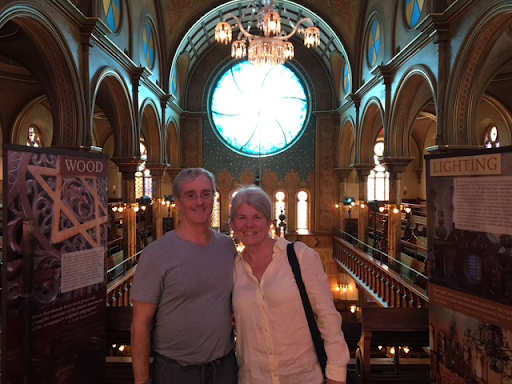
Museum at Eldridge Street
One of the joys of visiting New York City is discovering places we never knew existed. On one of our trips, we decided to visit the Museum at Eldridge Street, and it became a most memorable stop of our visit. Completed in 1887, the Eldridge Street Synagogue was the first great synagogue built in the […]

