The Caryatids of the Erechtheion
Five marble maidens stand together in the Acropolis Museum, their carved clothing falling in long folds beneath the architectural capitals balanced on their heads. Known as the Caryatids, these figures once supported the roof of the southern porch of the Erechtheion, a temple on the Acropolis built during the late fifth century BC.
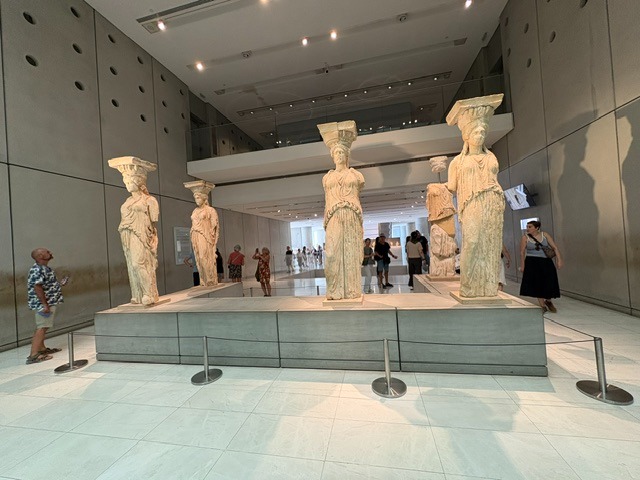
Six figures originally formed the porch. Each served as a structural support while also displaying the individuality of a sculpture. Their poses, drapery, and elaborate hairstyles create variations within a carefully coordinated group. The deep folds of their garments give their bodies a column-like strength without concealing their human form.
Ancient building accounts called them korai, or maidens. Their precise identities and ceremonial meaning remain subjects of scholarly discussion. Surviving ancient copies indicate that they originally held offering bowls in one hand and gathered their clothing with the other.
Their later history explains why only five originals are in Athens. One was removed by Lord Elgin’s agents in 1804 and is held in the British Museum. In 1979, the five remaining figures were taken indoors to protect them from air pollution. Replicas replaced them on the temple.
The museum setting allows visitors to examine details that were difficult to appreciate high above the ground, including the intricate braids at the backs of their heads and the differences between their garments.
Together, the Caryatids reveal the close relationship between sculpture and architecture in ancient Greece. Their purpose was practical, but their makers transformed the work of supporting a roof into an enduring expression of human form.

