Boot Hill
On a hill overlooking Ogallala, Boot Hill Cemetery preserves a connection to the years when cattle drives helped transform the Nebraska town into a busy western shipping point. Its history reflects the rapid growth, unsettled conditions, and personal losses that accompanied the cattle trade.
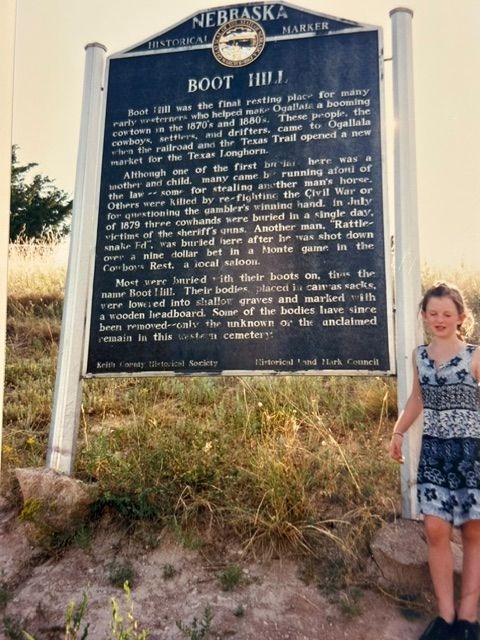
During the 1870s and 1880s, herds driven north from Texas reached Ogallala, where the railroad connected ranchers with distant markets. Cowboys, cattle buyers, merchants, and travelers brought business to the town. Saloons and other establishments served a population that expanded with the arrival of the herds.
Boot Hill became a burial place during this period. Its name referred to the tradition of burying people who had died suddenly or violently “with their boots on.” Yet the cemetery also served a broader community. Women and children were buried here alongside men associated with the cattle-town years.
Early burials could be simple. Wooden markers identified graves, while some bodies were buried in canvas rather than coffins. Such arrangements reflected the limited resources and hurried circumstances of a developing settlement.
Over time, relatives moved some remains to other burial places. According to the historical marker, those left at Boot Hill were principally people whose identities were unknown or whose remains went unclaimed.
The cemetery’s history invites a closer look at the familiar image of the western cowtown. Behind stories of gunfights and saloons were people building businesses, moving livestock, raising families, and sometimes dying far from those who knew them.
Boot Hill preserves part of that human history. Its significance lies in remembering both Ogallala’s place in the cattle trade and the individuals whose lives ended during the town’s early years.

