The Fall River Historical Society Mansion
The granite mansion at 451 Rock Street has occupied two locations and served several purposes during its long history. Built as a private home in 1843, it became associated with the Underground Railroad, underwent relocation and architectural transformation, and eventually became the home of the Fall River Historical Society.
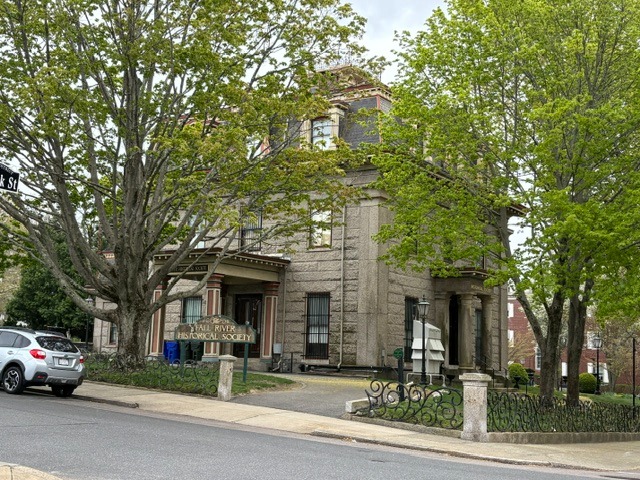
The house was originally constructed on Columbia Street for Andrew Robeson Jr. and his wife, Mary Arnold Allen. The land had been a wedding gift from Robeson’s father, a prominent New Bedford businessman. Built of native granite in the Greek Revival style, the residence stood along the former Massachusetts–Rhode Island boundary, with portions of the house in each state.
Its early history also connects it with Fall River’s abolitionist activity. According to the Historical Society, Robeson reputedly adapted a wine cellar to conceal people escaping slavery, with access hidden behind a false panel of books in the library. William Hill Sr., a Quaker abolitionist who purchased the property in 1854, continued its association with the Underground Railroad. The concealed bookcase panel survives within the house.
Around 1870, owner Robert Knight Remington had the mansion dismantled and moved to Rock Street. During its reconstruction, the house was enlarged and remodeled in the French Second Empire style. The relocation preserved the granite residence while giving it the elaborate Victorian character associated with the prosperous homes of Fall River’s Highlands.
The mansion later became the residence of Elizabeth Hitchcock Brayton. Following her death in 1935, her nephew, David Anthony Brayton, donated it to the Fall River Historical Society. The gift provided a permanent home for an organization founded in 1921 to preserve the city’s history.
As both a historic house and a local history museum, the mansion preserves more than the lives of its former owners. Its period rooms, furnishings, archives, and collections document the wider community. The building itself remains a central artifact: a home whose changing location, appearance, and purpose trace several chapters of Fall River’s past.

Read More From Nancy
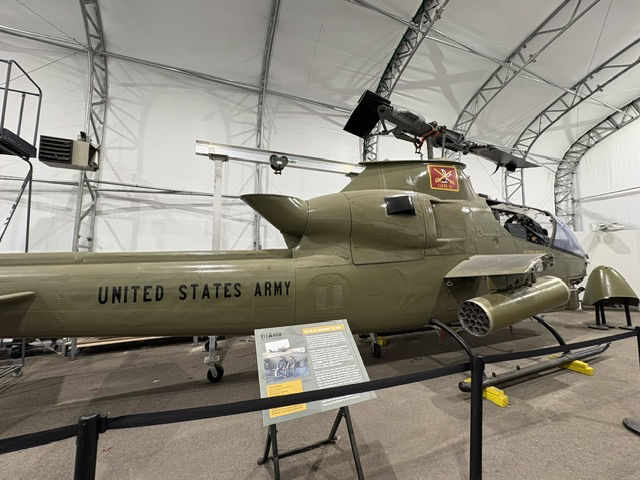
The AH-1 Cobra
Among the enormous ships and maritime exhibits at Battleship Cove in Fall River, this Army helicopter tells the story of a very different kind of warfare. The aircraft is a Bell AH-1 Cobra, part of Battleship Cove’s exhibit devoted to the helicopter war in Vietnam. Battleship Cove preserves both a Cobra and a UH-1 Iroquois, better known […]
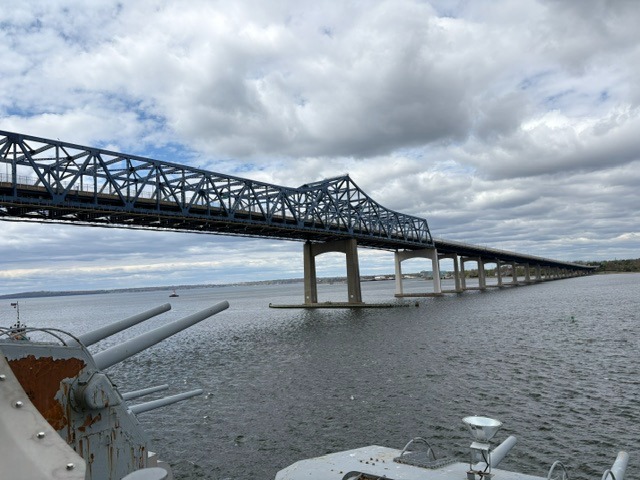
Charles M. Braga Jr. Memorial Bridge
Stretching across the Taunton River between Fall River and Somerset, the Charles M. Braga Jr. Memorial Bridge is one of the most recognizable structures on the city’s waterfront. Its steel framework carries Interstate 195 high above the water, connecting communities across southeastern Massachusetts. Opened in 1966, the bridge became an important part of the region’s […]
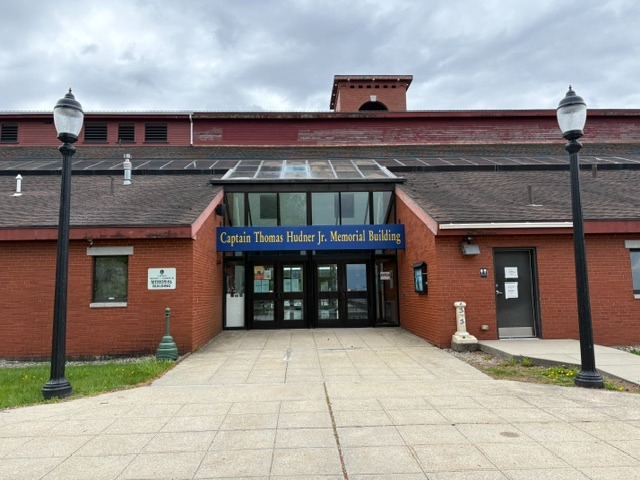
Captain Thomas Hudner Jr. Memorial Building
At Fall River Heritage State Park, the Captain Thomas Hudner Jr. Memorial Building honors a hometown naval aviator whose courage became part of the history of the Korean War. The waterfront building carries the name of a man who risked his life in an attempt to save a fellow pilot stranded behind enemy lines. Massachusetts […]

