The Coastal Railway
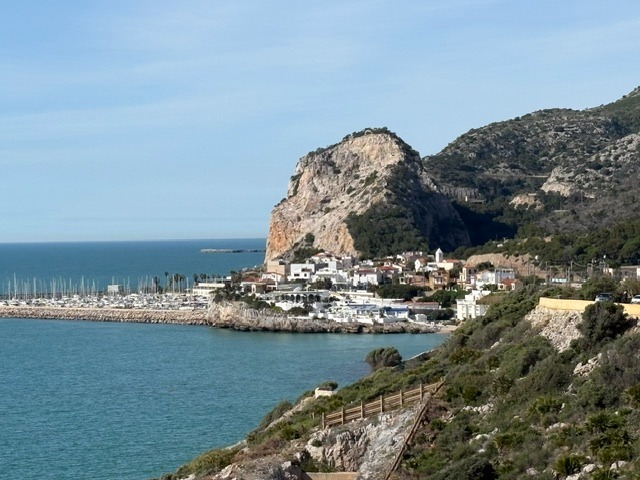
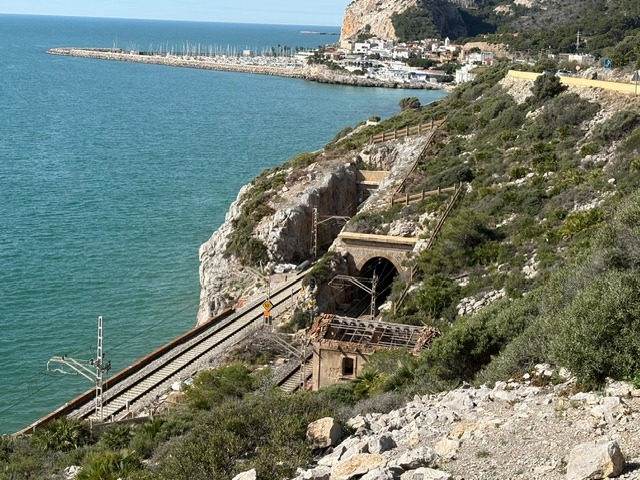
Along the coast at Garraf, railway tracks follow a narrow ledge between the Mediterranean and the rocky slopes above. Where the land leaves too little room for an open route, the rails disappear into tunnels. This stretch of railway reveals the challenge of connecting coastal communities through a landscape that offers few easy passages.
In 1881, the railway linked Barcelona with Vilanova i la Geltrú. Its construction required tunneling through the Garraf massif, a major obstacle along the route. The project was championed by Francesc Gumà i Ferran, a businessman from Vilanova who devoted money and effort to establishing the connection.
For towns along the line, the railway changed access to the world beyond the coast. Sitges’s municipal history identifies its arrival as a major improvement in land transportation. It also contributed to the decline of the town’s local shipping fleet, as overseas traffic increasingly concentrated on larger vessels departing from Barcelona. The new route reshaped an older relationship between land and sea.
At Garraf, that change remains visible in the physical arrangement of the tracks. The railway occupies a carefully engineered corridor, with rock on one side and open water on the other. Tunnel entrances mark the points where continuing along the surface became impractical.
The setting makes the work behind the railway easier to appreciate. Before trains could carry passengers along this coast, workers had to cut a continuous route through difficult terrain. Each tunnel joined sections of shoreline that the massif had separated.
Today, the line remains part of Garraf’s coastal landscape. Its tracks and tunnels preserve the achievement of a nineteenth-century project that brought communities closer together by finding a passage through the rock.