The Beach Huts
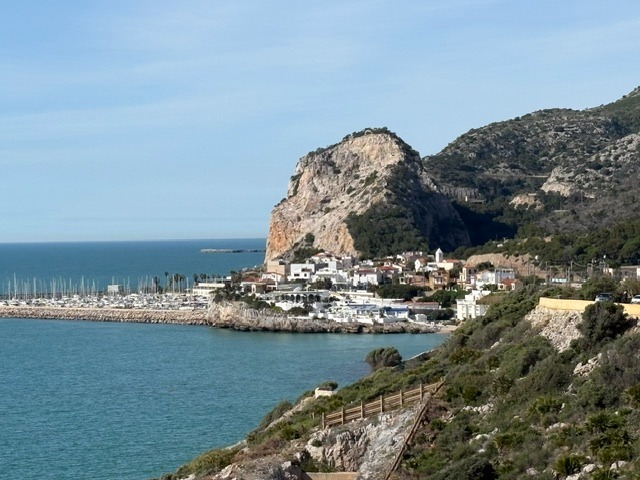
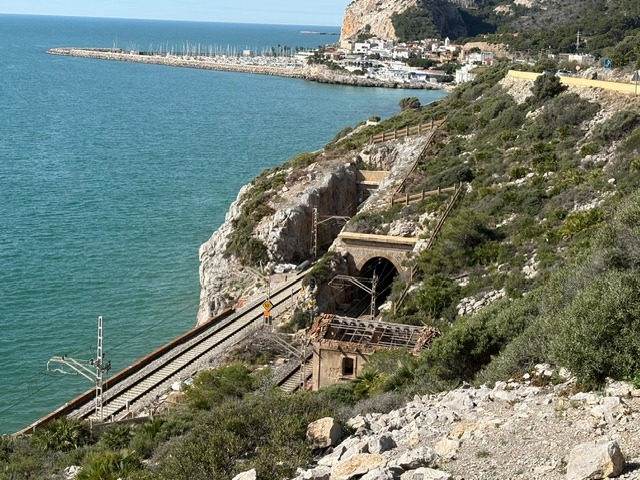
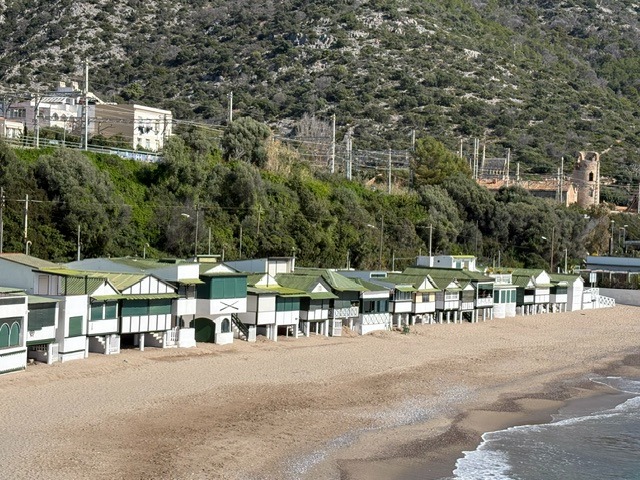
Along the curve of Garraf’s beach, a row of green-and-white wooden huts faces the Mediterranean. Their small porches, shuttered openings and varied rooflines give the shoreline a distinctive character. Behind them rise the rocky slopes of the Garraf massif, leaving a narrow space where the mountains, railway and sea meet.
The huts began as practical shelters around 1920. Early structures were made from reeds and served several purposes: families used them for shade during visits to the beach, fishermen stored equipment inside, and railway workers found shelter and rest there. Their origins reflect a shoreline shared by people working beside the water and those coming to enjoy it.
Reeds offered limited protection against coastal weather. Wooden construction followed, and around 1930 the huts were raised on supports to help them withstand storms and waves. What began as a temporary shelter developed into a lasting feature of the village.
The buildings retain a modest scale. Each has its own details, while the repeated green-and-white colors unite the row. Their fronts open directly toward the sand, keeping the relationship between shelter and shoreline easy to understand.
The group of 33 huts received protection as a historic site in 2020. An association dedicated to their preservation helps maintain both the structures and their surroundings. That recognition acknowledges the importance of everyday buildings in the history of a coastal community.
Garraf’s beach huts preserve a particular chapter of life by the Mediterranean: fishing equipment stored close to the water, workers taking a break, and families seeking shade. Their survival gives those ordinary activities a visible place along a shoreline that has changed around them.