Madame Tussauds
Coming face to face with people from another century was part of the appeal of Madame Tussauds. We had to include this wax museum in our family vacation in the United Kingdom. Figures such as Beethoven and Mozart gave familiar names a physical presence, offering a playful way to encounter people whose music and stories had outlived them.
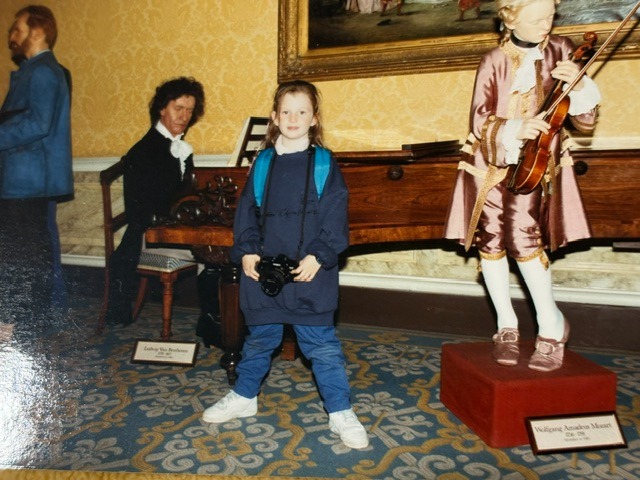
The museum began with the work of Marie Grosholtz, later known as Madame Tussaud. Born in Strasbourg in 1761, she learned wax modeling from Philippe Curtius, whose exhibitions in Paris attracted visitors eager to see lifelike representations of recognizable people. After his death in 1794, Marie inherited his collection, providing the foundation for the business that would carry her name.
Wax figures offered something particularly compelling before photographs became widely available: the opportunity to see a three-dimensional likeness of someone known through reputation, printed accounts, or portraits. The exhibitions brought public figures within apparent reach, combining craftsmanship with curiosity about the famous.
In 1802, Marie brought her collection to Britain. For the next thirty-three years, she traveled with the exhibition through England, Scotland, and Ireland. Behind the displays was the demanding work of transporting fragile figures, arranging temporary exhibitions, and attracting audiences in each new location. In 1835, she and her sons established a permanent home at the Baker Street Bazaar in London.
Her family continued the enterprise after her death. In 1884, the collection moved to Marylebone Road, where the London attraction remains. Its displays combined entertainment with historical subjects. Nineteenth-century advertisements even promoted the royal figures as a way for schoolchildren to connect with the people they encountered in their history books.
Madame Tussauds grew from a traveling collection into a museum where historical figures, royalty, musicians, and entertainers share the galleries. Its appeal rests on the craftsmanship of lifelike wax portraits and the experience of standing beside recognizable figures. The London museum continues the exhibition tradition Marie Tussaud established nearly two centuries ago.
Read More From Nancy
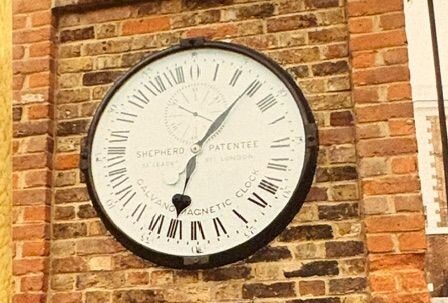
The Shepherd Gate Clock
At first glance, the Shepherd Gate Clock looks familiar: a round face, Roman numerals, and hands marking the time. Look more closely, however, and the dial reveals twenty-four hours instead of twelve. The hour hand makes just one complete circuit each day, pointing downward at noon and upward at midnight. Installed outside the Royal Observatory […]
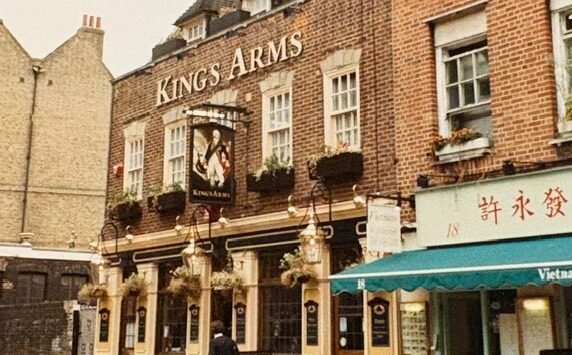
The King’s Arms
During our family vacation in the United Kingdom, we came across the King’s Arms on King William Walk in Greenwich. Its brick exterior, hanging sign, and flower-filled window boxes were part of the streetscape we encountered while exploring the area. Behind that familiar pub frontage is a story preserved partly through the memories of local […]
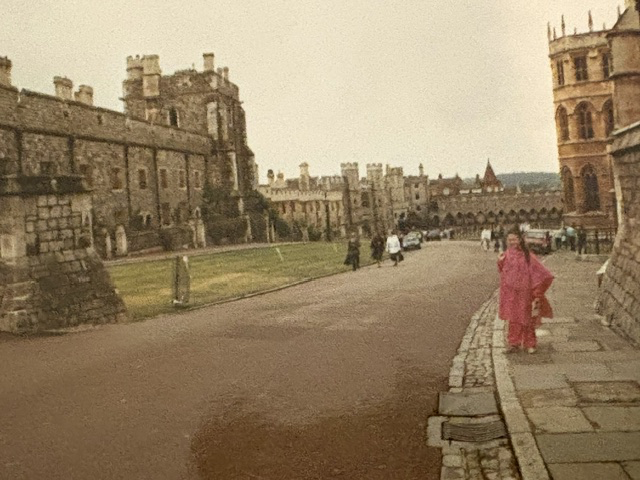
Windsor Castle
This is Emmy standing just outside Windsor Castle in her bright pink rain poncho. When we took our daughters to England, Windsor Castle was one of the places we knew we wanted them to experience. We quickly discovered that England’s reputation for rainy weather was well deserved, but a little rain did nothing to dampen […]

